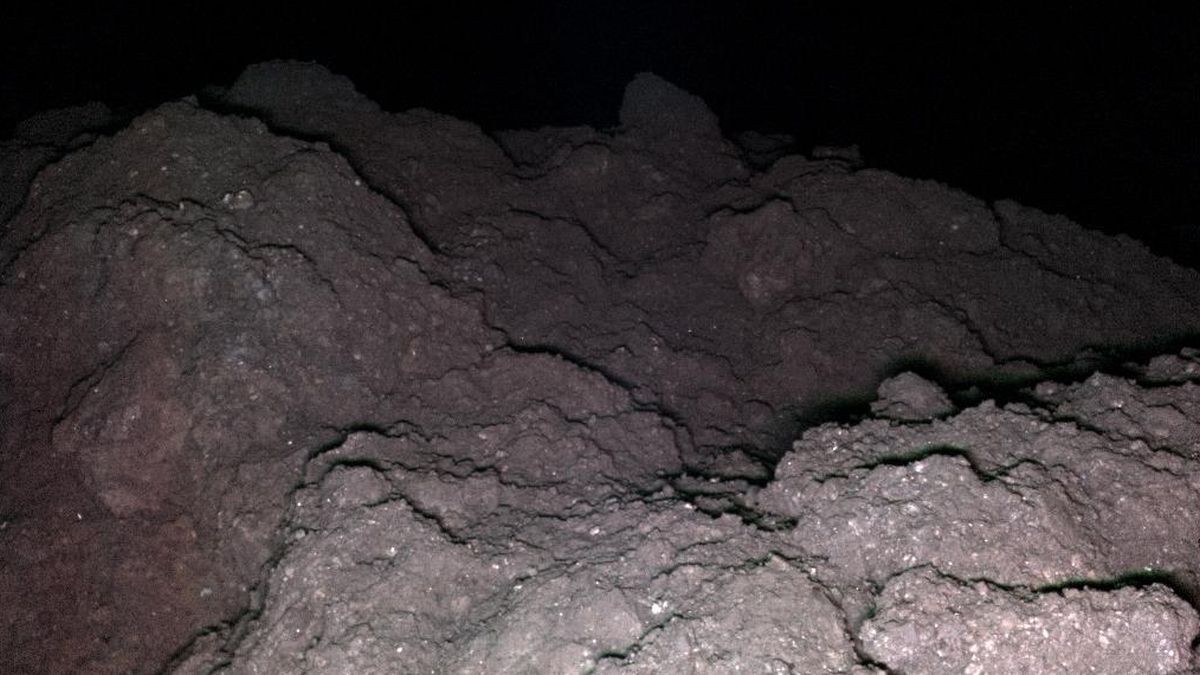
New analysis of material from asteroid Ryugu confirms the presence of all five nucleobases – the essential molecular components of RNA and DNA – solidifying evidence that the ingredients for life were likely common in the early solar system. This discovery, paired with a similar finding from asteroid Bennu, suggests that Earth may have received these vital building blocks through asteroid impacts, rather than them being unique to our planet.
The Search for Life’s Origins
For decades, scientists have debated how life arose on Earth. A central question is where the fundamental molecular ingredients came from. DNA and RNA, the blueprints of all known life, rely on five core nucleobases: adenine, cytosine, guanine, thymine, and uracil. Finding these compounds elsewhere in the solar system strengthens the theory that early Earth was seeded with these components from space.
Two Asteroids, Two Sets of Evidence
The Ryugu asteroid, sampled by Japan’s Hayabusa2 mission, now joins Bennu (sampled by NASA’s OSIRIS-REx) as the second asteroid confirmed to contain all five nucleobases. Previously, Ryugu had only yielded uracil. The latest research, led by Toshiki Koga, analyzed two separate Ryugu samples, each confirming the complete set of building blocks.
This matters because it shows that these molecules aren’t rare occurrences. They’ve also been found in meteorites Murchison and Orgueil, suggesting a widespread distribution across carbon-rich space rocks.
Chemical Differences Reveal Asteroid Diversity
The researchers compared nucleobase ratios between Ryugu, Bennu, Murchison, and Orgueil, discovering subtle but significant differences. Ryugu had balanced purines (adenine and guanine) and pyrimidines (cytosine, thymine, and uracil). Bennu and Orgueil were pyrimidine-rich, while Murchison favored purines.
These variations correlate with ammonia levels in the samples. This implies that the internal chemical environment of parent asteroids influences which nucleobases form, pointing towards a diversity of organic chemistry in the early solar system.
Implications for the RNA World Hypothesis
The presence of thymine alongside uracil is particularly intriguing. DNA uses thymine, while RNA uses uracil. Some theories suggest life first emerged in an “RNA World” where RNA, being simpler to form, was the primary genetic molecule. The discovery of both thymine and uracil in asteroids suggests that asteroid chemistry can produce both, not just the easier-to-form uracil.
“The universal detection of all five canonical nucleobases…highlights the potential contribution of these exogenous molecules to the organic inventory that supported prebiotic molecular evolution.”
This reinforces the idea that early Earth received a full chemical toolkit via asteroid bombardment, providing the necessary ingredients for life to emerge. The findings indicate that the synthesis of these molecules may be common in carbon-rich bodies throughout the solar system.