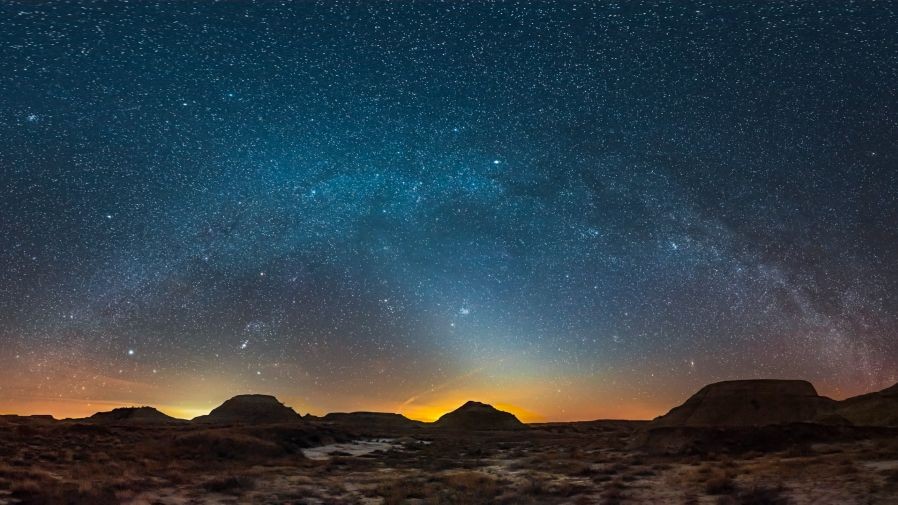
The spring equinox this month offers a rare chance to witness a subtle but spectacular astronomical phenomenon: zodiacal light. This faint glow appears as a pale, pyramid-shaped column of light rising from the western horizon just after sunset, and it’s visible to the naked eye under dark skies.
What Causes This Ethereal Glow?
Zodiacal light isn’t caused by any celestial body; instead, it’s sunlight reflecting off microscopic dust particles in space. These particles drift along the ecliptic —the plane of Earth’s orbit around the sun, and the same plane where all the planets reside.
The source of this dust has long been debated. Traditionally, astronomers believed it came from comets and asteroid collisions. However, recent data from NASA’s Juno spacecraft suggests that Mars itself may be a significant contributor, constantly shedding fine particles into space. This is a surprising discovery that highlights how little we still understand about interplanetary dust.
When and Where to Look
The best time to observe zodiacal light in the Northern Hemisphere is in the weeks surrounding the spring equinox (March 20). The ecliptic is at its steepest angle relative to the horizon during this period, making the glow more pronounced. Stargazers near the equator can see it any time of year, though.
This year, conditions are particularly good. The moon will be absent from the evening sky from March 7 until a few days after the new moon on March 20, providing ideal darkness.
How to Spot It: A Simple Guide
No special equipment is needed—just a clear, dark sky away from city lights. Allow your eyes at least 20 minutes to fully adjust to the darkness. If you’re lucky, a faint, pale pyramid of light will emerge from the horizon.
Zodiacal light is a gentle reminder of the vastness of space and the constant, subtle interactions between planets and dust. It’s a beautiful, yet often overlooked, display of natural light.
If you miss it this month, the autumn equinox (September 23) offers another chance, though conditions may vary. For now, head out and look west – you might just catch the “false dawn” before it fades.