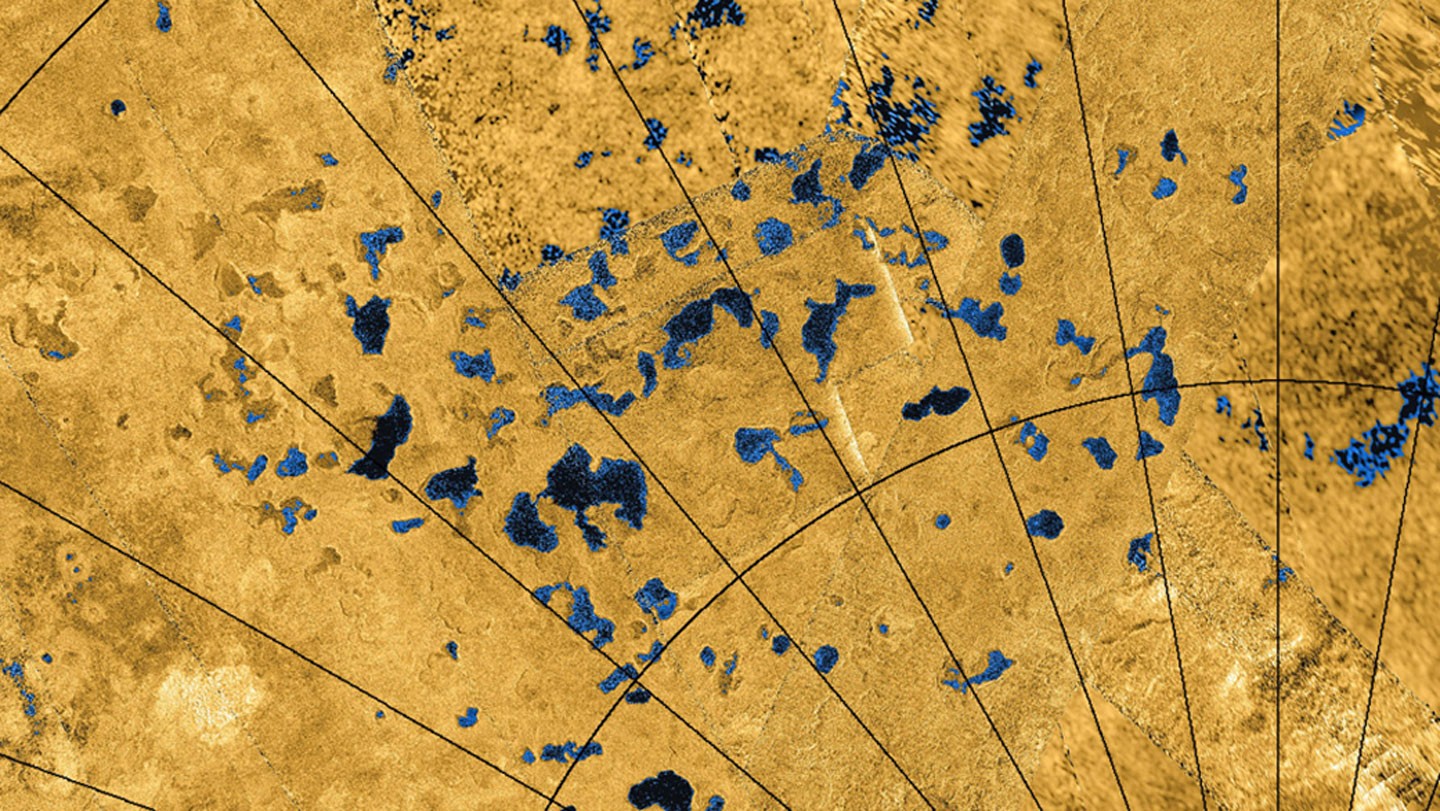
Recent experiments have cast doubt on the possibility of life existing in the methane lakes of Saturn’s moon Titan, specifically regarding the formation of hypothetical cell-like structures called azotosomes. Initial computer models suggested that acrylonitrile, a compound found in Titan’s atmosphere, might allow these structures to form in the frigid methane and ethane seas. However, new lab tests indicate this is unlikely.
The Azotosome Hypothesis
The idea of life on Titan hinges on the potential for alternative biochemistries. Since water is frozen solid on the moon, scientists theorized that liquid methane and ethane could serve as a solvent for life. Vinyl cyanide (acrylonitrile) was thought to be a key ingredient, capable of forming stable membrane-like bubbles – azotosomes – that could encapsulate biological material. If these structures could form spontaneously, it would suggest life could exist in a radically different form than what we know on Earth.
Experimental Results
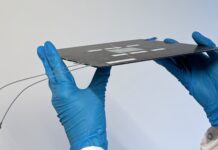
Researchers at NASA’s Jet Propulsion Laboratory conducted experiments to simulate Titan’s conditions. Solid vinyl cyanide was sprinkled onto supercooled liquid ethane and methane. Instead of forming azotosomes, the substances crystallized together. No bubbles or self-assembling structures emerged in either liquid, directly challenging earlier simulations. This means that the most promising known pathway for bubble-like structures to form on Titan does not work in reality.
What This Means for Titan Life
While this discovery significantly weakens the azotosome hypothesis, it doesn’t entirely rule out life on Titan. The researchers emphasize that our understanding of life is limited to Earth-based examples, and extraterrestrial life may operate under entirely different principles.
“We tend to interpret life as we know it, because that’s the only form of life that we know. But on Titan it could be life as we don’t know.”
Other mechanisms for creating protective structures or entirely different biological processes could still exist. The search for life beyond Earth is always about expanding our imagination beyond what is immediately obvious. The experiment serves as a reminder that simulations must be tested in the lab, and that the universe may contain life forms far stranger than we currently conceive.
The possibility of life on Titan remains open, but the path toward it may be far more convoluted and alien than previously anticipated.