The Artemis II mission has successfully completed its historic journey around the Moon, marking the first time humans have orbited our lunar neighbor in over half a century. The crew—comprising NASA astronauts Reid Wiseman, Victor Glover, and Christina Koch, along with Canadian astronaut Jeremy Hansen —reached a distance of over 250,000 miles from Earth, pushing the boundaries of human exploration once again.
A Journey Through Silence and Discovery
The mission reached its most profound moment when the spacecraft, named Integrity, slipped behind the far side of the Moon. For 40 minutes, the crew was completely cut off from Earth, experiencing a total radio silence that separated them from the eight billion people below.
Upon re-establishing contact, the crew shared breathtaking observations of the lunar landscape:
– The Orientale Basin: Commander Reid Wiseman provided a first-of-its-kind view of this massive, 600-mile-wide crater, describing it as “dynamic” and highly three-dimensional.
– Lunar Impacts: Christina Koch observed fresh meteorite impacts, noting how the bright, light-colored soil kicked up by the collisions looked like “pinprick holes” in a lampshade.
– Celestial Views: The crew witnessed a solar eclipse and spotted the reddish hue of Mars and the orange tint of Saturn against the dark void of space.
Moments of Human Connection
Beyond the scientific data, the mission was punctuated by deeply personal moments. The crew honored the legacy of space pioneers, including a pre-recorded message from the late Jim Lovell, the legendary pilot of Apollo 8.
In a moving tribute, Jeremy Hansen requested that two lunar craters be named: one for the spacecraft, Integrity, and another to honor Carroll Wiseman, the wife of Reid Wiseman, who passed away from cancer in 2020.
The mission also featured a high-profile communication from President Trump, who called the crew to discuss their experience. During the 12-minute call, the President expressed curiosity about the period of radio silence and extended an invitation for the crew to visit the Oval Office. The exchange also highlighted the international cooperation of the mission, with the President noting the pride Canada takes in Hansen’s achievement.
Historical Context: The Race for the Moon
The success of Artemis II serves as a bridge between the era of the “Space Race” and a new age of permanent lunar habitation. To understand the magnitude of this flight, one must look back to the late 1960s:
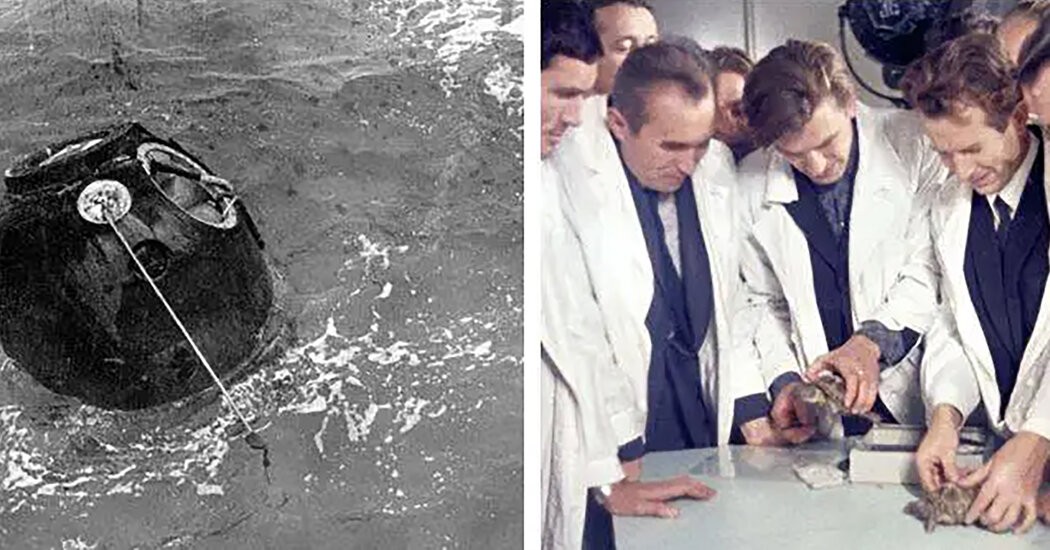
During the height of the Cold War, the Soviet Union’s Zond 5 mission successfully sent living organisms—including tortoises—around the Moon in 1968, predating human lunar orbits.
While the Soviets achieved early biological milestones, the Artemis II mission represents a shift in intent. Unlike the competitive “flags and footprints” era of the 20th century, NASA’s current objective is to establish a long-term, enduring presence on the Moon as a stepping stone for future missions to Mars.
The Road Ahead
The crew is currently preparing for the final stages of their mission. After a period of rest, Integrity is scheduled to begin its return journey on Thursday, with a planned splashdown on Earth this Friday.
While future crewed landings on the lunar surface may face delays, the successful completion of this flyby confirms that humanity is no longer just visiting the Moon—we are learning to live alongside it.
Conclusion: Artemis II has successfully transitioned from a feat of engineering to a triumph of human spirit, proving that while we reach for the stars, our connection to Earth and each other remains our most vital anchor.