The idea of bringing back extinct species – mammoths, dodos, even dire wolves – has moved from science fiction to a multi-billion dollar industry. Colossal Biosciences, a Dallas-based company backed by high-profile investors from Tiger Woods to Paris Hilton, is leading this charge. Valued at $10.2 billion, it recently announced the birth of “de-extinct” dire wolf pups, sparking both excitement and intense debate.
The Science Behind Revival
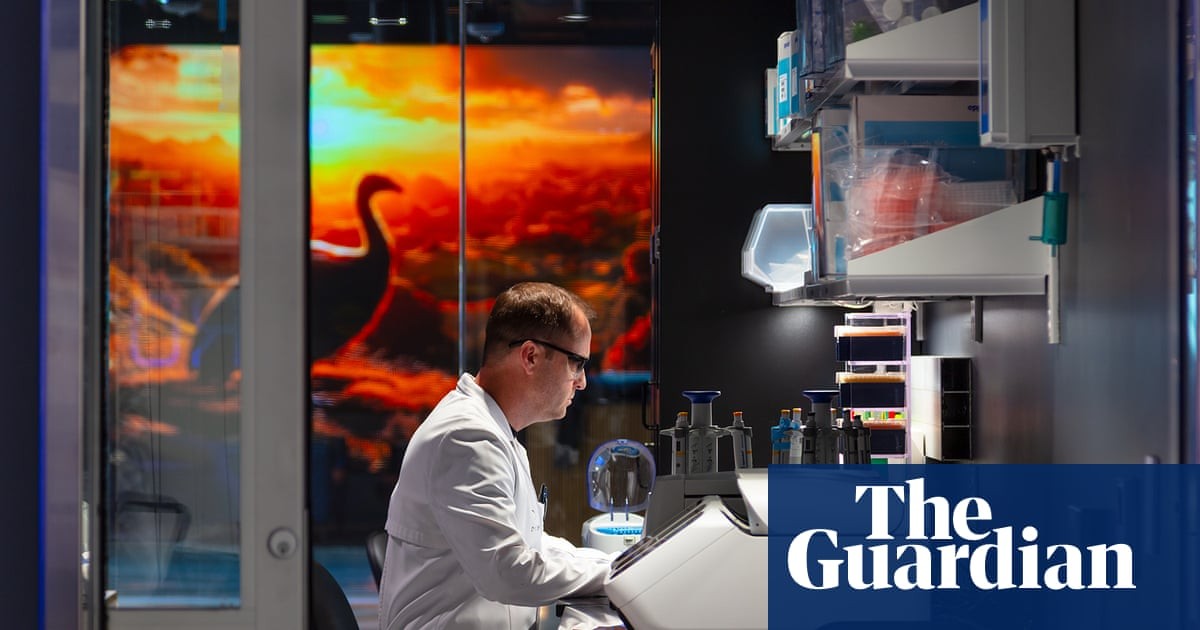
Colossal’s approach hinges on ancient DNA extracted from fossils and advanced gene editing tools like CRISPR. The process involves identifying the genetic differences between an extinct species and its closest living relative, then selectively modifying the extant animal’s genome. For example, 14 out of 19,000 genes in gray wolves were edited to create the “dire wolf” pups – making them larger, snow-colored, and more cold-resistant.
While resurrecting dinosaurs (as depicted in Jurassic Park ) is currently impossible due to DNA degradation, Colossal is targeting species with more intact genetic material. This includes the woolly mammoth, slated for revival within two years, and the iconic dodo. The company has even cultivated primordial germ cells from pigeons, the closest relative to the dodo, to facilitate reproduction.
Why De-Extinction Now?
The driving force behind this work is not just scientific curiosity, but also a perceived “moral obligation” to address the current extinction crisis. Human activity is driving species loss at up to 1,000 times the natural rate, prompting Colossal CEO Ben Lamm to argue that technological intervention is necessary. The goal isn’t merely bringing back extinct animals, but also raising awareness about conservation and inspiring public engagement with science.
However, the effort raises a fundamental question: Is this truly de-extinction, or simply genetic modification? Some scientists argue that Colossal’s creations are hybrids, not authentic revivals. Vincent Lynch, an evolutionary biologist at the University at Buffalo, points out that modifying a related species doesn’t equate to bringing back the original.
Beyond Spectacle: The Real Potential
Despite the hype, the most significant impact of Colossal’s technology may lie in conservation efforts for existing endangered species. Gene editing could restore genetic diversity to populations like red wolves (down to barely two dozen individuals), develop vaccines against deadly viruses in elephants, or engineer resistance to toxins in Australian marsupials threatened by invasive species.
Colossal recognizes this potential, with five spin-off companies already in development, targeting areas from plastic pollution to national security. The company frames itself as a “species preservation company,” focusing on next-generation conservation tools rather than perfect recreations of extinct ecosystems.
The Risks and Uncertainties
Reintroducing extinct species into modern ecosystems carries inherent risks. Mammoths, for example, could cause significant disruption in human-populated areas. Even if species are resurrected, their behavior in a changed world is unpredictable. The introduction of invasive species proves that ecological balance is easily upset.
Critics also worry that de-extinction could undermine existing conservation efforts by creating a “moral hazard” – the idea that species can be revived if lost, reducing urgency around habitat protection and hunting bans.
A New Era of Conservation?
Colossal Biosciences is pushing the boundaries of science, but its work remains controversial. The debate over what constitutes de-extinction will continue, but the company’s broader mission – to leverage technology for species preservation – could reshape the future of conservation. Whether these efforts will succeed or backfire depends on careful planning, ethical considerations, and a realistic understanding of the complexities of ecosystems.