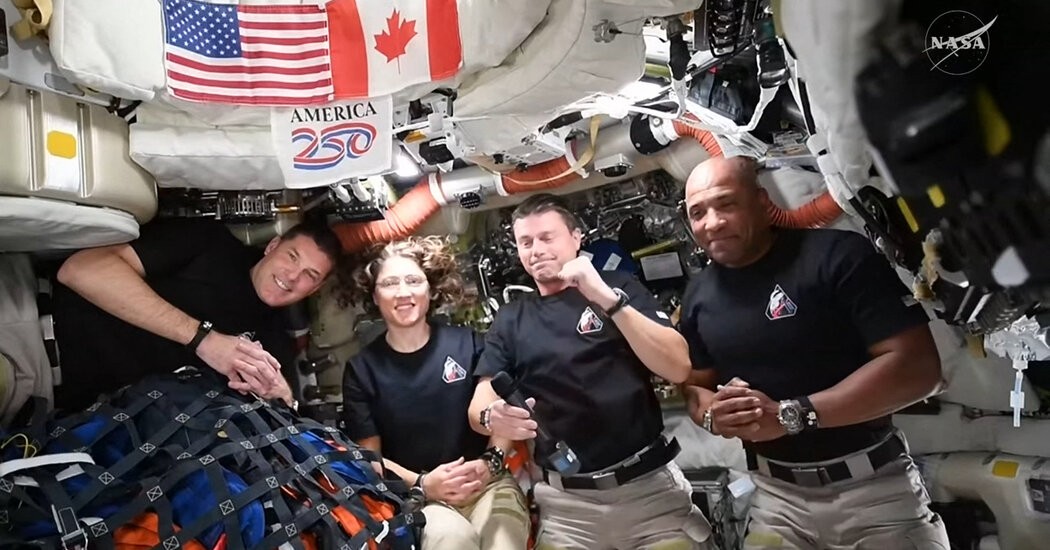
President Trump held a call with the crew of the Artemis II mission on Monday, following their historic transit around the far side of the moon. The mission marked a milestone in human spaceflight, as the crew reached a distance from Earth never before achieved by humans.
A Milestone for NASA and International Cooperation
During a roughly 12-minute conversation, the President congratulated the crew on their achievement, stating, “You’ve made history and made all America really proud.” Notably, the President also acknowledged the international dimension of the mission by recognizing Jeremy Hansen, the Canadian astronaut on board.
This mission serves as a critical testing ground for the broader Artemis program. While the current flight is a flyby, it validates the systems necessary for the next phase: landing humans on the lunar surface.
The Long Road to the Moon and Mars
The Artemis II success aligns with the long-term spaceflight objectives established during Trump’s first term. The administration’s vision for lunar exploration has shifted from short-term visits to permanent presence.
The strategic roadmap includes:
– Establishing a lunar base: Moving beyond “planting flags” to creating a sustainable foundation on the Moon.
– Mars as the ultimate goal: Using lunar operations as a stepping stone for eventual crewed missions to Mars.
However, the timeline for these ambitions remains complex. Mr. Trump noted that future crewed landings on the moon may face delays that extend past the end of his second term, highlighting the immense technical and budgetary challenges inherent in deep-space exploration.
Shifting Political Focus
The call provided a moment of diplomatic and national unity for the President. In the days following the April 1 launch, much of the administration’s public attention and social media presence had been dominated by geopolitical tensions involving Iran. This brief pivot to space exploration offered a moment of levity amidst a heavy domestic and foreign policy agenda.
“We’re going to be doing a lot of traveling [in space], and you’re going to ultimately do the whole big trip to Mars.”
Conclusion
The Artemis II mission represents a significant leap in human capability, moving the world closer to permanent lunar habitation. While political timelines and technical hurdles remain, the successful transit around the moon reinforces the momentum toward a future of deep-space exploration and Mars colonization.