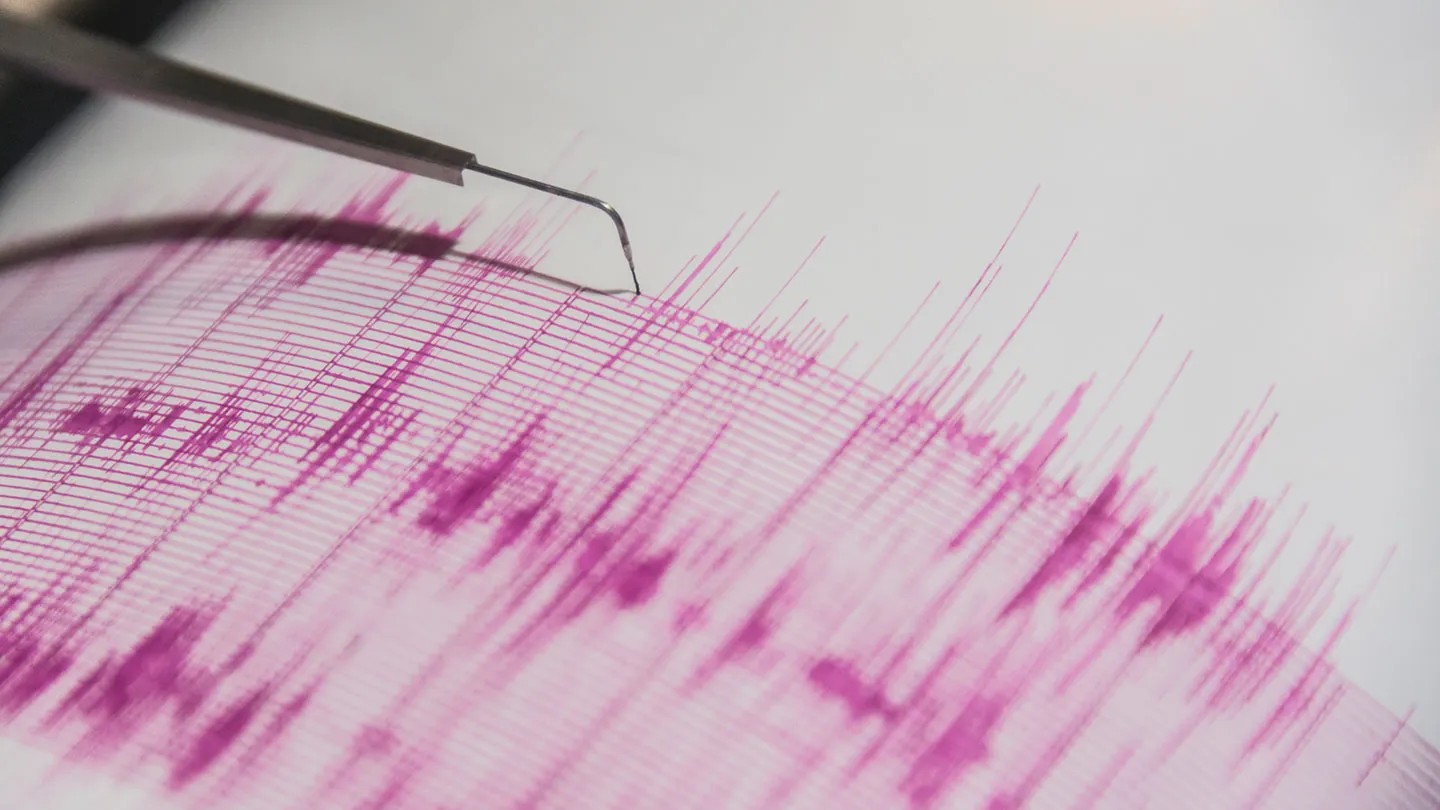
Scientists study earthquakes to better understand them and, ultimately, to predict them to save lives. A seismograph is the tool they use to record these events and measure their strength. This activity guides you through building a simplified version of one using common materials, offering a clear look at how these devices work.
Materials You’ll Need
To construct your own seismograph, gather the following:
- A medium-sized cardboard box
- A paper or plastic cup
- String
- A marker
- Scissors
- Tape
- Paper or a long store receipt
- Coins, marbles, or small rocks for weight
- A helper to assist with the experiment
Video instructions are available in English and Spanish for visual guidance.
Step-by-Step Instructions
- Prepare the Box: Cut off the lid or flaps of the cardboard box. Stand it upright on one of its smaller sides.
- Attach the Cup: Poke two holes opposite each other near the rim of the cup. Tie a piece of string (slightly longer than the box’s length) to each hole.
- Hang the Cup: Poke two holes in the top of the box, spaced the same distance apart as the holes in the cup. Thread the strings through these holes and tie them together, suspending the cup inside the box. The cup’s bottom should be approximately 2.5 centimeters (1 inch) above the box’s bottom.
- Install the Marker: Poke a hole in the center of the cup’s bottom. Insert the marker through the hole, ensuring its tip lightly touches the box’s bottom.
- Add Weight: Fill the cup with coins or other small weights to keep the marker vertical.
- Create the Paper Strip: Tape several strips of paper together end-to-end to form one long strip, or use a long store receipt directly.
- Set Up the Recording Surface: Cut slits on opposite sides of the cardboard box near the bottom edge. Pass the paper strip through these slits, so it runs across the middle of the box.
- Center the Marker: Ensure the marker is centered on the paper strip. Adjust the hanging points if necessary.
Conducting the Experiment
- Stabilize and Pull: Have your helper slowly pull the paper strip through the box at a constant speed.
- Shake and Observe: While the paper is moving, shake the box gently back and forth (perpendicular to the paper strip). Observe how the line on the paper changes with different shaking intensities.
- Analyze the Results: Pull the paper strip all the way out and examine the line. A straight line indicates no shaking, while squiggly lines represent movement.
How It Works: The Science Behind the Shake
When you shake the box, the cup’s inertia resists the motion due to its weight and suspension. This causes the paper to move under the relatively stationary marker, creating a squiggly line. The size of these squiggles, or their amplitude, reflects the intensity of the shaking — similar to how a real seismograph records earthquake strength.
Understanding Earthquakes and the Richter Scale
Earthquakes occur constantly, most too small to feel. However, major earthquakes can be catastrophic, causing widespread destruction and loss of life. The Richter scale, ranging from 1 to 10, measures their strength. Each whole number increase on the scale represents a tenfold increase in power. For instance, a 6.0 earthquake is ten times stronger than a 5.0. The most powerful earthquake ever recorded was a 9.5 on the Richter scale.
Seismographs detect ground motion from various sources, including earthquakes, volcanic eruptions, and explosions. Modern instruments use electrical signals, while older ones relied on pens drawing lines on paper. This experiment replicates that older method, demonstrating how relative motion between a fixed weight and a moving frame creates a seismogram.
This simple experiment illustrates the fundamental principles behind earthquake detection and measurement. By building your own seismograph, you can gain a deeper understanding of this powerful natural phenomenon.