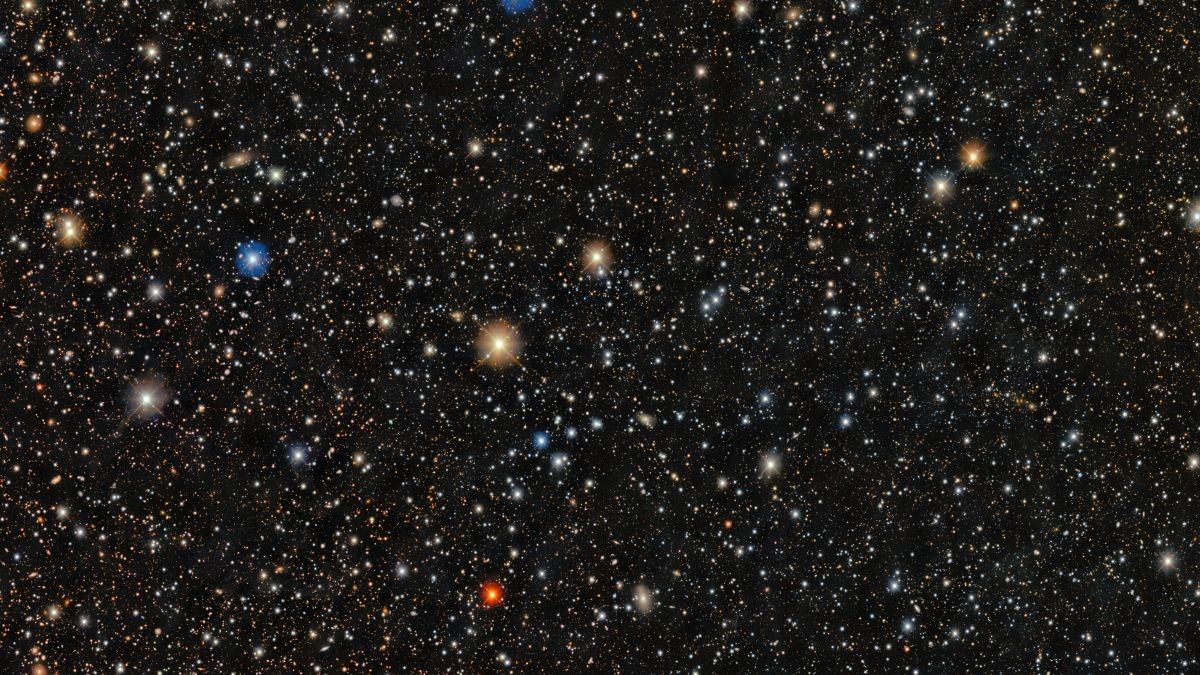
Astronomers have discovered an exceptionally rare star that appears to have formed directly from the remnants of the very first stars in the Universe. This finding provides unprecedented insight into the conditions of the early cosmos, just as the first stellar light began to pierce through the darkness.
The Quest for Population III Stars
For decades, scientists have been searching for Population III stars – the theoretical first generation of stars born from nearly pure hydrogen and helium. No such star has ever been directly observed, likely because these massive stars burned out quickly. Instead, researchers look for their descendants : Population II stars, which formed from gas enriched by the supernovae of those ancient progenitors.
PicII-503: A Window into the Primordial Universe
The newly identified star, PicII-503, is located in the fossil galaxy Pictor II, a dwarf galaxy orbiting the Milky Way. This galaxy is notable for its extreme age and lack of recent star formation, making it an ideal environment to find stars formed in the early Universe.
PicII-503 stands out because it contains the lowest iron abundance ever detected in a star outside the Milky Way. It has roughly 43,000 times less iron than our Sun, and 160,000 times less calcium. However, its carbon levels are extraordinarily high, suggesting it formed from the debris of a faint supernova that preferentially ejected lighter elements into space.
“Discovering a star that unambiguously preserves the heavy metals from the first stars was at the edge of what we thought possible,” says astrophysicist Anirudh Chiti.
Why This Matters
This discovery matters because it offers a rare glimpse into how the Universe transitioned from darkness to light. The first stars were crucial for forging heavier elements, which seeded subsequent generations of stars and eventually made life possible. Finding stars like PicII-503 helps scientists reconstruct the conditions of the early cosmos and understand the processes that shaped the galaxies we see today.
The low metal content and high carbon abundance of PicII-503 suggest that the star formed from a unique type of supernova—one that didn’t expel heavy metals efficiently. This also means that faint supernovae may have played an important role in the early Universe, as the elements would have remained bound to the star and its galaxy.
The Milky Way has consumed countless smaller galaxies over its lifetime, including those containing similar stars. Future observations of halo stars within our own galaxy may reveal more clues about the Universe’s earliest days.
This discovery provides a fundamental observation that ties together the origins of the first-star-enriched objects in primordial galaxies with those found in our own galactic halo.