A newly observed star within its original galaxy is providing crucial insights into the origins of carbon, a fundamental element for life. The star, designated PicII-503, resides in the dwarf galaxy Pictor II, a relic from the early universe formed over 10 billion years ago.
Stellar Archeology in Pictor II
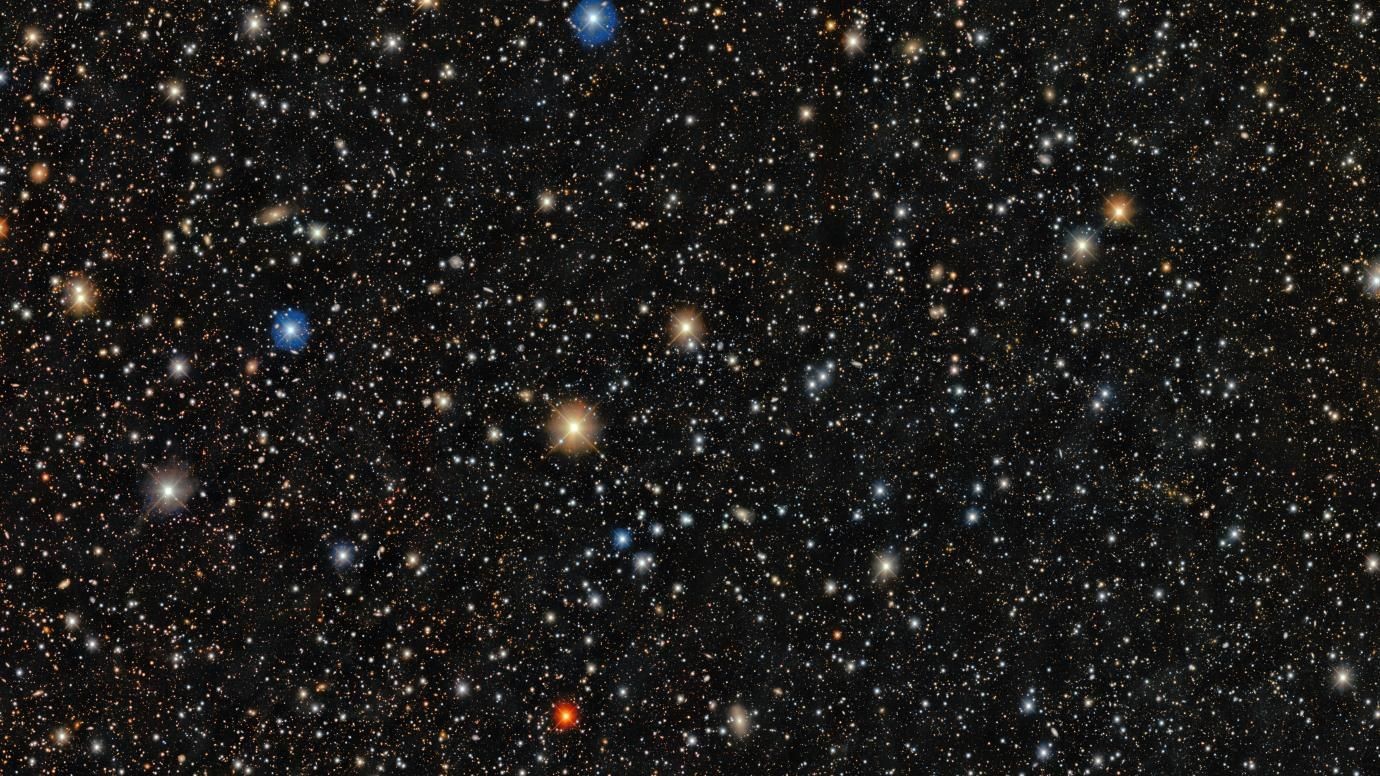
Captured by the Dark Energy Camera in Chile, the image reveals a field of ancient stars. What sets PicII-503 apart is its extreme age and composition. As a second-generation (Population II) star, it formed when the universe was young, before heavy elements were widespread. This means it’s almost entirely composed of hydrogen and helium, with a minuscule amount of iron – only 1/40,000th that of our sun.
The Carbon Anomaly
Despite its low iron content, PicII-503 is remarkably rich in carbon. Its carbon-to-iron ratio exceeds that of our sun by over 1,500 times. This unusual makeup has puzzled astronomers, who have long debated how carbon became so prevalent in the universe. Previous studies were hampered by observing stars that had migrated from their birthplaces, making it difficult to verify theories about their formation.
Supernova Evidence and Life’s Ingredients
Because PicII-503 remains in its original galaxy, researchers can now confirm a leading hypothesis: violent supernova explosions may selectively eject carbon further than other elements. This process could explain why carbon is so widely distributed throughout the cosmos, making it the ideal building block for life as we know it.
The star’s composition provides strong support for the idea that carbon’s abundance in the universe is a direct result of early stellar evolution and supernova events. This finding reinforces carbon’s role as a key ingredient in the emergence of life.