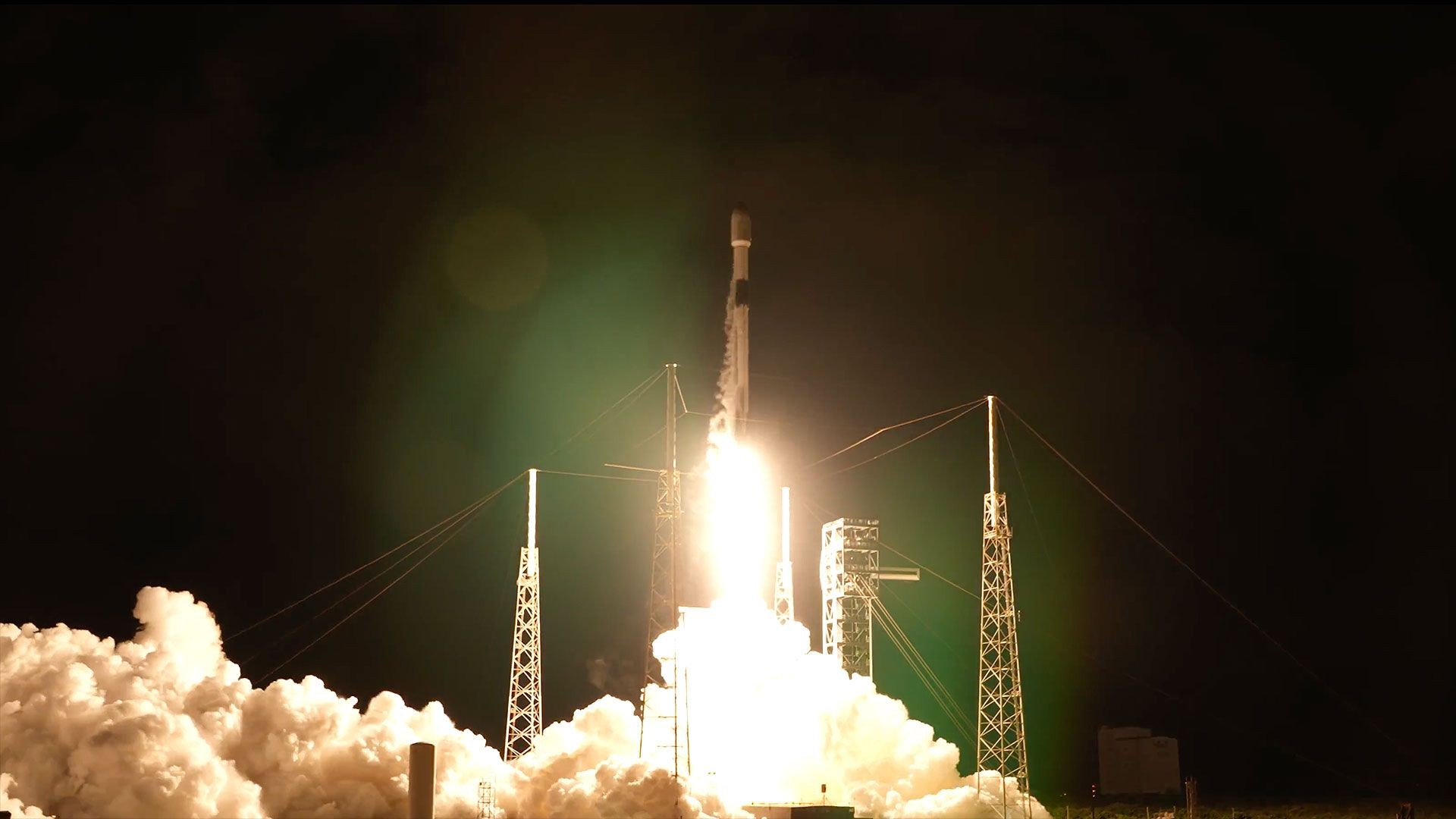
SpaceX successfully deployed another 29 Starlink satellites into orbit on Sunday, January 18th, further expanding its rapidly growing satellite internet network. The launch, conducted from Cape Canaveral Space Force Station in Florida at 6:31 p.m. EDT (2331 GMT), used a Falcon 9 rocket and marks the 24th reuse of a single Falcon 9 first-stage booster (B1080), demonstrating SpaceX’s cost-cutting and operational efficiency.
Payload Deployment and Booster Recovery
The Falcon 9’s upper stage reached its initial orbit roughly nine minutes after liftoff, with satellite deployment expected within an hour following a coast phase and a second engine burn. The booster, after separating from the upper stage, executed a controlled landing on the “A Shortfall of Gravitas” droneship stationed in the Atlantic Ocean.
Starlink Constellation Growth and Impact
With this launch, the total number of active Starlink satellites exceeds 9,500. This expansion is crucial as the network provides internet access to underserved areas worldwide, including regions with limited terrestrial infrastructure. Beyond residential use, Starlink now supports in-flight Wi-Fi for airlines and direct satellite-to-cell service through partnerships with mobile providers.
SpaceX Launch Cadence
This mission was SpaceX’s eighth launch of 2026 and its 591st Falcon 9 mission overall since 2010. The frequent launch cadence highlights SpaceX’s dominant position in the commercial space sector, driven by the demand for low-latency, high-bandwidth internet access.
The rapid deployment of Starlink satellites underscores a growing trend towards space-based internet solutions. As the need for connectivity increases globally, SpaceX’s model of reusable rockets and mass-produced satellites is reshaping the telecommunications landscape.