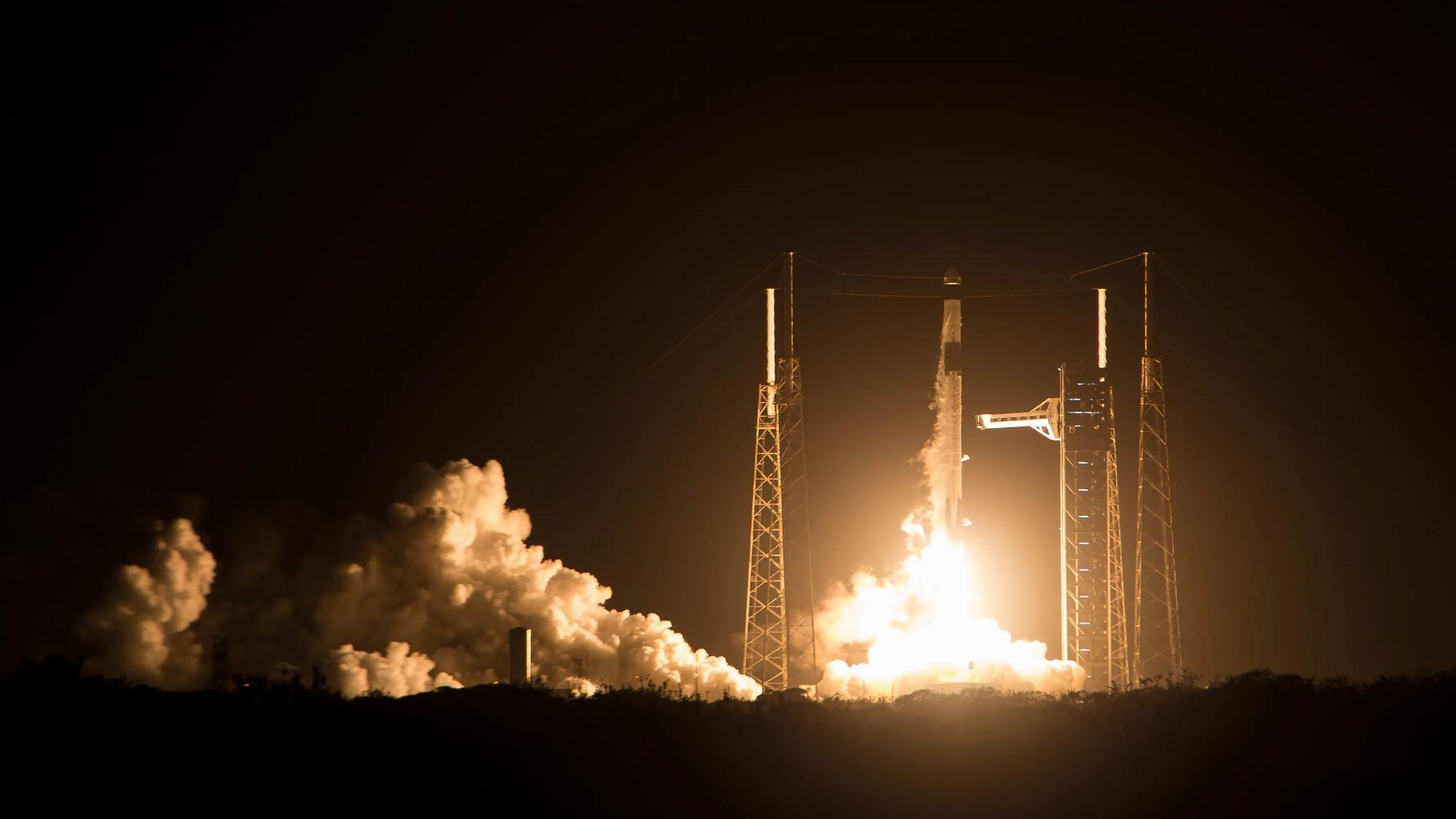
A SpaceX Crew Dragon spacecraft has successfully delivered four astronauts to the International Space Station (ISS), bolstering a crew depleted by a recent medical emergency. The launch, which occurred at 5:15 a.m. EST on February 13th from Cape Canaveral Space Force Station, marks the latest in a series of rapid astronaut rotations that have become standard for the ISS.
Medical Evacuation and Crew Rotation
The Crew-12 mission arrives as the ISS operates with a reduced staff following the unprecedented medical evacuation of an unnamed astronaut from the Crew-11 mission in January. NASA has not publicly disclosed details, citing privacy, but the incident highlights the inherent risks of long-duration spaceflight and the importance of contingency planning. The quick turnaround for Crew-12 demonstrates SpaceX’s ability to maintain a consistent flow of personnel to the orbital laboratory.
Falcon 9 Reliability and Launch Pad Changes
The launch was briefly delayed due to unfavorable weather conditions, but ultimately proceeded without issue. The Falcon 9 rocket, which powered the mission, was cleared for flight by the Federal Aviation Administration (FAA) after a minor anomaly with a Starlink mission earlier in February. SpaceX officials emphasized that the Starlink issue – involving an upper-stage deorbit failure – was unrelated to crewed missions, as Crew Dragon flights do not require the same complex engine burn sequence.
The Crew-12 launch also utilized SpaceX’s Landing Zone-40 (LZ-40) for booster recovery, a shift from the company’s primary launch site at Kennedy Space Center’s Launch Complex-39A (LC-39A). This change is due to ongoing construction at LC-39A in preparation for SpaceX’s Starship program.
Mission Objectives and Crew Experience
The four astronauts – NASA’s Jessica Meir and Jack Hathaway, ESA’s Sophie Adenot, and Roscosmos’ Andrey Fedyaev – will spend approximately eight months aboard the ISS. Their tasks include ongoing microgravity research, station maintenance, and two previously scheduled spacewalks. Astronaut Adenot is the first from her ESA class to reach orbit, marking a milestone for the agency’s human spaceflight program.
The mission’s duration extends beyond the typical six-month rotation, allowing for flexibility in research schedules and potential adjustments following the recent medical emergency. The Crew-12 capsule, Freedom, is set to dock with the ISS’s Harmony module around 3:15 p.m. EST on February 14th.
This launch underscores the growing reliance on commercial space providers like SpaceX to sustain human presence in low Earth orbit. The rapid pace of crew rotations and the ability to respond quickly to unforeseen events, such as medical emergencies, are vital for the ISS’s continued operation.