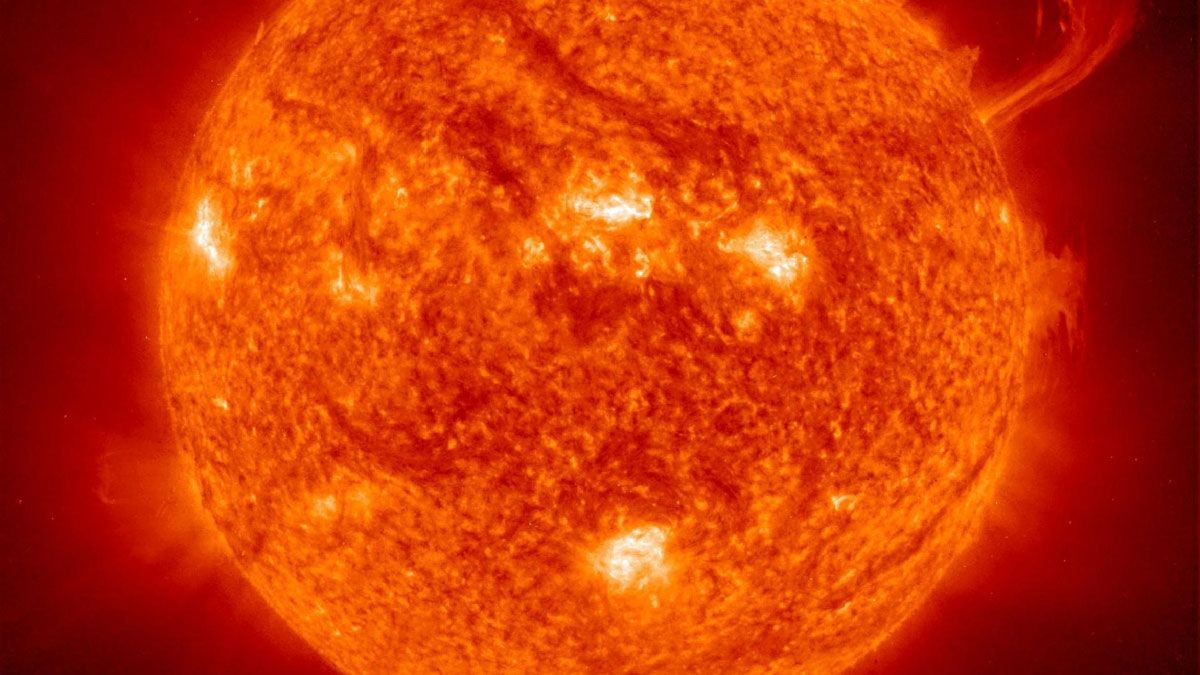
New observations from the European Space Agency’s (ESA) Solar Orbiter mission have revealed that solar flares, powerful bursts of energy from the sun, are triggered by cascading magnetic avalanches. This discovery provides unprecedented clarity on how our star releases energy in the form of high-energy radiation, including ultraviolet light and X-rays. The findings were published alongside detailed observational data from a medium-class flare captured on September 30, 2024.
The Threat to Earth
Solar flares can lead to coronal mass ejections (CMEs), which are vast plumes of plasma ejected from the sun’s corona. If these CMEs intersect with Earth’s orbit, they can cause geomagnetic storms, disrupting satellite operations, damaging power grids, and interfering with communications systems. Although such events are rare, the potential for widespread disruption makes understanding flare origins crucial for predictive capabilities.
How Solar Flares Work: A Step-by-Step Process
The ESA Solar Orbiter witnessed the build-up to a medium-class flare in detail. The process unfolded over 40 minutes, beginning with small magnetic instabilities that quickly escalated. Scientists observed how magnetic field lines became increasingly taut and snapped, releasing energy in a chain reaction akin to an avalanche on a mountainside.
Specifically, Solar Orbiter’s instruments detected the following key stages:
- Magnetic Instability: An arching filament of magnetic fields began to grow unstable, with field lines snapping and reconnecting.
- Avalanche Ignition: These initial reconnection events triggered a cascade of increasingly powerful releases, appearing as bursts of light.
- Filament Detachment: The filament detached from its anchor point on the sun, driven by the solar wind.
- Flare Culmination: The cascade culminated in a medium-class flare, with X-ray levels rising dramatically and charged particles accelerating to nearly half the speed of light.
- Post-Flare Cooling: After peak energy was reached, the magnetic region relaxed, plasma cooled, and particle emission subsided.
Why This Matters: Refining Flare Prediction
The research team was surprised to discover that a large flare could be driven by a series of smaller reconnection events. The study suggests that all flares may not be the result of single, powerful eruptions but rather the culmination of these cascading disturbances.
“These minutes before the flare are extremely important, and Solar Orbiter gave us a window right into the foot of the flare where this avalanche process began,” said Pradeep Chitta, the lead researcher.
Beyond Our Sun: Implications for Stellar Physics
The avalanche model had previously been proposed to explain the collective behavior of many flares, but this is the first time it’s been observed in a single event with such clarity. This discovery raises new questions: do all solar flares operate this way? And if so, does the same mechanism apply to flares on other stars, particularly red dwarfs, which are known for their frequent and powerful flares?
The ESA Solar Orbiter observations provide a major step forward in understanding how flares work. Further research will be required to determine whether the avalanche model is universal, but this discovery has already changed how scientists view the sun’s most energetic events.
The findings underscore the importance of continued solar observation for improving space weather forecasting and protecting critical infrastructure from the harmful effects of solar flares.