Earth experienced a deep freeze approximately 717 million years ago, plunging into what scientists call a “Snowball Earth” event. Ice sheets expanded from the poles to the equator, blanketing the planet in glaciers and leaving behind dark, subglacial seas deprived of sunlight. Recent research published in Nature Communications has revealed just how frigid these ancient oceans were: an estimated −15°C ± 7°C, potentially making this the coldest sea temperature ever measured in Earth’s history.
The Puzzle of Sub-Freezing Water
For seawater to remain liquid at such low temperatures, it had to be exceptionally salty. The study suggests that during the Sturtian snowball glaciation (which lasted 57 million years), some pockets of seawater could have been up to four times saltier than modern oceans. This extreme salinity prevented complete freezing, similar to the super-salty, sub-zero brines found today in Antarctica’s Lake Vida.
This discovery matters because it helps us understand the conditions under which early life persisted through extreme climate shifts. The intense cold and salinity would have created a harsh environment, yet life found a way to survive in isolated pockets. It also raises questions about the interplay between glaciation, ocean chemistry, and the evolution of early ecosystems.
How Scientists Measured Ancient Temperatures
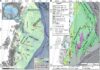
The team behind the research devised a novel method to reconstruct past sea temperatures by analyzing ancient iron formations. These formations accumulate when dissolved iron in water reacts with oxygen, forming rust. The isotopic composition of iron changes depending on temperature: colder water results in heavier isotopes.
By comparing the isotopic signature of iron in snowball Earth formations with older, pre-oxygenated iron deposits, scientists calculated that the ancient seas were roughly 40°C colder than those conditions. This innovative approach allows researchers to extract climate data from rocks that are billions of years old.
Salinity as a Key Factor
The study also confirmed extremely high salinity levels. Independent analyses of sediments from Australia support the finding that snowball Earth brines were incredibly concentrated. This high salt content, combined with the extreme cold, would have created a unique environment where life could potentially survive in isolated pockets.
“It was very cool to get the additional confirmation it was actually very, very cold,” says Jochen Brocks of the Australian National University, whose previous work corroborates the new findings.
The combination of extreme cold and high salinity is significant because it highlights the resilience of life in the face of catastrophic climate events. Understanding these conditions can help us better assess the habitability of other planets and the potential for life to exist in extreme environments elsewhere in the universe.
These findings confirm that Snowball Earth was a truly alien world, with oceans far colder and saltier than anything we see today. The research adds another piece to the puzzle of Earth’s turbulent past, reminding us that our planet has undergone dramatic transformations throughout its history.