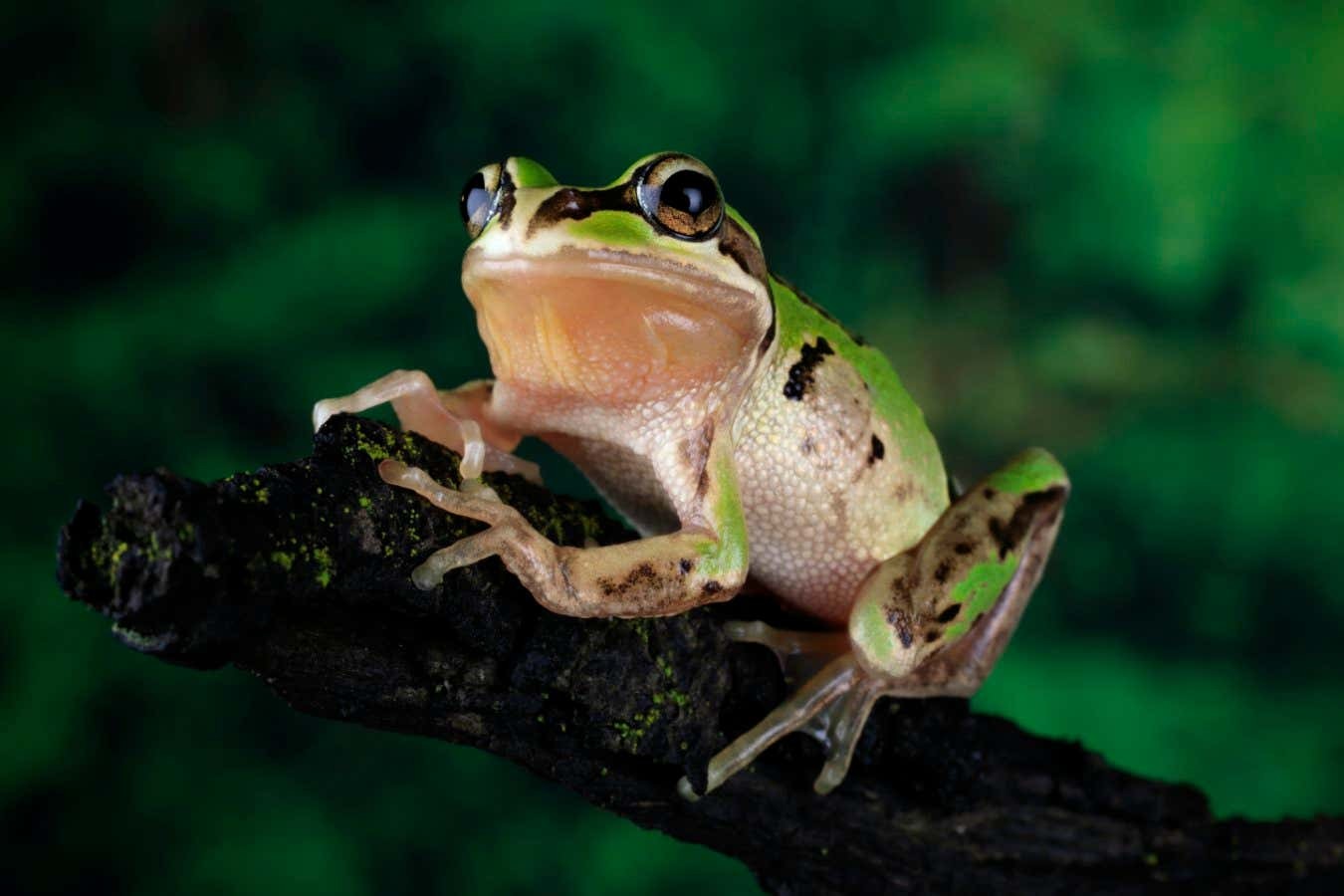
A deadly fungal pandemic ravaging amphibian populations is driving a bizarre adaptation in one Australian frog species: infected frogs are jumping nearly 25% farther than healthy ones. This seemingly paradoxical boost in athletic performance may be a desperate evolutionary response to maximize mating opportunities before the fungus proves fatal.
The Chytrid Fungus and Global Amphibian Decline
The pathogen Batrachochytrium dendrobatidis (Bd), or chytrid fungus, has triggered a global decline in amphibian populations, with some species facing extinction. The fungus attacks the skin, disrupting electrolyte balance and ultimately killing the host. While most infected amphibians experience a debilitating drain on energy, some species exhibit unexpected physiological changes.
Alpine Tree Frogs and the “Super Jump” Effect
Researchers at the University of Melbourne studied Litoria verreauxii alpina, or Verreaux’s alpine tree frogs, to understand how Bd infection affects their physical performance. The study divided 60 frogs into infected and uninfected groups and tracked their jumping distance over six weeks.
The results were surprising : infected frogs consistently leapt almost a quarter farther than their healthy counterparts. This “super jump” isn’t a sign of improved health; rather, it’s believed to be a last-ditch effort to find a mate before the fungus overwhelms the frog’s system. Other infected frogs increase vocalizations to attract mates, and this enhanced mobility could serve the same purpose.
The Fungus’s Perspective: Facilitating Transmission
Experts suggest that Bd may even benefit from this adaptation. Increased movement aids fungal transmission, extending its survival within the host population. This highlights how pathogens can manipulate host behavior to their own advantage.
Conservation Implications and Ongoing Research
The interaction between Bd and its hosts is complex, varying by species and environment. While some frogs show temporary resilience, most succumb to the infection once clinical signs appear. Scientists emphasize the urgency of understanding these dynamics to mitigate the spread of Bd and protect vulnerable amphibian populations.
“All we can do is learn as much as we can to help species survive and to slow or stop the spread of Bd before it’s too late,” says Alexander Wendt, lead researcher on the study.
The alpine tree frog’s desperate leap underscores the brutal efficiency of natural selection. Even in the face of a deadly pandemic, life finds a way—however fleeting—to perpetuate itself.