Eight centuries before modern astrophysics, a Dominican friar at Oxford University, Richard Fishacre, accurately deduced that planets and stars share the same material composition as Earth. His work challenged the prevailing Aristotelian belief in a distinct “fifth element” forming celestial bodies—a concept widely accepted at the time.
Challenging Ancient Dogma
For centuries prior to Fishacre’s insights, European science held that the terrestrial realm was built from four core elements: fire, water, earth, and air. The heavens, however, were thought to consist of a separate, perfect, and transparent “quintessence” untouched by earthly decay. This belief stemmed from philosophical tradition rather than empirical observation.
Fishacre’s Breakthrough
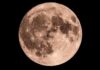
Fishacre reasoned that if celestial bodies truly consisted of this ethereal fifth element, they would appear transparent to the naked eye. Instead, he observed distinct colors: the red hue of Mars, the yellow glow of Venus, and the blues and whites of the Moon. He argued these colors proved that stars and planets were not made of a uniform, transparent substance but rather a mixture of elements found on Earth.
His argument relied on a basic understanding of how light interacts with matter. The visible colors indicated material composition, a principle that would later underpin spectral analysis in modern astronomy.
Historical Reception
Fishacre’s ideas were met with resistance in his time. The entrenched philosophical framework of the day did not easily accommodate his findings. Yet, his reasoning was sound, and centuries later, spectroscopy confirmed his suspicions: planetary atmospheres are composed of elements like hydrogen, helium, carbon, and oxygen—the same found on Earth.
Fishacre’s work demonstrates how early scientific inquiry, even within the constraints of ancient thought, could arrive at correct conclusions through careful observation and logical deduction.
His forgotten contribution serves as a reminder that scientific progress isn’t always linear, and even medieval scholars could anticipate modern discoveries with startling accuracy.