


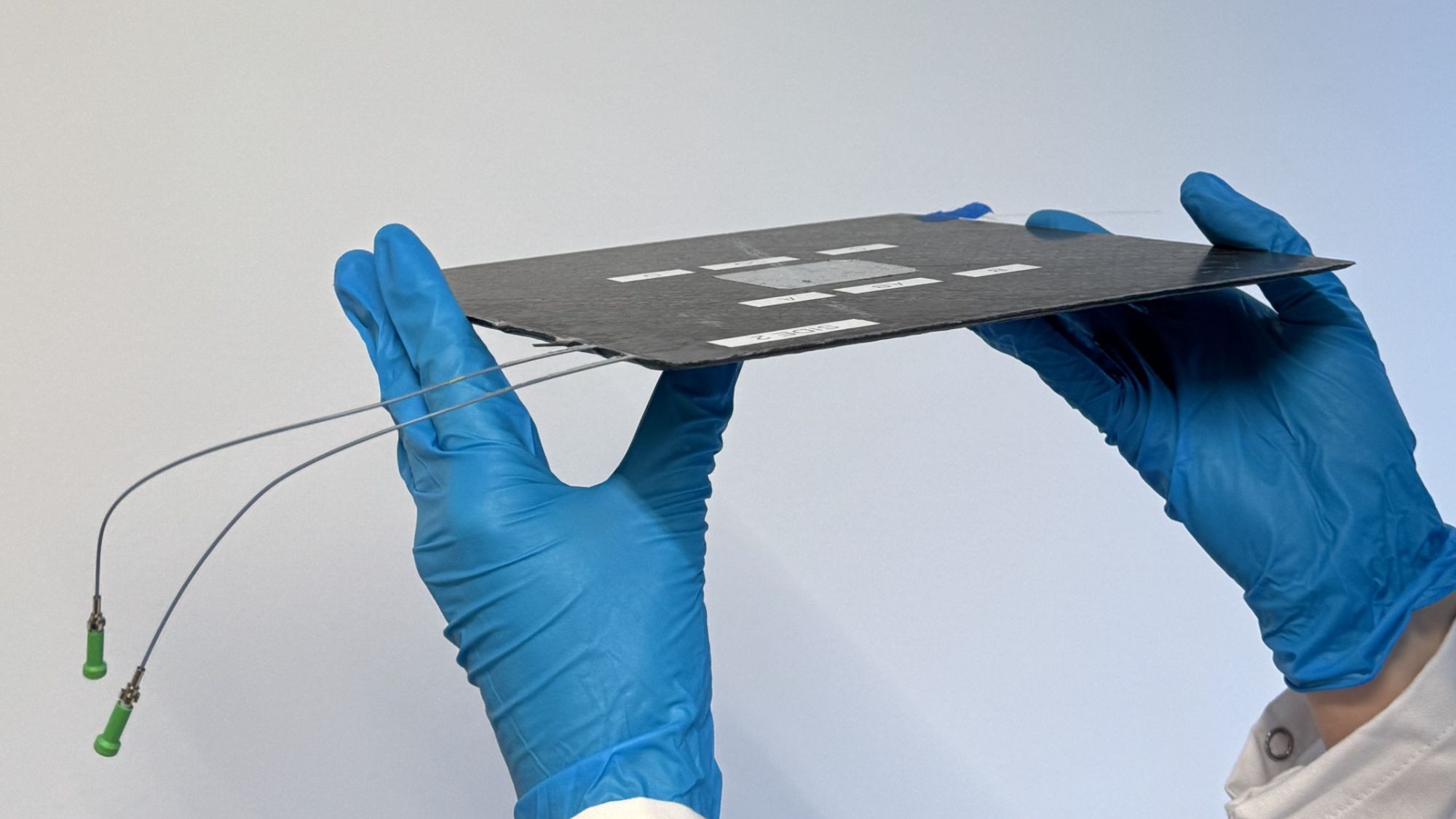
Future spacecraft may soon be capable of autonomously detecting and repairing structural damage while in orbit, thanks to innovative self-healing materials developed under a European Space Agency (ESA) program. This capability could significantly reduce mission costs and extend the lifespan of reusable launch vehicles, marking a major step forward in space infrastructure.
The Problem of Spacecraft Damage
Spacecraft endure extreme conditions: launch vibrations, temperature fluctuations, and long-term structural stress. Carbon-fiber composites, commonly used in spacecraft construction due to their strength and lightweight properties, are still susceptible to microscopic cracks over time. Traditional repair methods are costly, time-consuming, and often impossible to perform in orbit. This limitation hinders long-duration missions and the viability of fully reusable spacecraft.
Project Cassandra: Autonomous Sensing and Repair
The ESA-backed Project Cassandra, involving Swiss companies CompPair and CSEM, and Belgian firm Com&Sens, introduces a solution: a composite material called HealTech. This material integrates damage detection, heating elements, and self-healing properties into a single system.
- Damage Detection: Fiber-optic sensors embedded within the composite continuously monitor for cracks or defects.
- Automated Repair: Once damage is identified, lightweight 3D-printed aluminum grids distribute heat to the affected area (between 100-140°C). This activates a healing agent embedded within the carbon-fiber layers.
- Self-Healing Process: Heat softens the composite, allowing the healing agent to flow into cracks, bonding damaged areas and restoring structural strength.
Testing and Future Applications
Prototype structures, up to 40 centimeters wide, have already demonstrated successful crack detection, precise heating, and structural restoration. Researchers are now scaling up the technology for larger components, including cryogenic fuel tanks – a critical area where extreme temperature swings pose ongoing maintenance challenges.
The potential impact is substantial: reusable space transportation systems could benefit from reduced inspection times, lower maintenance costs, and extended component lifespans. Beyond reusability, HealTech could also prove valuable for spacecraft parts exposed to harsh conditions, such as propellant tanks.
“This makes them suited to the demanding requirements of propellant tanks and reusable space structures and paves the way for lighter, more maintainable spacecraft components,” says Cecilia Scazzoli, head of research and development for CompPair.
The development of self-healing materials represents a significant advancement in space technology, potentially enabling more resilient, cost-effective, and sustainable space missions.


