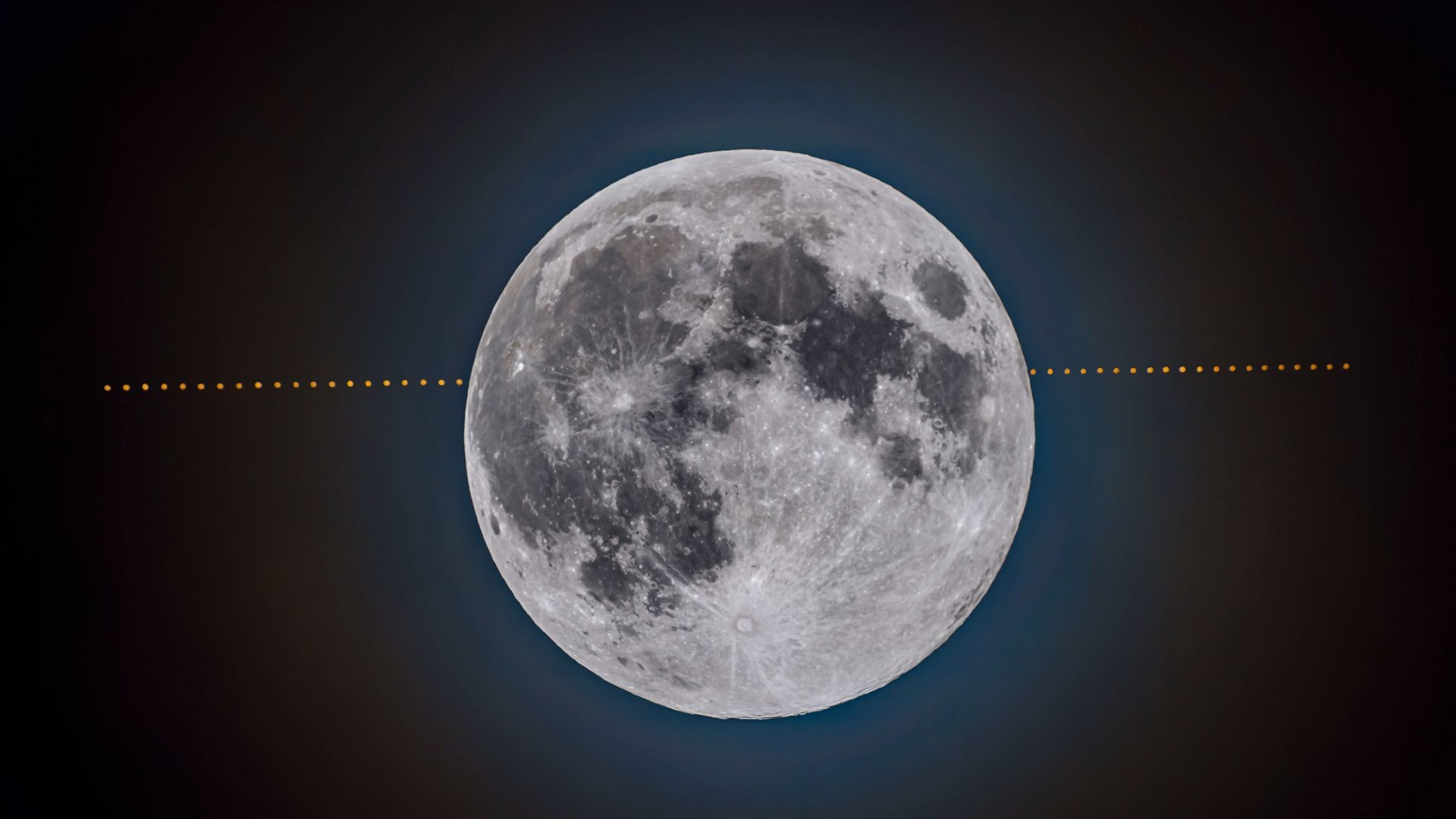
On the night of February 2, 2026, skywatchers across parts of North America and northwest Africa will witness a captivating astronomical event: the moon will pass directly in front of Regulus, the brightest star in the constellation Leo. This phenomenon, known as a lunar occultation, will cause Regulus to momentarily disappear from view before reappearing shortly after.
Understanding Lunar Occultations
A lunar occultation happens when the moon moves between Earth and another celestial object, temporarily blocking it from our sight. This is a natural consequence of the moon’s orbit and its apparent size in the sky. Regulus, also called Alpha Leonis, is a particularly notable star: it’s hotter and younger than our sun, but relatively close at 79 light-years away. Its name means “Little King” in Latin, and it marks the heart of the lion in Leo, a constellation prominent in the spring sky.
The event is easily visible with the naked eye, though binoculars or a telescope will enhance the experience. Even if you aren’t within the precise path where Regulus vanishes and reappears, a close conjunction between the moon and the star will be visible from much of the world.
When and Where to Watch
The event’s timing varies by location. Here are some sample times for major cities:
- New York City: Disappearance at 8:51 p.m. EST, reappearance at 9:54 p.m. EST
- Washington D.C.: Disappearance at 8:51 p.m. EST, reappearance at 9:48 p.m. EST
- Boston: Disappearance at 8:53 p.m. EST, reappearance at 10:00 p.m. EST
- Chicago: Disappearance at 7:43 p.m. CST, reappearance at 8:42 p.m. CST
- Denver: Disappearance at 6:40 p.m. MST, reappearance at 7:34 p.m. MST
Eastern North America, select parts of Africa (Morocco, Algeria, Spain, and Portugal), and extreme southwestern Europe will have the best views.
Why This Matters
Occultations are relatively common events, but they are not random. Regulus sits near the ecliptic – the apparent path of the sun, moon, and planets across the sky – making occultations inevitable. Other bright stars on the ecliptic, like Spica, Aldebaran, and Antares, also undergo similar alignments.
The moon is currently in a cycle of occulting Regulus, which began in July 2025 and will continue through December 2026. The February 2, 2026, occultation is considered the most favorable for North American observers in this series. These cycles recur roughly every 18 months, with the next series beginning in 2035. Observing these events provides valuable data for refining our understanding of celestial mechanics and lunar orbit.
This alignment is a reminder of the dynamic interplay between Earth, the moon, and the stars, a spectacle that has fascinated observers for millennia.