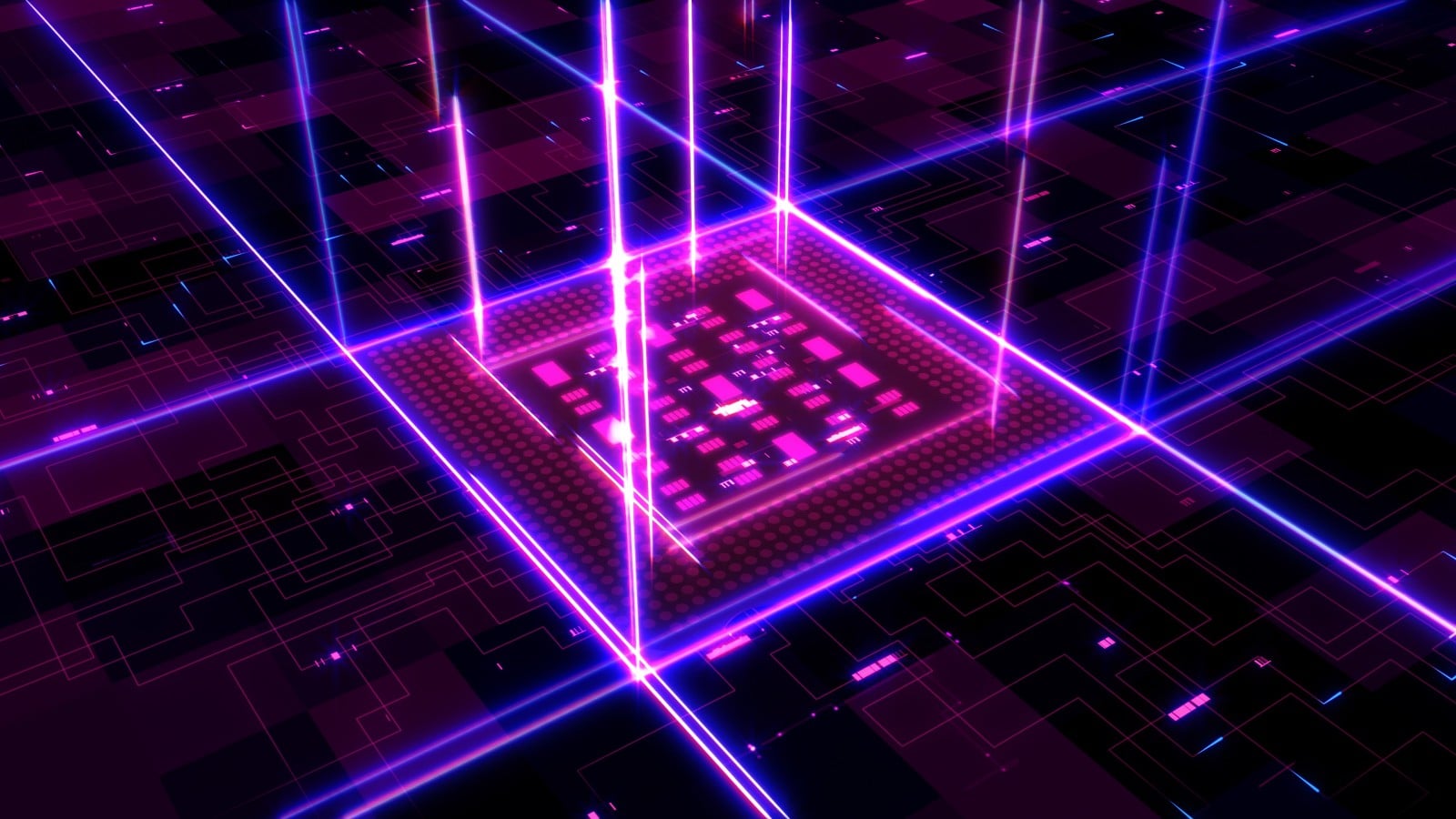
Researchers at Silicon Quantum Computing (SQC) have unveiled a new quantum computing chip that boasts unprecedented accuracy, marking a significant step towards practical quantum computation. The achievement stems from a novel silicon-based architecture, dubbed “14/15,” which leverages the unique properties of phosphorus atoms embedded within silicon wafers. This approach bypasses challenges faced by other quantum platforms, such as superconducting or trapped-ion systems, by minimizing error rates at the fundamental qubit level.
The 14/15 Architecture: A New Approach to Qubit Stability
The core innovation lies in the precision with which these qubits are fabricated. Unlike traditional silicon chip manufacturing, SQC’s process creates qubits at the atomic scale—a feature size of just 0.13 nanometers. This level of precision dramatically reduces instability and errors that plague other systems, where qubits are more susceptible to external disturbances.
The key advantage is efficiency: because fewer errors occur in the first place, less overhead is needed for error correction. This translates to a more streamlined and scalable system.
Record-Breaking Fidelity Rates
SQC’s chip has demonstrated fidelity rates between 99.5% and 99.99% in a nine-nuclear qubit and two-atomic qubit computer. These results, published in Nature on December 17th, represent the first successful demonstration of atomic, silicon-based quantum computing across separate clusters. Fidelity rates measure how well error-correction techniques work, and SQC’s numbers are state-of-the-art for its architecture.
While other projects boast higher qubit counts, SQC’s approach focuses on quality over quantity. This is because scalability is built into the design: the 14/15 architecture theoretically allows for millions of functional qubits without the exponential error growth seen in competing platforms.
Why This Matters: The Race to Fault Tolerance
Quantum computing relies on maintaining fragile quantum states (superposition) long enough to perform calculations. Errors inevitably occur due to environmental noise, causing qubits to collapse and lose information. This is why error correction is crucial, but it comes at a cost: dedicating additional qubits to check and mitigate errors.
SQC’s architecture minimizes these errors at the source, reducing the need for extensive error correction. This is a game-changer because as qubit counts increase, so does the overhead required for error correction. By lowering the baseline error rate, SQC reduces that burden, making large-scale quantum computers more feasible.
Beating the Benchmark: Grover’s Algorithm
The industry standard for testing quantum computing performance is Grover’s algorithm, a search function designed to demonstrate quantum advantage over classical computers. SQC achieved a fidelity rate of 98.9% on Grover’s algorithm without error correction—surpassing results from IBM and Google, which still rely on error mitigation even with larger qubit counts.
This indicates that SQC’s qubits are inherently more stable, requiring less computational power to maintain coherence. While infrastructure challenges remain, the team believes their platform is poised to scale to millions of qubits while minimizing power consumption and physical system size.
The development of this chip is a pivotal step in making quantum computing a reality, not just a theoretical possibility. By prioritizing accuracy over brute-force qubit scaling, SQC is paving the way for fault-tolerant QPUs that could revolutionize fields like medicine, materials science, and artificial intelligence.