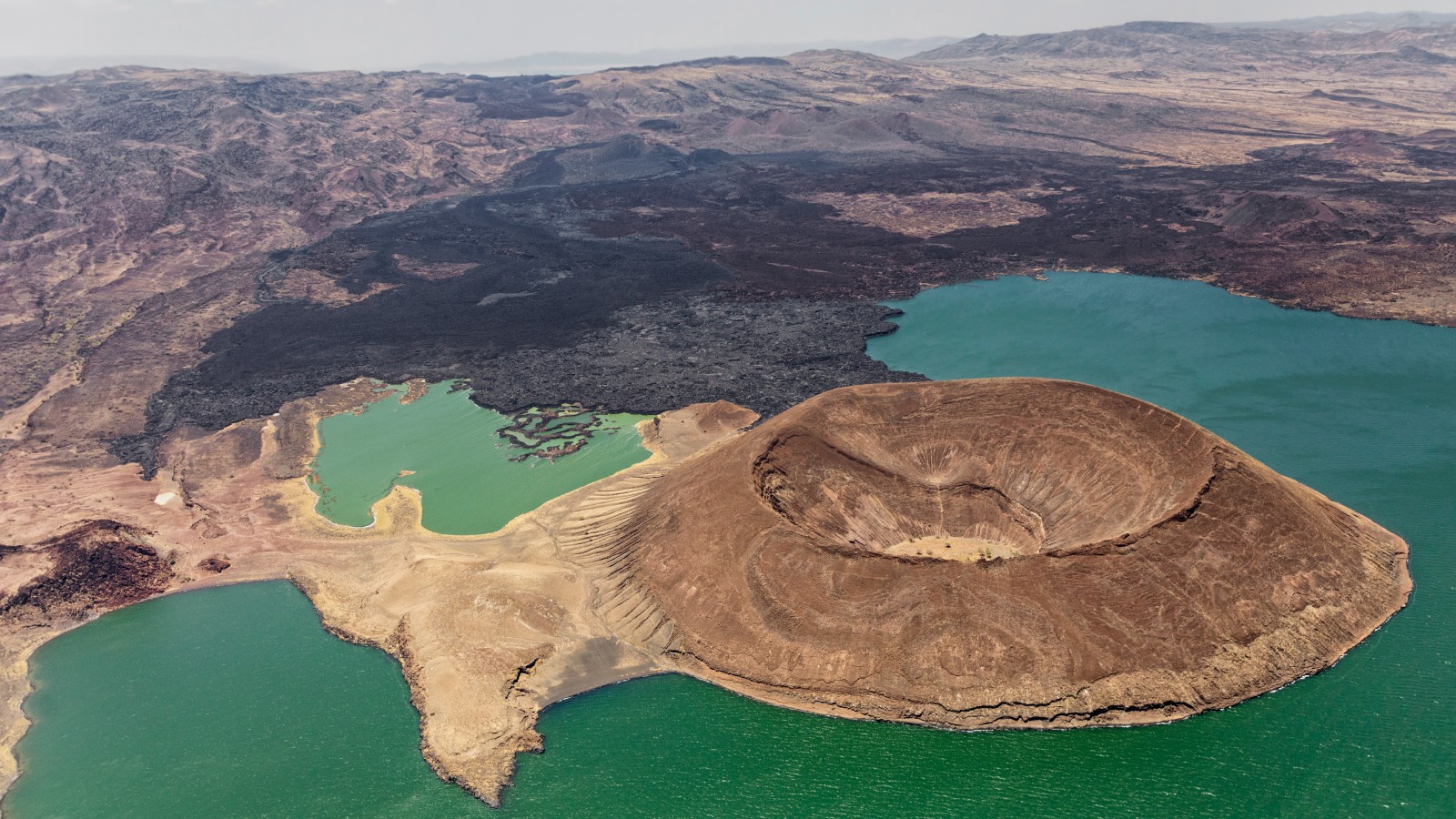
East Africa is splitting apart at an increasing rate, and new research suggests this isn’t just a geological process – it’s being directly influenced by the region’s drying climate. A study published in Scientific Reports reveals a clear link between declining lake levels over the last 5,000 years and the acceleration of tectonic activity along the East African Rift Zone.
The Two-Way Relationship Between Climate and Plate Tectonics
For decades, scientists assumed tectonic forces shape climate: mountain building alters rainfall patterns, for example. However, this research demonstrates the inverse is also true. Changes in water weight and underground pressure caused by climate shifts directly impact how quickly continents move.
The study focused on Lake Turkana in Kenya, which was once 500 feet deeper during the wetter African Humid Period (roughly 9,600 to 5,300 years ago). By analyzing ancient lakebed sediments, researchers found that as the climate dried out and water levels dropped, fault lines around the lake began moving faster.
How Drying Lakes Speed Up Continental Drift
The effect is measurable: faults now move an extra 0.007 inches (0.17 millimeters) faster per year. While Africa is already rifting apart at 0.25 inches (6.35 millimeters) annually, this acceleration isn’t insignificant. The process works in two key ways:
- Reduced Pressure: Less water means less weight on the Earth’s crust. This allows fault lines to move more freely, like loosening a vise on two slabs of rock.
- Volcanic Activity: The drying climate also decompresses the mantle beneath a volcano on Lake Turkana’s south side. This decompression causes more magma to melt and inflate the volcano’s chamber, increasing tectonic stress on nearby faults.
Long-Term Implications and Future Research
The findings suggest that earthquake activity in the region is likely more pronounced now than it was 8,000 years ago. This isn’t just a theoretical concern; East Africa’s rifting process will eventually split the continent into two plates with a new ocean forming in between.
Researchers are now expanding their studies to Lake Malawi, analyzing water level changes dating back 1.4 million years to gain a broader understanding of how climate and continental separation interact over geological time. This research underscores that plate tectonics isn’t just a slow, internal Earth process – it’s actively influenced by surface conditions, particularly the availability of water.
The study proves that climate isn’t just a result of geological activity; it’s also a driver of it, with implications for understanding continental drift and seismic activity in East Africa and beyond.