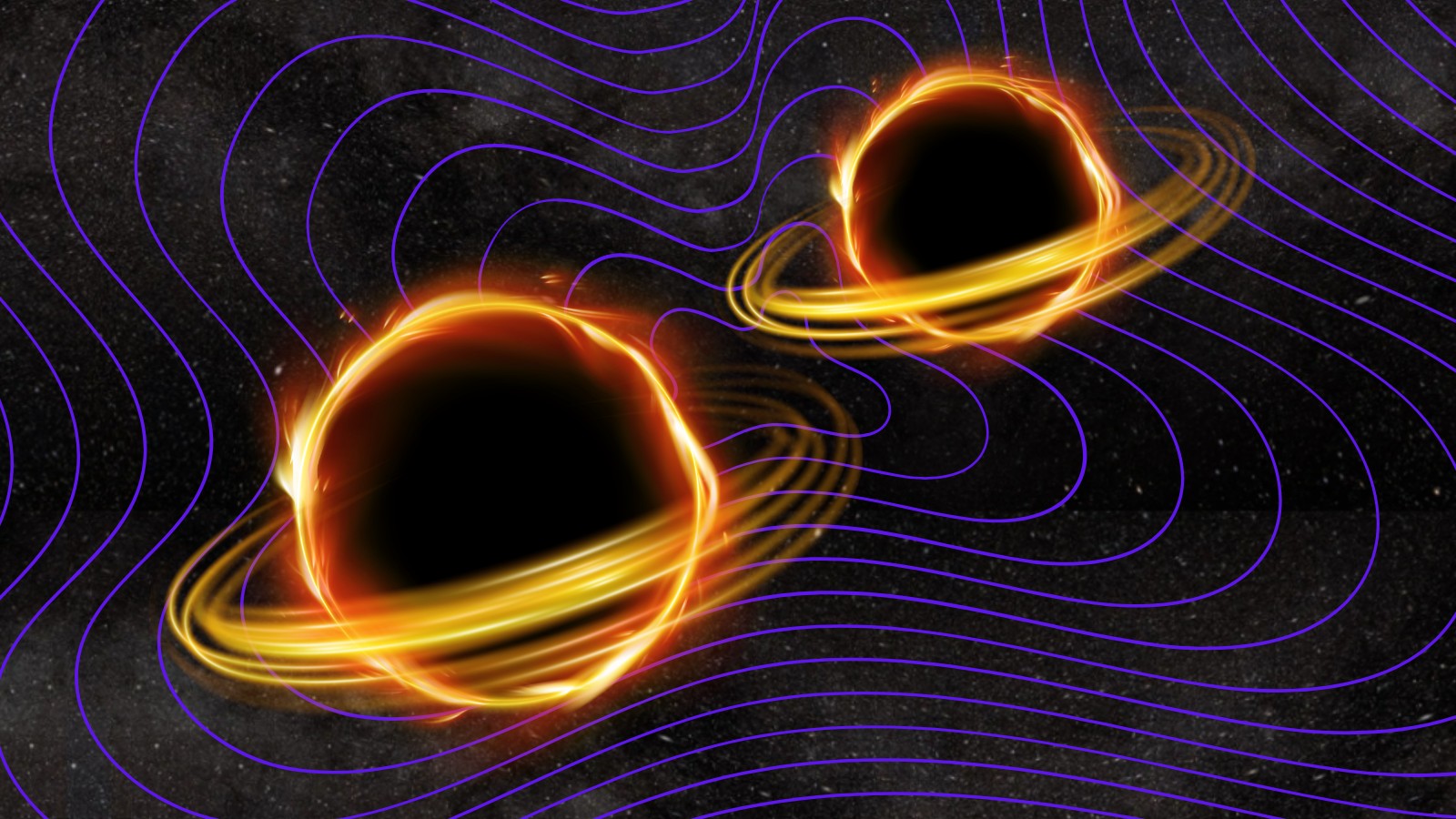
Scientists have doubled the known number of extreme cosmic events detected through gravitational waves, offering an unprecedented look into the most violent collisions in the universe. The latest catalog, GWTC-4, released by the LIGO-Virgo-KAGRA (LVK) Collaboration, now includes 128 confirmed detections of black holes and neutron stars colliding, nearly doubling the previous count of 90. This means we’re now “hearing” the universe in a whole new way.
The Breakthrough: Ripples in Spacetime
The existence of these ripples – distortions in the fabric of space and time – was first predicted by Albert Einstein in 1915. It took another century for technology to catch up. In 2015, the Laser Interferometer Gravitational-Wave Observatory (LIGO) made the first direct detection, originating from a black hole merger 1.3 billion light-years away. Since then, detectors in Italy (Virgo) and Japan (KAGRA) have joined the hunt, revealing a universe teeming with these cataclysmic events.
Why this matters: Gravitational waves are unique because they carry information about collisions that light cannot. Light can be bent, blocked, or distorted. Gravitational waves pass through almost everything, giving us a direct view of the most extreme phenomena in the cosmos.
What’s New in GWTC-4
This latest dataset, compiled from observations between May 2023 and January 2024, is notable for its diversity :
- Heavier Black Holes: The catalog includes the heaviest black hole binaries ever observed, each roughly 130 times the mass of our Sun.
- Uneven Mergers: Some collisions involve black holes with wildly different sizes, suggesting complex formation histories.
- Extreme Spins: Several black holes are spinning at up to 40% the speed of light – evidence of prior collisions and the possibility of “merger chains” where black holes grow through repeated mergers.
- Mixed Mergers: Two new events involve collisions between black holes and neutron stars.
The increased sensitivity of the LVK detectors is allowing scientists to detect events up to 10 billion light-years away. This allows for rigorous tests of Einstein’s theory of general relativity, which continues to hold up under these extreme conditions.
Implications for Astrophysics
“This dataset has increased our belief that black holes that collided earlier in the history of the universe could more easily have had larger spins than the ones that collided later,” says LVK member Salvatore Vitale of MIT.
The data also suggest that black holes may grow through multiple mergers, forming even more massive entities over cosmic time. These observations are providing insights into how black holes form from collapsing stars, how they evolve, and how they influence the structure of the universe.
“We are expanding into new parts of what we call ‘parameter space’ and a whole new variety of black holes,” explains LVK member Daniel Williams of the University of Glasgow. “We are really pushing the edges, and are seeing things that are more massive, spinning faster, and are more astrophysically interesting and unusual.”
The results from this catalog will soon be published in the Astrophysical Journal Letters. The continued refinement of these detection methods promises even more revelations about the universe’s most violent and mysterious events.