BREMEN, Germany – A German astronaut will be the first European to travel beyond Earth orbit and reach the Moon as part of a future NASA-led Artemis mission, the European Space Agency (ESA) confirmed on Thursday, November 27th, at the ESA Ministerial Council in Bremen. This milestone represents a significant step forward for European space exploration, secured through Germany’s substantial financial contributions to the ESA and its critical role in building key components for the Artemis program.
Europe’s Investment in Lunar Missions
Germany is the largest financial contributor to the ESA, and its Airbus factory in Bremen is responsible for assembling the European Service Module (ESM). The ESM is essential for the Orion spacecraft, providing vital functions such as propulsion, power, and life support during lunar missions. Beyond the ESM, European nations – specifically France and Italy – are also constructing elements for the Lunar Gateway, a planned space station orbiting the Moon set to be operational by 2027.
The ESA secured three astronaut seats on Artemis missions in exchange for these contributions. Director General Josef Aschbacher stated that the first flight beyond low Earth orbit will be “a huge inspiration and source of pride for their country and for Europe at large.”
The Contenders for Artemis 4
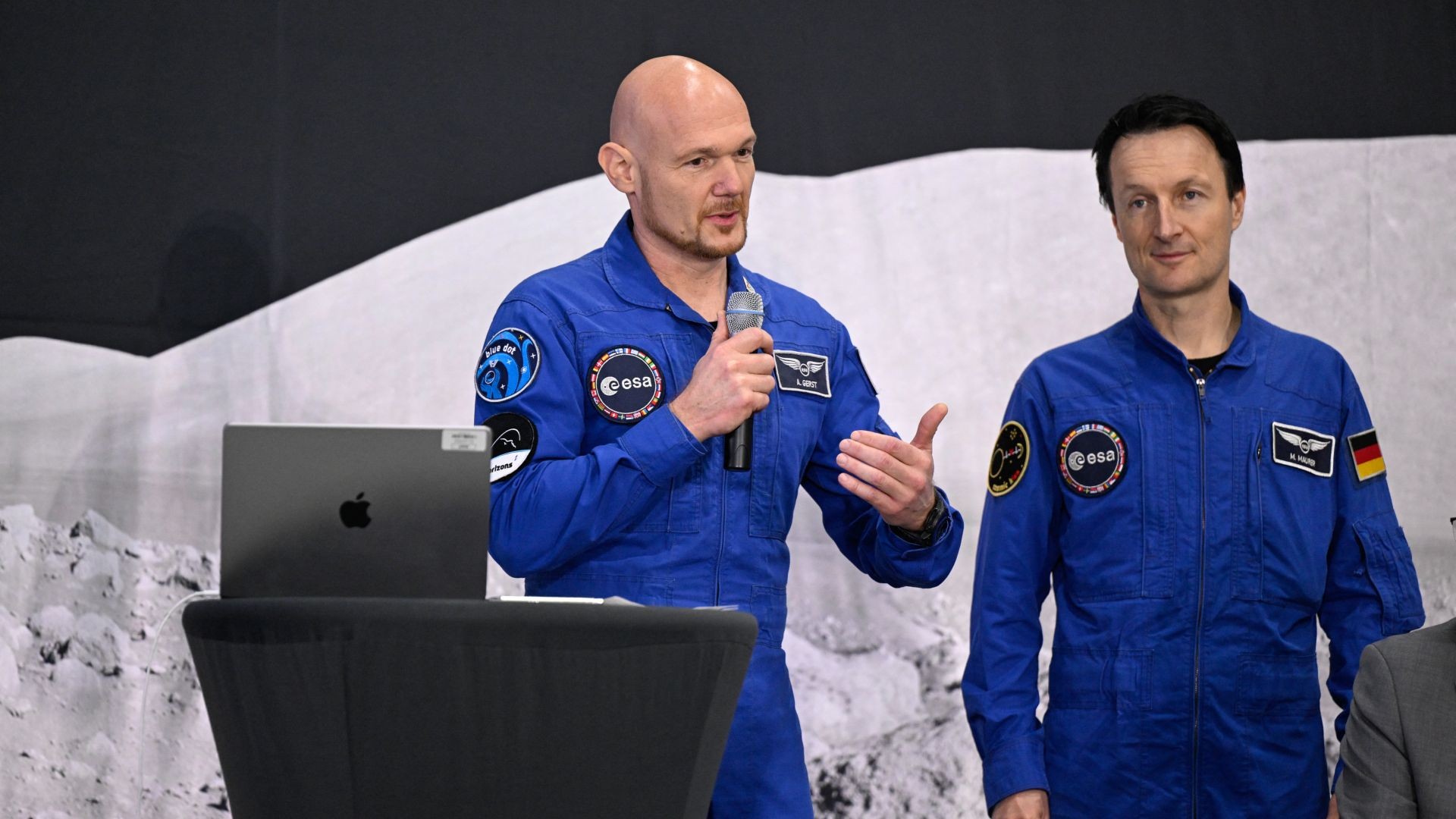
Germany currently has two experienced astronauts in the ESA corps most likely to take the historic seat: Matthias Maurer, 55, and Alexander Gerst, 49. Both have logged extensive time on the International Space Station (ISS). While Germany also has two reserve astronauts, Amelie Schoenenwald and Nicola Winter, neither has yet flown to space.
Gerst brings 362 days in space, including a six-hour spacewalk in 2014 and a stint as ISS commander in 2018. Maurer completed a 176-day ISS mission in 2021, also including a spacewalk. These experiences position them as frontrunners for the Artemis 4 mission, currently planned for the second half of 2028.
Broader European Participation
While Germany will send the first European to orbit the Moon, France and Italy are poised to send their own astronauts to the lunar surface in later Artemis missions. French astronaut Thomas Pesquet, with 397 days in space across two ISS missions, is a strong candidate. New ESA astronaut Sophie Adenot, a helicopter pilot selected in 2022, is also gaining experience on the ISS, potentially qualifying her for a future lunar flight.
Italy also has contenders, including Luca Parmitano and Samantha Cristoforetti, both veterans of long-duration ISS missions and multiple spacewalks. Parmitano notably survived a near-fatal helmet flooding incident during a spacewalk.
Future Uncertainty and European Independence
NASA has announced the crew for Artemis 2, which will orbit the Moon in 2025, and Artemis 3 is slated to land humans on the Moon in 2027. However, the long-term fate of the Artemis program remains uncertain. The administration of U.S. President Donald Trump has signaled intentions to discontinue the Space Launch System (SLS) and Orion programs, potentially replacing them with commercial alternatives.
The ESA has secured contracts with NASA to produce six European Service Modules for the Artemis missions, but its future participation depends on continued collaboration. ESA Director Daniel Neuenschwander has stated that the agency will “keep the options open” beyond ESM number six, exploring potential extensions of the Orion-ESM partnership. Europe is also developing the Argonaut lunar lander for cargo delivery, seeking to maintain a role in future lunar exploration independent of NASA.
The first European voyage to orbit the Moon marks a turning point for the continent’s space program. Whether it is through continued collaboration with NASA or through independent development, Europe is positioning itself as a key player in the next era of lunar exploration.