The Moon is currently in its Waxing Crescent phase, meaning it’s gradually becoming more visible in the night sky. As of today, March 21, 2026, approximately 7% of the Moon’s surface is illuminated. This phase marks the beginning of a lunar cycle that will lead to a Full Moon in early April.
Understanding Lunar Phases
The Moon orbits Earth roughly every 29.5 days, completing a full cycle of phases. While we always see the same side of the Moon, varying amounts of its surface are lit by the Sun, creating the changing shapes we observe. These phases are a natural result of the Moon’s orbit and Earth’s position relative to the Sun.
Here’s a breakdown of each phase:
- New Moon: The Moon is between Earth and the Sun, making it appear dark and invisible to the naked eye.
- Waxing Crescent: A thin sliver of light emerges on the right side (in the Northern Hemisphere), growing brighter each night.
- First Quarter: Half of the Moon is illuminated, resembling a half-circle.
- Waxing Gibbous: More than half of the Moon is lit, continuing to increase in brightness.
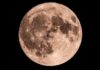
- Full Moon: The entire face of the Moon is fully illuminated, appearing as a bright, circular disk. This phase is the peak of the lunar cycle.
- Waning Gibbous: Light begins to fade on the right side as the Moon moves past its peak.
- Third Quarter (Last Quarter): Another half-Moon appears, but this time the left side is illuminated.
- Waning Crescent: A diminishing sliver of light remains on the left side before the cycle restarts with a New Moon.
When to Expect the Next Full Moon
The next Full Moon in North America is predicted for April 1, 2026. As the lunar cycle progresses, the Moon will continue to grow in brightness, making it easier to observe details on its surface.
The Moon’s phases are a fundamental aspect of astronomy and have influenced human cultures for millennia. Tracking these changes provides insight into celestial mechanics and the rhythm of our natural satellite.