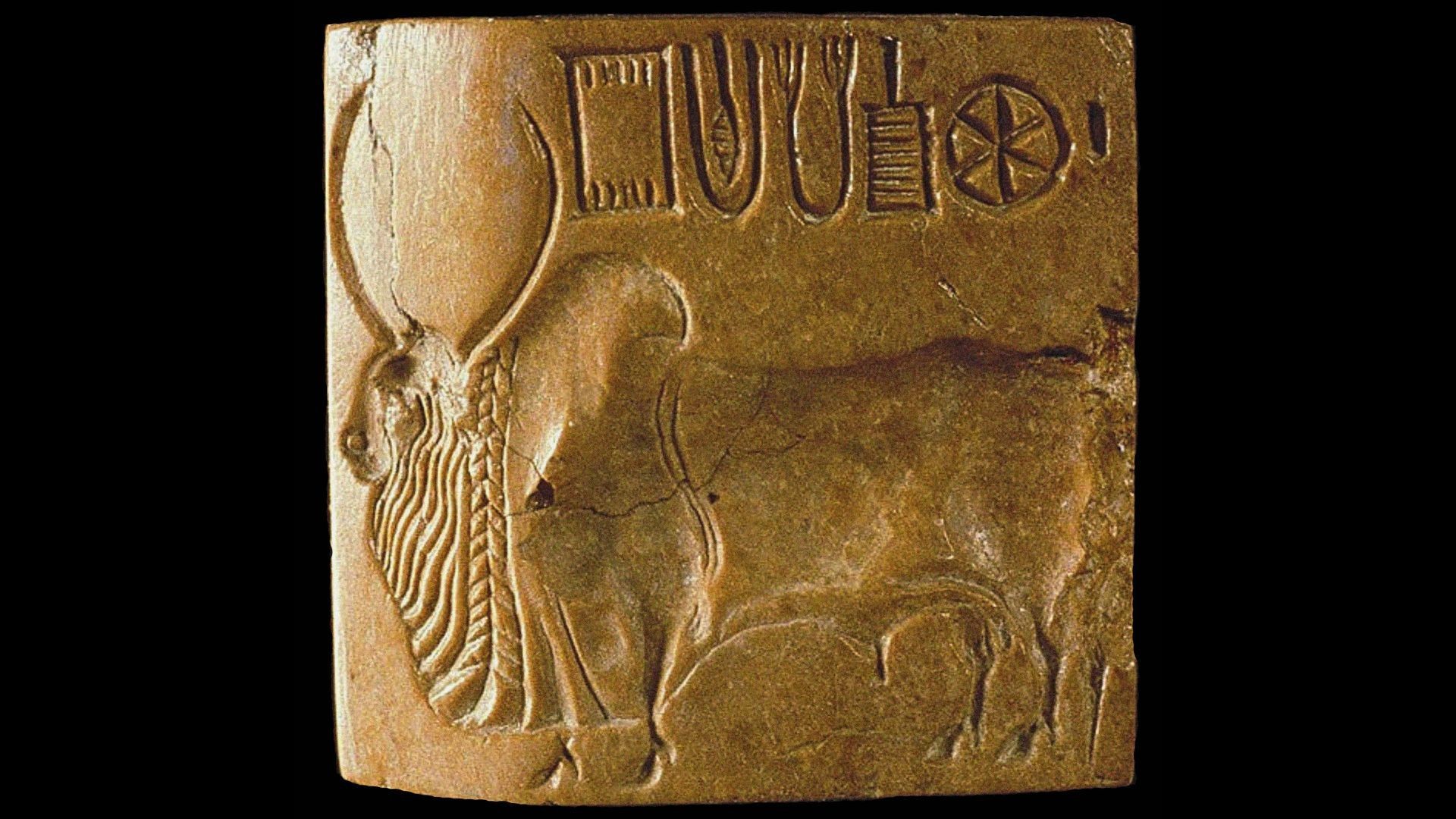
For over a century, scholars have wrestled with one of archaeology’s most enduring mysteries: the undeciphered script of the Indus Valley Civilization, which flourished roughly 4,000 years ago in modern-day Pakistan, India, Iran, and Afghanistan. Despite thousands of surviving artifacts bearing hundreds of unique signs, the language remains stubbornly opaque.
Why Does This Matter?
The Indus script represents a critical missing link in understanding one of the world’s earliest urban societies. Without decipherment, we cannot directly access the thoughts, beliefs, or administrative structures of these people. This makes it harder to assess how the civilization operated, what its trade relationships were, and even whether the symbols represent a true language or something else entirely.
The Script Itself
The signs are diverse, ranging from geometric shapes resembling diamonds with squares to U-shaped symbols with “fingers” and oval forms with asterisk-like interiors. Most inscriptions are short – averaging just five signs per text – and appear on durable materials like clay and stone. Crucially, no bilingual inscription (like the Rosetta Stone) exists to provide a key for translation. Some scholars even suggest that the script may not encode a language at all, but instead act as emblems representing people or entities.
Current Progress and Challenges
Decipherment efforts face several hurdles. The short length of texts makes statistical analysis unreliable. There’s no consensus on the number of distinct signs, and competing theories abound. Some researchers claim partial decipherments, suggesting that certain signs denote weights or assets, but these claims lack widespread acceptance.
“Most of the Indus inscriptions are brief and highly repetitive, which makes the task of reproducible decipherment very difficult,” says independent researcher Steve Bonta, who believes the script is already partially understood, yet underappreciated.
The Role of Artificial Intelligence
Modern tools, particularly AI, offer new hope. Researchers like Peter Revesz at the University of Nebraska-Lincoln are using data mining and statistical analysis to identify potential sign meanings. However, even advanced AI requires human guidance.
Rajesh Rao of the University of Washington notes that while AI can reveal statistical patterns (confirming the script likely encodes a language), a full decipherment remains improbable without more data. One area of partial success lies in reconstructing their number system, as some inscriptions include tally marks alongside symbols thought to represent objects.
The Search for More Evidence
The most promising path forward involves further archaeological excavations. Many Indus Valley sites remain unexplored, and future discoveries could yield longer texts or inscriptions alongside a known language.
Ultimately, the Indus script will likely remain a puzzle until more evidence emerges. The combination of advanced tools and rigorous research design may eventually unlock its secrets, but for now, the civilization’s voice remains lost in time.