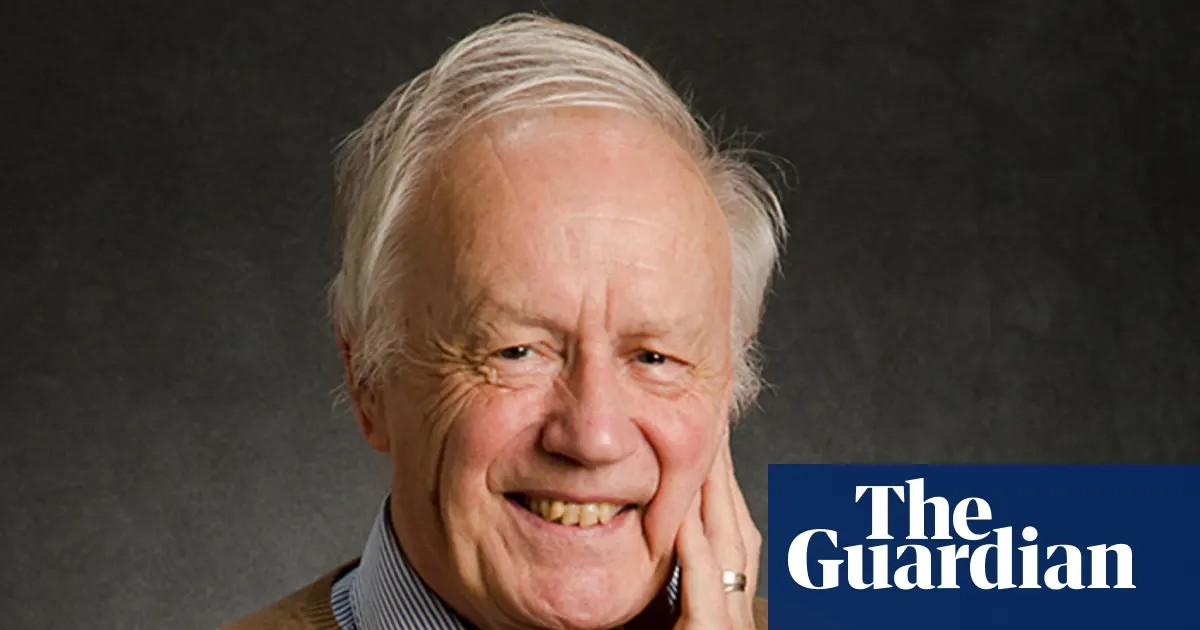
Sir Anthony Leggett, a pioneering physicist whose work unlocked deeper understanding of superfluids and superconductors, died at age 87. His career was unexpectedly influenced by the Soviet launch of Sputnik in 1957, which triggered a Western scramble to bolster science education. This event allowed Leggett, a classical scholar by training, to pursue a second undergraduate degree in physics at Oxford, where he excelled.
From Classics to Quantum Physics:
Leggett initially studied “Greats” — a rigorous combination of classical literature, ancient history, and philosophy — before switching to physics. He later recalled that Sputnik forced policymakers to prioritize science, creating scholarship opportunities for humanities students like himself. Without this shift, his path to becoming a Nobel laureate might never have happened.
Leggett’s research focused on the bizarre but fundamental behavior of matter at atomic levels. He investigated superfluids — liquids that flow without friction — and superconductors, materials capable of conducting electricity without resistance. His work revealed how quantum mechanics affects everyday phenomena, explaining the unique properties of helium-3 in its superfluid state. This discovery had applications across cosmology, particle physics, and materials science.
Nobel Recognition and Later Life:
In 2003, Leggett shared the Nobel Prize in Physics with Alexei Abrikosov and Vitaly Ginzburg for their contributions to the theory of superconductors and superfluids. The Nobel committee highlighted how his findings opened doors for research in other fields. He spent decades as a professor at the University of Illinois Urbana-Champaign, known for his enthusiasm and forward-thinking approach.
Leggett’s early life was marked by academic tradition and Catholic upbringing, which fostered an independent, even iconoclastic, mindset. A formative experience included immersion in Japanese student life at Kyoto University, where his behavior raised suspicions of espionage. His dedication to research never wavered, and he maintained that even seemingly wasted work can resurface later.
“Remember that no piece of honestly conducted research is ever wasted, even if it seems so at the time,” Leggett once said.
He is survived by his wife, Haruko Kinase-Leggett, daughter Asako, and sisters Judith and Clare. Sir Anthony Leggett’s legacy endures as a testament to the transformative power of scientific curiosity and the unpredictable forces that shape careers.