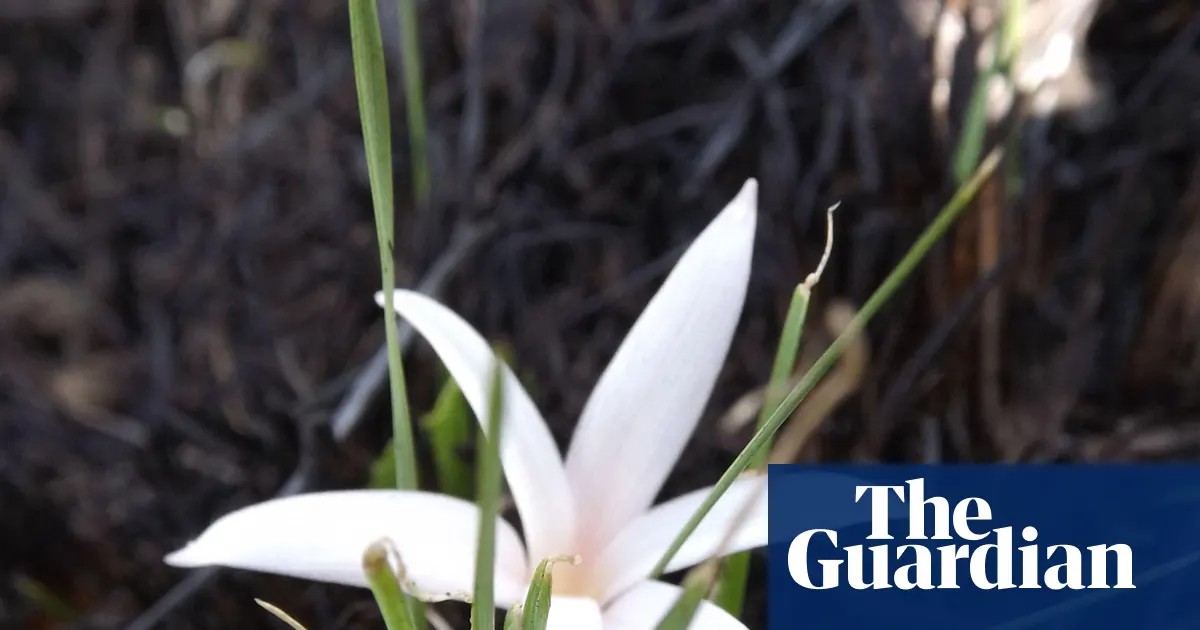
The Natal crocus (Apodolirion buchananii ) is a remarkable example of plant adaptation, using a unique combination of natural fire, bee pollination, and ant seed dispersal to maximize its reproductive success in South African grasslands.
Fire as a Signal
This plant blooms shortly after wildfires sweep through its habitat. The bright white flowers stand out starkly against the scorched landscape, acting as a visual beacon for pollinators. The timing is crucial: the flowers emerge before the leaves, ensuring they are highly visible. The sweet scent released by the blooms further attracts bees, ensuring effective pollination in a landscape where other flowering plants may be temporarily absent.
Underground Seed Maturation
Once pollinated, the fruits of the Natal crocus develop underground for approximately six months. This protects the seeds from harsh conditions and predation until they are fully mature. Only then do the seeds become ready for dispersal.
Ant-Driven Seed Dispersal
The final stage involves ants. The mature seeds have a nutrient-rich appendage called an elaiosome that attracts ants. The ants carry the seeds back to their nests, consume the elaiosome, and discard the seeds in nutrient-rich locations, effectively dispersing them for future growth.
Why this matters: The Natal crocus demonstrates an extreme level of co-evolution with its environment. By exploiting fire as a cue for blooming, it ensures pollination when resources are scarce for other plants. The underground maturation and ant dispersal mechanisms further enhance survival rates, making it a highly successful species in its niche ecosystem.
This plant’s strategy is a powerful illustration of how organisms can adapt to harsh conditions by turning environmental factors into reproductive advantages.