


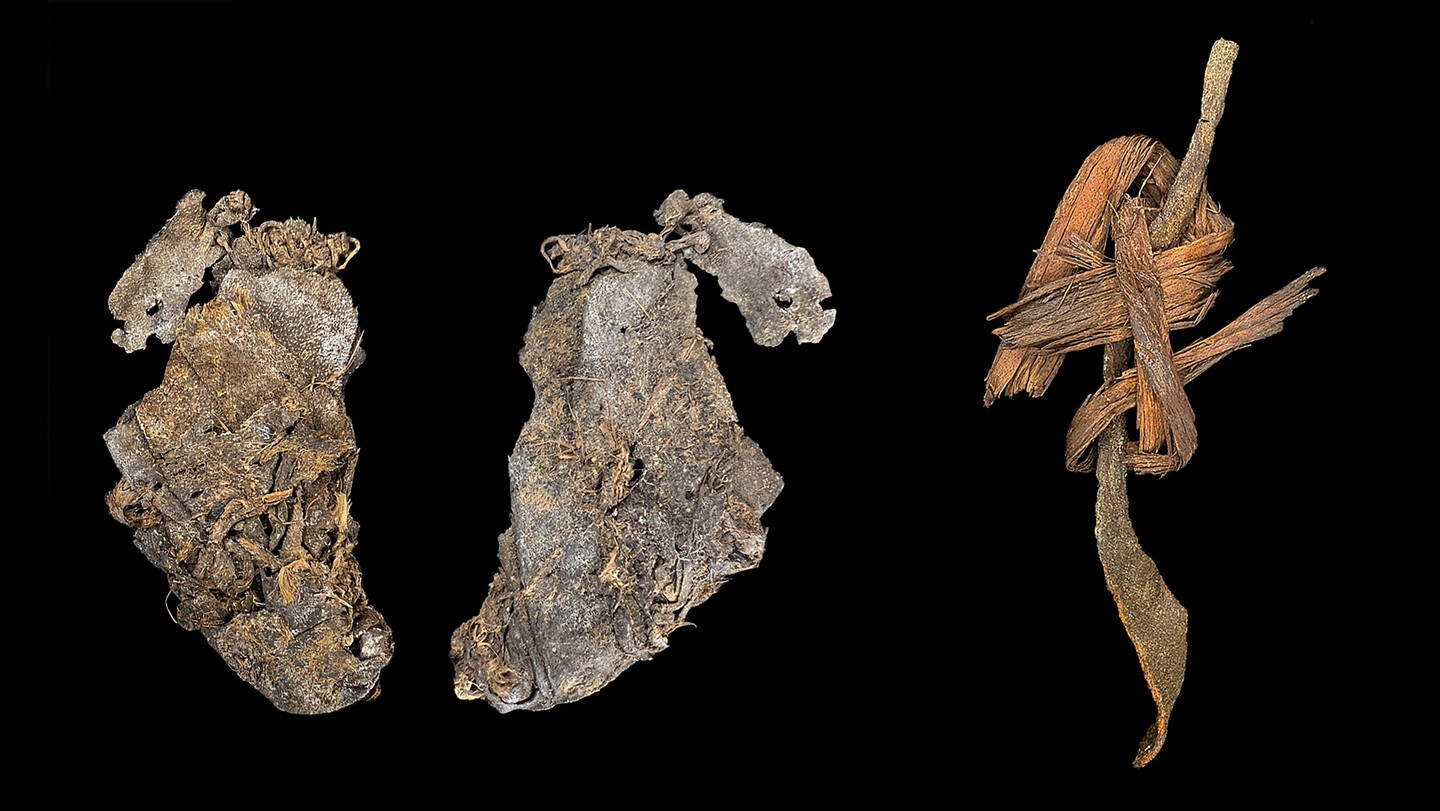
Archaeologists have confirmed that fragments of elk hide, unearthed from an Oregon cave, represent the oldest known sewn clothing in the world. Dating back roughly 12,400 years to the end of the last Ice Age, these small pieces of animal hide were joined by twisted fiber cords and preserved in Cougar Mountain Cave.
The Discovery & Confirmation
The fragments, though only a few square centimeters in size, clearly show evidence of sewing. According to Richard Rosencrance, an archaeologist at the University of Nevada, Reno, “we have cordage sewn into a hide that comes right out and goes into another piece of hide.” This confirms intentional construction, not accidental preservation. Radiocarbon dating has precisely placed the age of the hides, aligning with the late Pleistocene epoch.
What Was Found
Alongside the hide fragments, researchers discovered stone tools and bone needles within the cave. These artifacts provide further evidence that the cave’s early Native American inhabitants actively manufactured clothing for survival. Other materials recovered include scraps of elk, bison, rabbit, hare, and fox hides, as well as cords made from strips of animal hide and plant fibers – possibly a type of rush.
Implications and Context
The discovery isn’t just about old clothes; it offers a rare glimpse into how early humans adapted to harsh Ice Age conditions. The hides likely formed part of a garment designed to provide warmth and protection against extreme cold. The presence of twined fibers suggests the creation of other useful items, such as bags, baskets, or mats.
The artifacts were originally recovered in the 1950s but remained in private collections until recently made available for scientific analysis. This delayed study highlights how much archaeological knowledge remains locked away in private hands.
These findings underscore the ingenuity of early humans, demonstrating that even with limited resources, they developed sophisticated techniques for survival in challenging environments.


