The idea of multiple universes – a multiverse – has long been a staple of science fiction, from Rick and Morty to Spider-Man. But increasingly, physicists are exploring whether these alternate realities might actually exist, not as a plot device, but as a potential solution to some of the deepest mysteries in cosmology and quantum mechanics.
The Cosmological Multiverse: Inflation and Bubble Universes
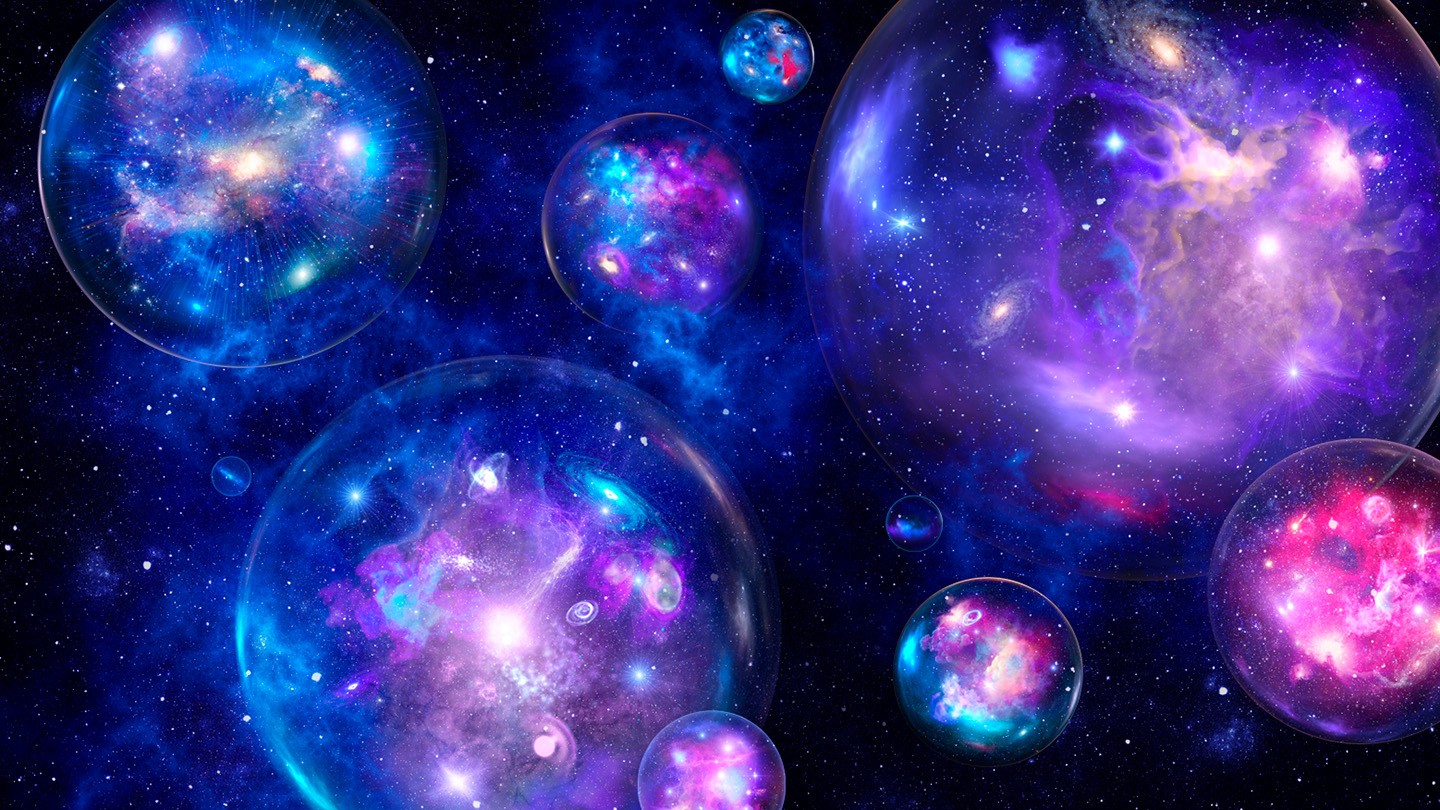
One leading theory stems from the rapid expansion of the early universe, known as inflation. During this period, quantum fluctuations stretched out, creating variations in density that eventually formed galaxies. However, these fluctuations didn’t stop at the edge of our observable universe; they likely continued at even larger scales. Andrei Linde, a physicist at Stanford University, proposes that these ongoing fluctuations have birthed countless “bubble universes” with radically different physical properties.
These universes could have entirely different particle masses, force strengths, or even fundamental laws of physics. In some, life as we know it might be impossible. The existence of such a multiverse offers an explanation for why our universe seems so finely tuned for life: if enough universes exist, it’s statistically inevitable that at least one would have the right conditions.
Testing this idea is challenging. One potential sign would be “scars” on the afterglow of the Big Bang, indicating collisions with other universes. But, as physicist Paul Halpern notes, no such evidence has been found yet.
The Quantum Multiverse: Everett’s Many-Worlds Interpretation
Another multiverse concept arises from quantum mechanics, where particles exist in a superposition of states until measured. The traditional interpretation suggests that measurement forces a collapse into a single outcome. However, physicist Hugh Everett III proposed in 1957 that instead of collapsing, all possible outcomes unfold in separate universes.
In this “many-worlds” interpretation, every quantum measurement splits the universe, creating parallel realities where each possibility is realized. You wouldn’t notice the split, as each version of yourself would live in its own, unaware of the others. This is a profoundly different picture than the multiverse of colliding bubbles, but it’s equally difficult to prove.
The Challenges of Interdimensional Travel
Despite the theoretical possibilities, traveling to other universes remains firmly in the realm of science fiction. Hypothetical wormholes might bridge realities, but creating them would require energy levels far beyond our current capabilities. The idea of a hidden wormhole in your closet is, therefore, highly improbable.
The multiverse remains a speculative but increasingly serious topic in physics. While the prospect of meeting alternate versions of yourself is unlikely, the implications for our understanding of the universe are immense.
Whether these theories ultimately prove correct or not, the exploration of the multiverse forces us to confront fundamental questions about reality, probability, and the nature of existence itself.