The new moon phase in mid-February (peaking on Feb. 17th) creates ideal conditions for observing the night sky. Without moonlight interference, planets, constellations, and deep-sky objects become more visible. This period isn’t just about darkness; it’s a natural cycle that makes cosmic wonders accessible to casual observers and dedicated astronomers alike.
Why Dark Skies Matter
A new moon occurs when the moon passes between Earth and the sun, rendering it invisible at night. This absence of lunar light allows fainter celestial objects to shine through, providing clearer views. The most recent new moon phase was observed on Feb. 17th at 7:01 AM EST (12:01 GMT). The timing also coincided with an annular solar eclipse visible from Antarctica, though inaccessible to most observers.
Visible Planets This Month
Several planets are positioned favorably for viewing in February.
- Mercury: Appears as a bright “evening star” low in the west shortly after sunset. It’s less than 20 degrees above the horizon, making it a challenging but rewarding target.
- Venus: If conditions are clear, Venus may be spotted below Mercury, quickly fading from view as the sun sets.
- Saturn: Visible just above Mercury, Saturn’s rings are becoming increasingly prominent after being nearly edge-on to Earth in November. This makes for a better view through telescopes.
Key Constellations to Spot
The dark skies around the new moon are perfect for constellation hunting.
- Gemini: Look left of Jupiter to find Castor and Pollux, representing the twins in this constellation.
- Canis Minor & Major: Procyon (in Canis Minor) shines directly below Jupiter, while Sirius (in Canis Major) dominates the sky to its lower right. These constellations are often called “stellar hounds” due to their proximity to Orion.
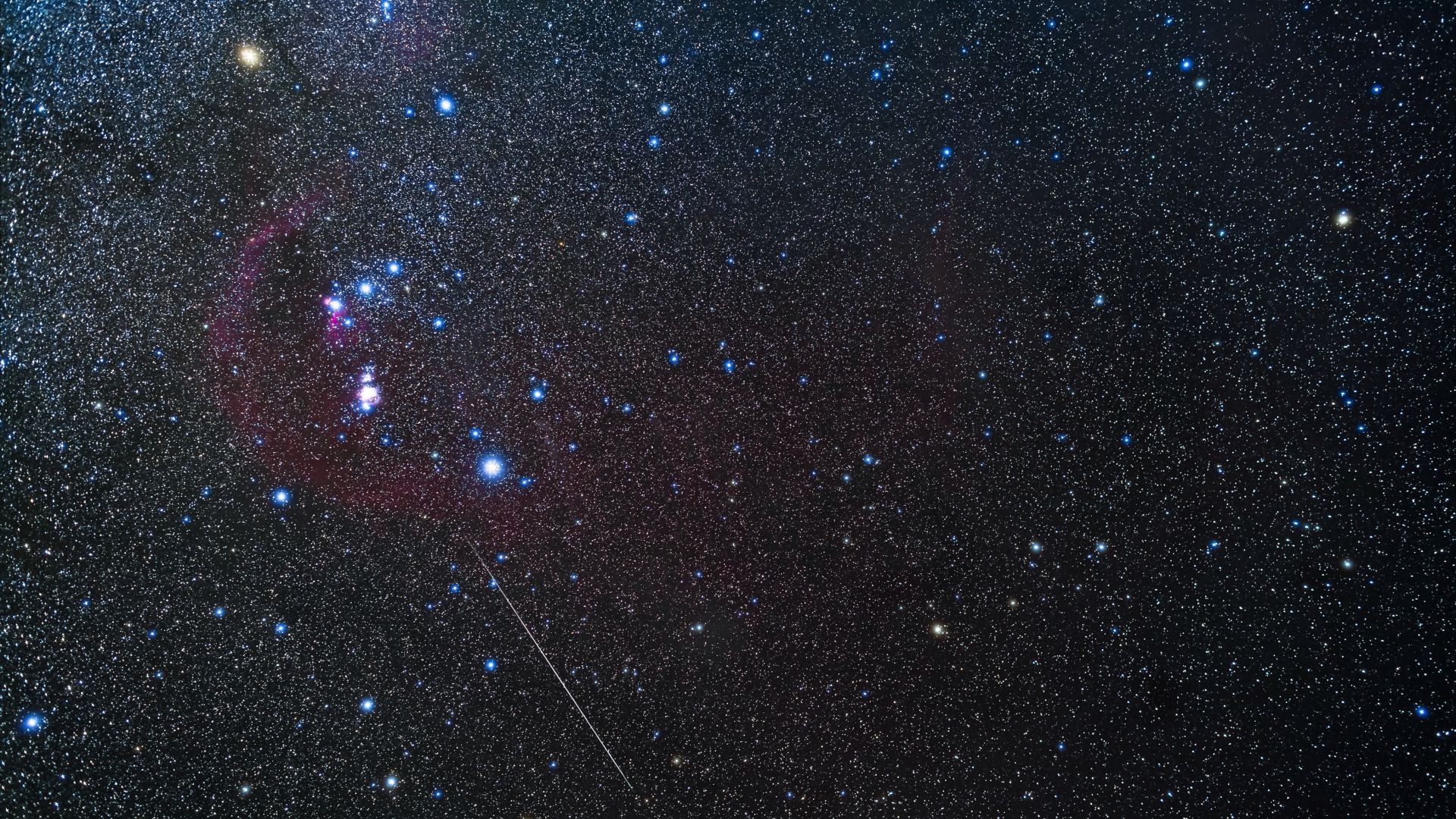
- Orion: The hunter constellation is visible to the upper right of Sirius, with Betelgeuse (red giant) marking its shoulder and Rigel (blue supergiant) marking its foot. The Orion Nebula, a stellar nursery, hangs below the belt.
- Taurus: Aldebaran, the red giant marking Taurus’s eye, is visible to the right of Orion. The Pleiades star cluster (a hazy patch of light) sits above Aldebaran, offering a stunning view through binoculars or a telescope.
Navigating the Northern Sky
- Big Dipper (Ursa Major): The asterism stands on its end near the horizon. Use Merak and Dubhe to find Polaris, the North Star.
- Cassiopeia: The “W” or “M”-shaped constellation is visible higher in the northeast, linked to Greek mythology.
The new moon phase presents a unique opportunity to explore the cosmos without interference from lunar glare. Whether observing with the naked eye, binoculars, or a telescope, February’s night sky offers a wealth of visible wonders.