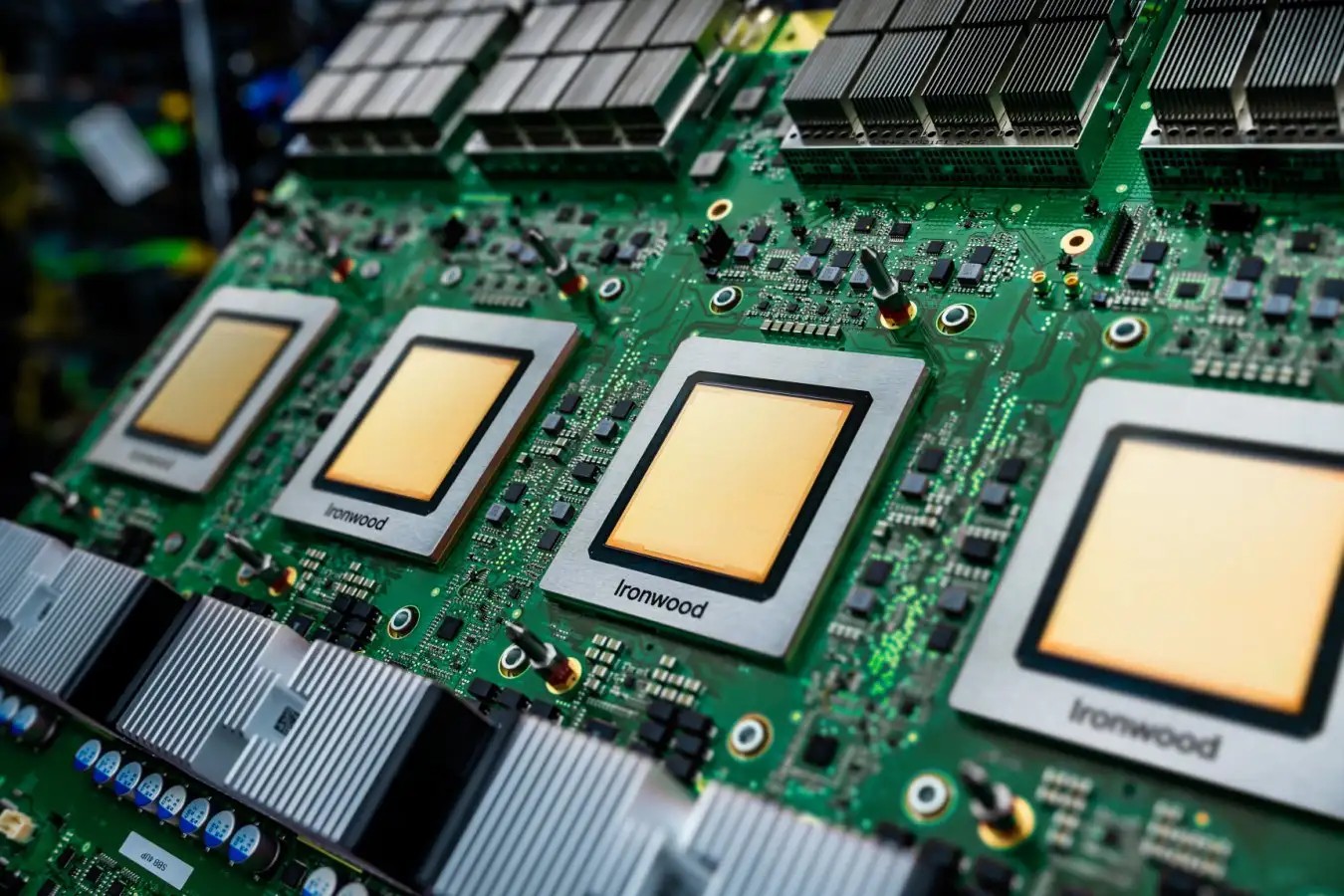
Google’s specialized AI chips, known as Tensor Processing Units (TPUs), are emerging as a significant competitor to Nvidia’s long-held dominance in the AI hardware market. Companies like Meta and Anthropic are reportedly preparing to invest billions in Google’s TPUs, signaling a potential shift in the industry.
The Rise of Specialized AI Hardware
The AI boom has heavily relied on Graphics Processing Units (GPUs) – originally designed for gaming and graphics rendering – due to their ability to perform parallel calculations efficiently. This parallel processing is crucial for training and running AI models, which often involve massive matrix multiplications. However, GPUs weren’t initially optimized for AI.
TPUs, first developed by Google in 2016, address this limitation by focusing solely on matrix multiplication, the core operation in most AI workloads. The latest generation, Ironwood, powers Google’s advanced AI models like Gemini and AlphaFold.
Efficiency vs. Flexibility
Technically, TPUs are a refined subset of GPUs, not a completely separate architecture. They streamline AI-specific calculations, potentially saving companies tens or even hundreds of millions of dollars.
However, this specialization comes with trade-offs. TPUs can be less flexible if AI models evolve significantly, forcing some processing back to slower CPUs. Historically, Nvidia GPUs had an advantage in software compatibility, but Google has narrowed this gap, making TPUs easier to integrate into existing workflows.
The Hyperscaler Response
The escalating cost of GPUs, driven by high demand, has pushed many tech giants (“hyperscalers”) to develop their own custom AI chips. Amazon’s Trainium is one example.
“Most of the hyperscalers have their own internal programs… because GPUs got so expensive and it might be cheaper to design and build your own.” – Simon McIntosh-Smith, University of Bristol
This move toward in-house chip development isn’t just about cost. It’s also about control and optimization for specific AI tasks.
A Shift in the Market?
For years, Google primarily used TPUs internally. Now, external demand is rising, with major players like Meta and Anthropic reportedly making substantial TPU purchases.
This increased competition could benefit buyers in the long run, potentially driving down GPU prices or forcing Nvidia to offer more competitive terms. Diversifying AI hardware suppliers ensures no single company controls the future of this critical technology.
The growing maturity of TPUs and the willingness of large AI companies to adopt them suggest a fundamental shift in the industry is underway.