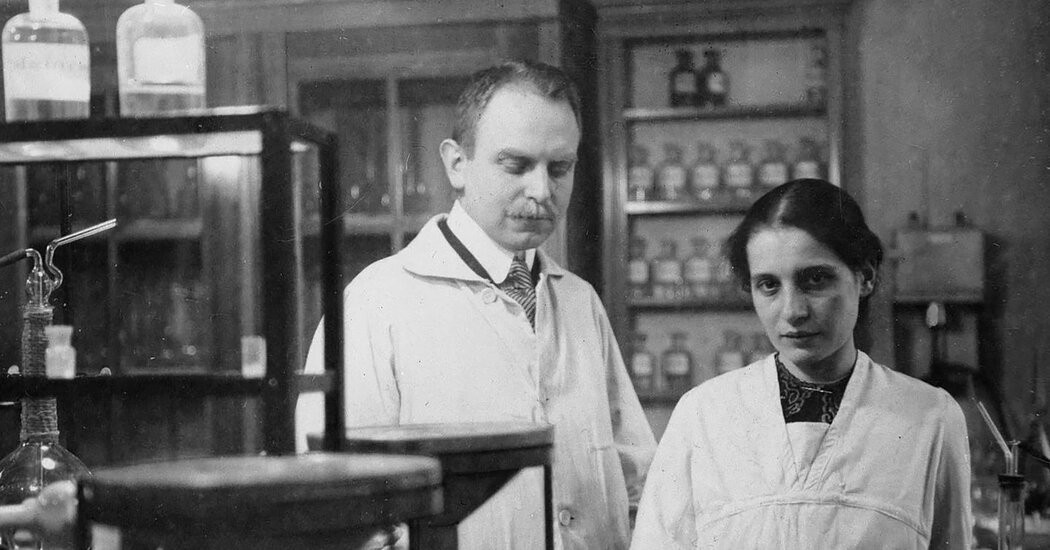
Lise Meitner, the Austrian-born physicist whose work was essential to understanding nuclear fission, died on December 22, 1983, at the age of 89. Though her contributions laid the theoretical foundation for the atomic age, she never directly participated in weapons development.
The Theoretical Breakthrough
Dr. Meitner first calculated the immense energy released when a uranium atom splits – a discovery that would later prove pivotal to both nuclear power and atomic weaponry. Her work, conducted over 30 years in partnership with German chemist Otto Hahn, was groundbreaking, yet she remained largely uncredited for decades.
Forced Into Exile
The tragic irony of Meitner’s career is that she was forced to flee Nazi Germany in 1938, just as she and Hahn were on the cusp of confirming nuclear fission. Being Jewish, she faced persecution under the rising Nazi regime. This exile meant she missed out on the Nobel Prize awarded to Hahn in 1944 – a controversial omission that many scientists have since criticized.
Legacy and Recognition
While the world benefited from the power of nuclear fission, Meitner’s role was initially minimized. She did not want to be involved in the creation of the atomic bomb, but her calculations were essential to its development. In the years after the war, Meitner continued her research and eventually received belated recognition for her contributions. The element Meitnerium (Mt), with atomic number 109, was named in her honor.
Dr. Lise Meitner’s story is a stark reminder that scientific progress is often intertwined with political tragedy and gender bias, but her legacy as a pioneer of nuclear physics remains undeniable.