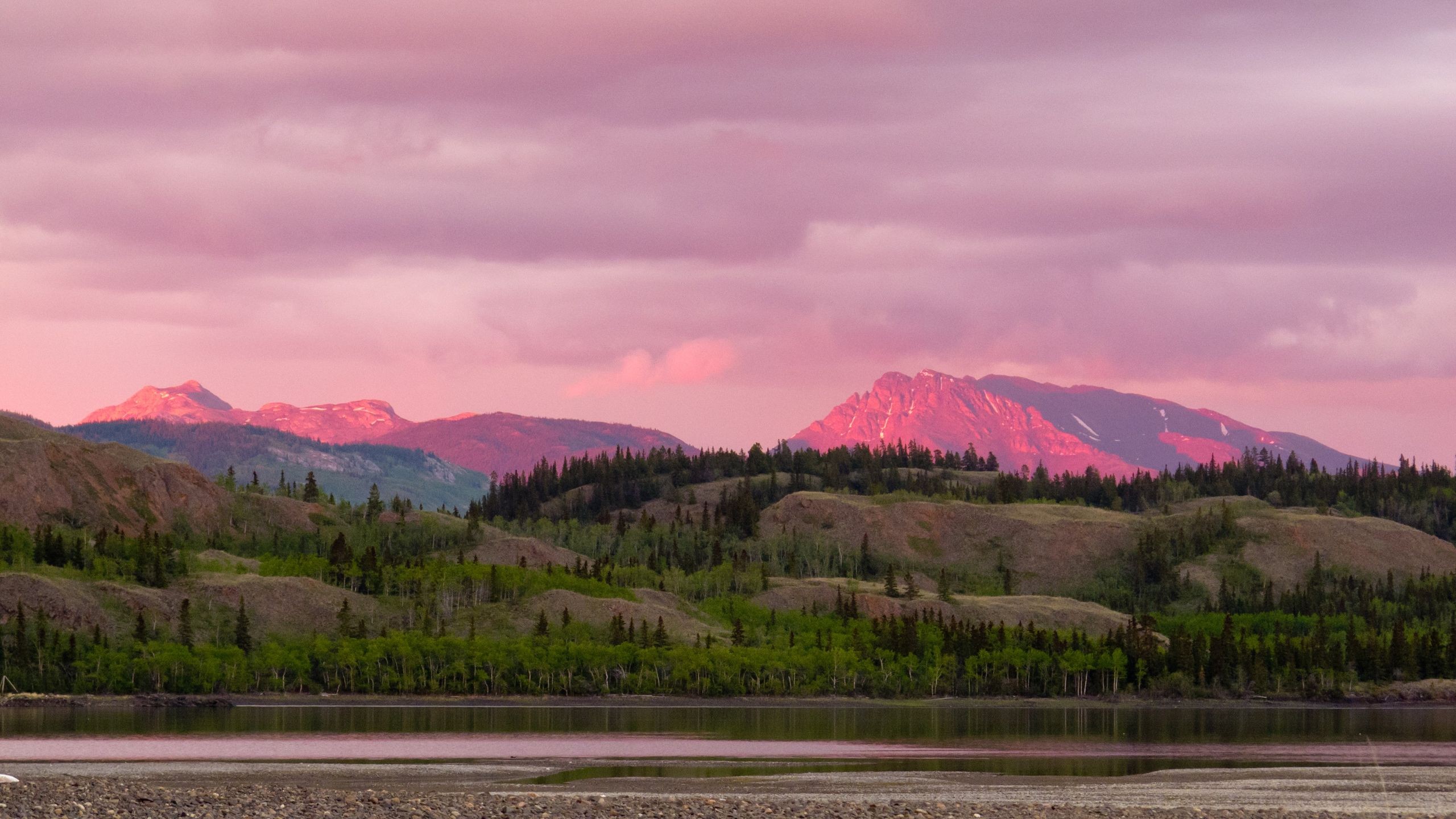
Canada has the potential to dramatically reduce atmospheric carbon by strategically planting trees along the northern edge of its boreal forest, according to new research. A study published in Communications Earth & Environment on November 13, 2025, suggests that reforestation across approximately 6.4 million hectares (15.8 million acres) could sequester nearly 4 gigatons of carbon by 2100 – exceeding Canada’s current annual emissions fivefold.
The Boreal Forest and Carbon Sequestration
The boreal forest, a vast woodland stretching across northern North America, Europe, and Russia, is shifting northward as climate change warms the Arctic. This natural migration creates opportunities for reforestation in previously barren land. Researchers led by Kevin Dsouza at the University of Waterloo used satellite data and forestry models to identify optimal planting zones, accounting for fire risks, seedling survival rates, and land types. Scaling up reforestation to 32 million hectares could sequester an astounding 20 gigatons of carbon.
Past Efforts and Current Challenges
Canada previously launched an ambitious plan to plant 2 billion trees by 2031, but it was ultimately scaled back due to logistical issues and funding shortfalls. As of June 2025, just 228 million trees had been planted, with current initiatives aiming for 988 million. Dsouza emphasizes that effective reforestation requires strategic planning, economic viability, and community involvement.
Permafrost Stability as a Co-Benefit
Northern reforestation could also stabilize thawing permafrost. As permafrost degrades, it releases methane—a greenhouse gas far more potent than carbon dioxide—accelerating climate change. Planting trees in these regions may help mitigate this risk by reinforcing soil structure and slowing thaw rates.
The Long-Term Carbon Storage Debate
While reforestation is an effective short-term carbon sink, some experts argue it’s not a sustainable solution. Ulf Büntgen of the University of Cambridge suggests that trees eventually die and release their stored carbon. His team published a study in NPJ Climate Action proposing a more permanent approach: harvesting mature boreal trees and sinking them in the Arctic Ocean’s deep, cold waters, where they would remain preserved for millennia. They estimate that managing just 1% of the boreal forest this way could remove 1 gigaton of CO2 annually.
Conclusion: While large-scale reforestation in Canada presents a viable strategy for reducing atmospheric carbon, long-term sustainability remains a key concern. Both planting trees and deep-sea carbon storage have merits, though the latter requires careful evaluation of ecological impacts. Effectively addressing climate change requires multifaceted solutions, integrating both natural carbon sequestration and innovative storage methods.