The total lunar eclipse that captivated observers across North America and Oceania has concluded its totality phase, but remains in progress as of today. Earth’s shadow dramatically transformed the full moon into a striking “blood moon” earlier this evening, with the first stunning images now available online.
Eclipse Progression and Notable Views
Photographers in both America and Oceania captured breathtaking views during both the partial eclipse and the spectacular blood moon phases. While totality has passed, the eclipse is still unfolding, and live coverage is ongoing. For those interested, a live blog and streaming options are available for free.
Early Partial Phase from New Zealand
Mirko Harnisch and the Dunedin Astronomical Society captured a striking image of the partial eclipse from New Zealand. The photograph shows Earth’s shadow slowly creeping across the lunar surface, darkening the lunar seas. This particular full moon is known as the “Worm Moon,” a name derived from the time of year when thawing ground allows earthworms and beetles to emerge.
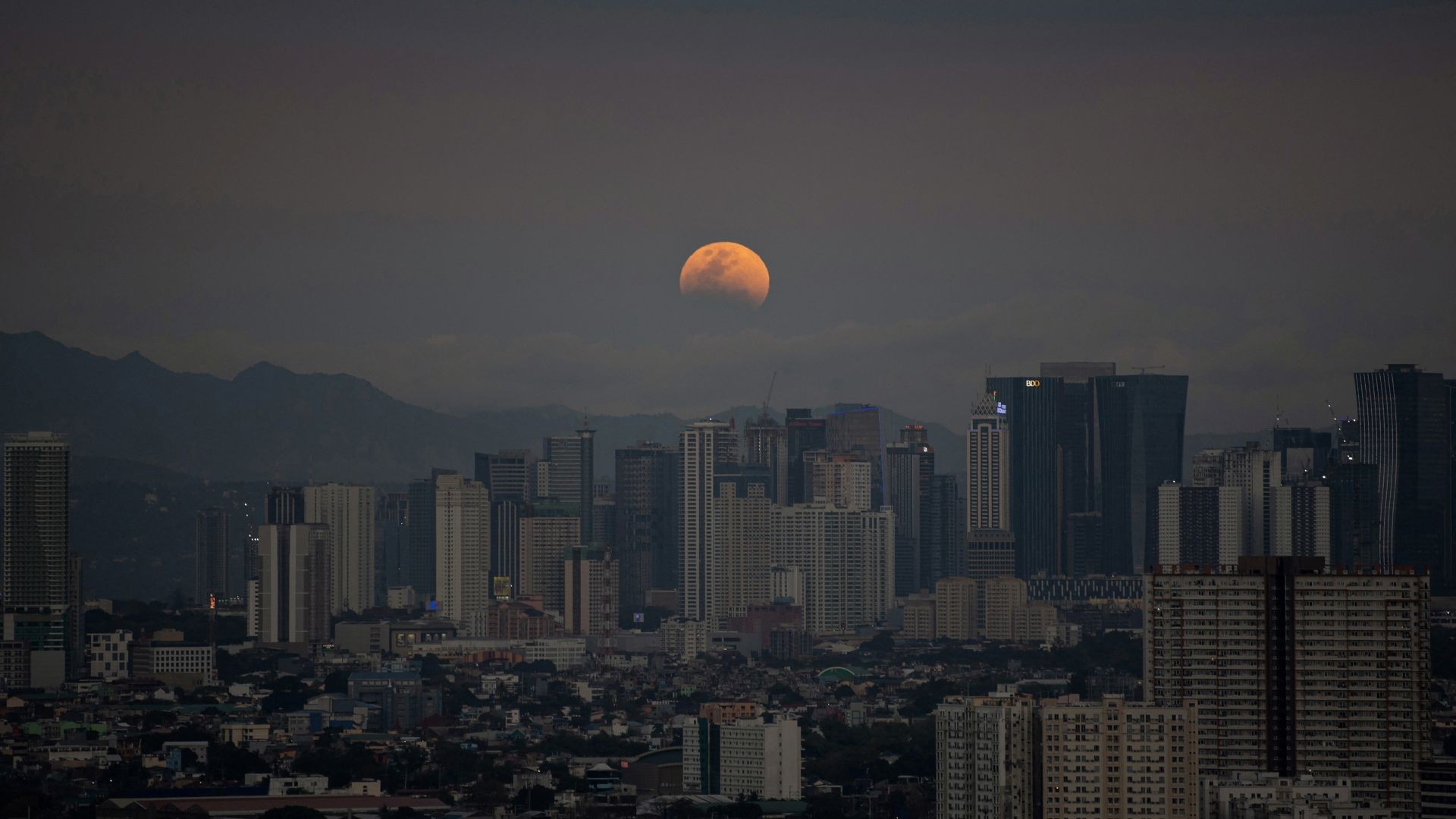
Manila’s View of the Partially Eclipsed Moon
Photographer Ted Aljibe provided another perspective, capturing the partially eclipsed moon rising over Manila in the Philippines. Earth’s shadow veiled the lower portion of the lunar disk, creating a dramatic contrast.
Mare Crisium and Mare Fecunditatis
Time and Date captured an image during the late partial phase, showing a crescent of the lunar disk peeking out from Earth’s shadow. The photograph highlights the dark basaltic plains of Mare Crisium (“Sea of Crisis”) and Mare Fecunditatis (“Sea of Fertility”), remnants of ancient lava flows on the lunar surface.
Totality from New Zealand and California
Harnisch and the Dunedin Astronomical Society again captured the moon during totality, where sunlight filtered through Earth’s atmosphere transformed the Worm Moon into a dramatic blood moon. Time and Date also provided another perspective from its mobile observatory in Yucca Valley, California, showing lunar seas darkening the crimson orb.
Final Views from Northern New Zealand
Phil Walker captured an impressive view from northern New Zealand during totality, with the full moon bathed in the light of Earth’s sunrises and sunsets.
Eclipse Conclusion
The March 3 eclipse will officially end at 9:23 a.m. EST (1423 GMT) when Earth’s penumbral shadow fully departs the lunar disk. This event serves as a vivid reminder of the dynamic interplay between Earth, the moon, and the sun, and the captivating celestial events that result.