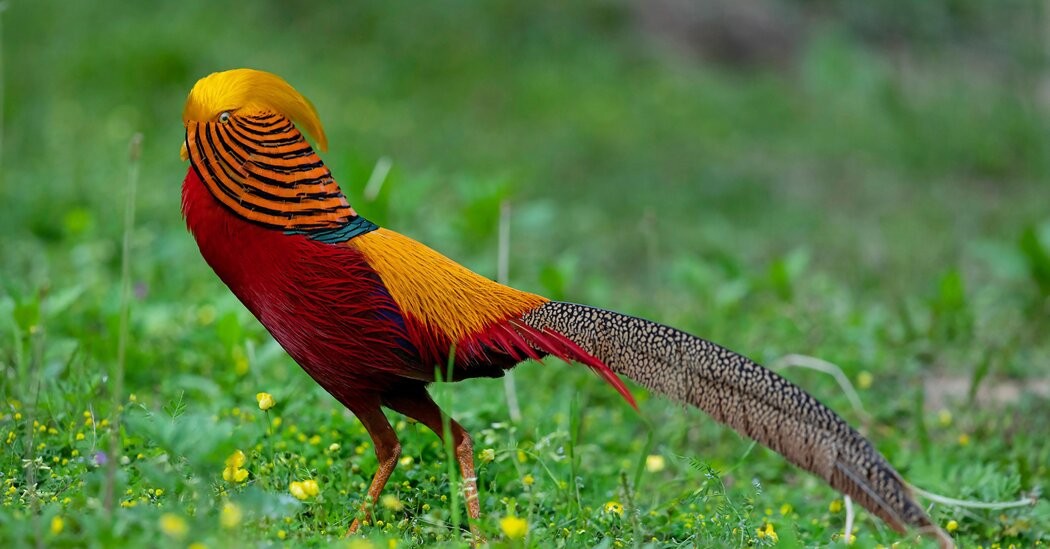
Male golden pheasants boast stunning plumage to attract mates, but a new study reveals this comes with a surprising downside: drastically reduced peripheral vision. Researchers at the University of Oxford have discovered that the elaborate facial feathers of male birds create a significant blind spot, marking the first known instance of sex-specific vision differences in birds.
The Trade-Off Between Appearance and Sight
The vibrant, cinnamon-colored tail quills, striped orange-and-black hoods, and bright yellow crests of male golden pheasants are evolutionary tools for courtship. However, these features physically obstruct their vision, limiting their ability to detect predators or navigate obstacles effectively.
“Looking this good comes with a cost,” explains biologist Steve Portugal. “This amazing hairdo cuts out a large portion of their vision.”
How the Study Unfolded
The discovery wasn’t the primary goal of Portugal’s research. His team initially investigated why some bird species collide with human-made structures, like wind turbines. After analyzing the vision of roughly 300 species, they found no consistent sex-based differences… until they tested golden pheasants.
Females, lacking the ornate facial plumage, possess a normal field of vision. The contrast was stark enough to prompt further investigation, including studies on closely related Lady Amherst’s pheasants (also highly ornamented) and more distantly related silver and green pheasants with less extravagant head feathers.
Testing Methodology
Researchers used ophthalmoscopes – devices commonly used by eye doctors – to map the visual boundaries of both male and female pheasants. The birds were carefully secured in foam cradles with silicone beak holders to ensure stable head positioning while light was shone into their eyes, reflecting off the retinas to reveal the extent of their vision.
Implications and Future Research
This finding highlights the extreme evolutionary pressures that drive sexual selection. While the reduced vision may pose risks, the reproductive advantage gained through enhanced attractiveness clearly outweighs those risks for male golden pheasants.
This raises questions about how these birds compensate for their visual impairment in the wild, and whether similar trade-offs exist in other species where elaborate ornamentation is common. The study underscores the fact that even the most striking adaptations can carry hidden costs, shaped by the relentless logic of natural selection.