For decades, the Search for Extraterrestrial Intelligence (SETI) has scanned the cosmos for evidence of alien life, primarily by listening for deliberate radio transmissions. However, a new analysis suggests that a previously overlooked factor – space weather – may have obscured these signals, making them fainter and harder to detect. The findings don’t mean previous searches were futile, but that the methods used may need refinement.
The Problem with Narrowband Signals
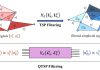
Traditionally, SETI researchers expected alien broadcasts to be sharp, concentrated radio signals in narrow frequency ranges. The assumption was that advanced civilizations would attempt to communicate via targeted transmissions, similar to how early Earth-based radio operated. However, this approach may be flawed. The new research indicates that signals traveling across vast interstellar distances can be “blurred” or widened by the plasma winds emitted by stars, effectively reducing their detectability.
Researchers at the SETI Institute calculated how solar winds distort radio signals within our own solar system. Extrapolating these effects to distant stellar environments, they found that even a relatively narrow 100-megahertz signal could be broadened enough to fall below detection thresholds. Space weather events—solar flares, coronal mass ejections—can exacerbate this distortion, making already faint signals even harder to identify.
A Shift in Thinking About Alien Communication
The findings align with a growing consensus that waiting for accidental broadcasts is unlikely to yield results. Civilizations advanced enough to transmit signals across interstellar distances likely use more sophisticated communication methods, such as broadband or spread-spectrum techniques, which carry far more data.
Simon George, a researcher at SETI, points out that Earth itself has shifted away from narrow radio broadcasts. “The idea that an intelligent civilization would send out such signals is becoming dated…there has been a dramatic move towards broadband.”
Improved Technology and Future Prospects
Despite the challenges, the new research doesn’t necessarily mean the search for extraterrestrial life has been a waste of time. Instead, it suggests that past searches may have missed evidence, and future efforts will be better equipped to succeed.
Advances in computing power and artificial intelligence are improving our ability to filter out noise and extract faint signals from background radiation. John Elliott of the University of St. Andrews notes that we’ve only been actively searching for a little over 50 years – “a blink of the eye” in cosmic terms. Given the rapid pace of technological progress, the chances of success are likely to increase dramatically in the coming centuries.
Active vs. Passive Search Strategies
While SETI primarily focuses on passively listening for signals, other groups, like the Messaging Extraterrestrial Intelligence (METI) organization, advocate for an active approach: broadcasting signals toward potential alien worlds. The debate over whether we should “shout into the void” or wait for a response highlights the uncertainty surrounding extraterrestrial communication.
Ultimately, the new research serves as a reminder that our assumptions about alien life may be limiting our search. By accounting for the effects of space weather and embracing more sophisticated detection methods, we may finally stand a chance of making contact.