A team of researchers at Rockefeller University has uncovered a critical mechanism within the cell that ensures proteins are built correctly. By studying how the antioxidant glutathione is managed within the endoplasmic reticulum (ER), scientists have identified a potential target for treating neurodegenerative diseases and certain types of cancer.
The Role of the Endoplasmic Reticulum
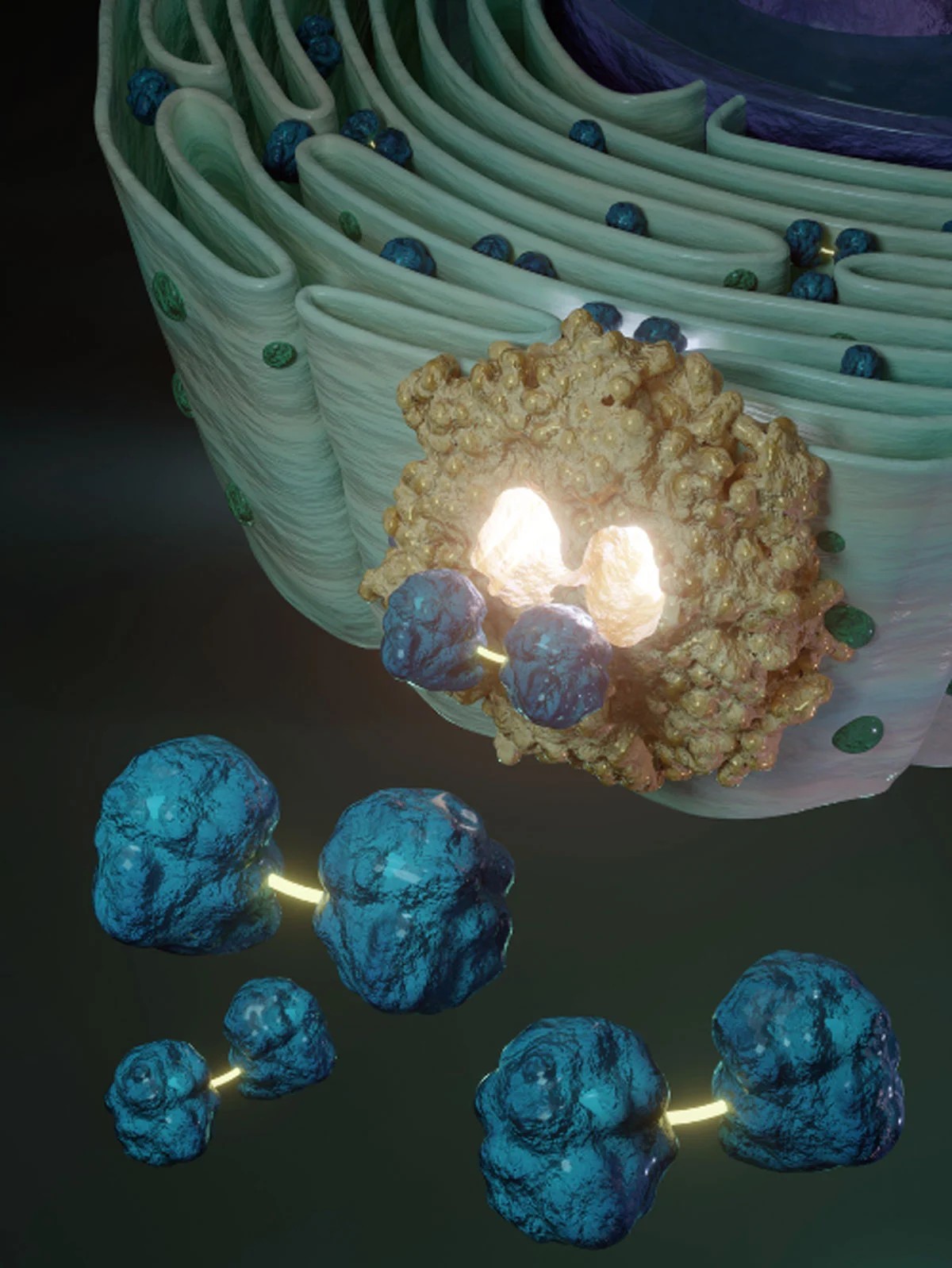
The endoplasmic reticulum (ER) serves as the cell’s primary manufacturing plant, responsible for producing and folding proteins. For these proteins to function correctly in the body, they must be folded into precise three-dimensional shapes.
If a protein is misfolded, it becomes useless or even toxic. To prevent this, the ER maintains a highly specific chemical environment. Unlike other parts of the cell that require a “reduced” state, the ER requires an oxidized environment to facilitate proper protein folding and quality control.
The Discovery: SLC33A1 as a Molecular Gatekeeper
For years, scientists knew the ER needed to stay oxidized, but the actual machinery driving this process remained a “black box.” The research, published in Nature Cell Biology, has finally identified the mechanism:
- The Balancing Act: To maintain its oxidized state, the ER must constantly exchange glutathione. It imports oxidized glutathione (GSSG) from the cell’s cytosol while exporting reduced glutathione (GSH).
- The Key Player: The researchers identified a specific transporter protein, SLC33A1, which acts as the primary exporter. This protein is responsible for moving the reduced glutathione out of the ER, thereby maintaining the necessary ratio of GSSG to GSH.
- The “Proofreader” Function: This ratio isn’t just a chemical byproduct; it is essential for the ER’s “quality control” system. If the balance is disrupted—for instance, if GSSG accumulates too much—the enzymes responsible for proofreading proteins fail to operate, leading to a buildup of defective proteins.
Connecting Cellular Mechanics to Human Disease
When the protein-folding process breaks down, the consequences are severe. Misfolded proteins accumulate within the ER, causing cellular stress that can eventually lead to cell death. This mechanism provides a potential explanation for several serious medical conditions:
1. Neurodevelopmental Disorders
The study sheds new light on Huppke-Brindle Syndrome, a rare disorder characterized by intellectual disability and progressive neurodegeneration. Mutations in the gene that produces the SLC33A1 transporter are linked to this condition. The researchers suggest that these mutations likely disrupt the glutathione balance, causing protein misfolding during critical stages of brain development.
2. Cancer Treatment
The findings offer a potential new strategy for tackling specific lung cancers, particularly those associated with KEAP1 mutations. These cancer cells are highly dependent on high levels of glutathione to survive. By using drugs to inhibit the SLC33A1 transporter, scientists may be able to force an accumulation of GSSG, effectively “choking” the cancer cells and triggering their death.
“Our work demonstrates that defining how nutrients and metabolites are transported… reveals fundamental principles of cell biology while uncovering a major class of disease-relevant and therapeutically tractable proteins.” — Kıvanç Birsoy, Rockefeller University
Looking Ahead
By identifying SLC33A1 as a master regulator of the ER’s chemical environment, this research opens new doors for medical intervention. Whether through synthesis inhibitors to manage glutathione overload in the brain or targeted transporters to starve cancer cells, the ability to manipulate this cellular “proofreader” could redefine how we treat complex, systemic diseases.
Conclusion: The discovery of the SLC33A1 transporter reveals how cells maintain the precise chemical balance necessary for protein integrity, providing a vital new link between cellular metabolism and the prevention of cancer and neurodegeneration.