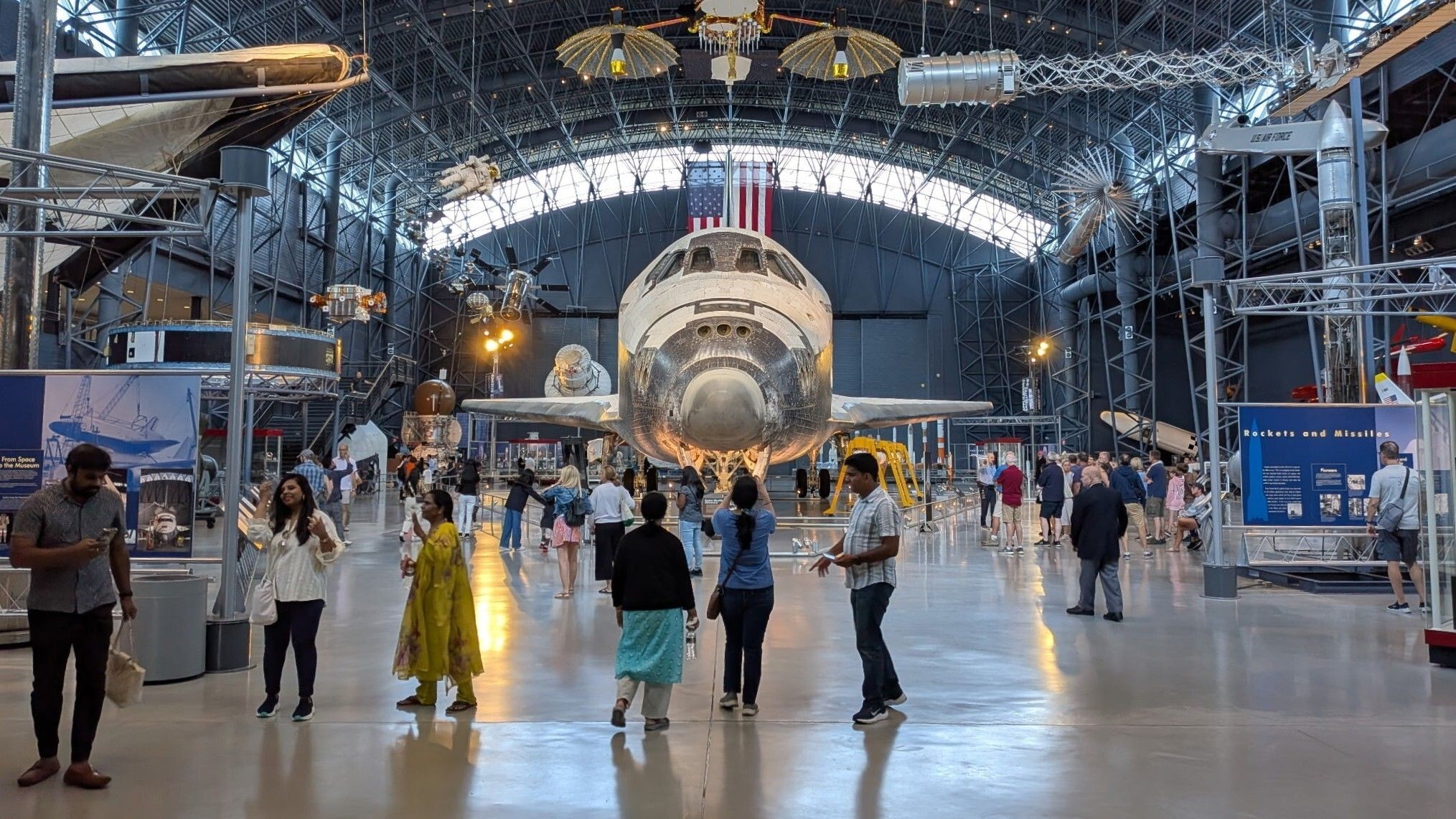
The incoming head of NASA, Jared Isaacman, has reportedly committed to moving the Space Shuttle Discovery from its current location in Virginia to the Lyndon B. Johnson Space Center in Houston, Texas. This pledge comes after lobbying by Senators John Cornyn and Ted Cruz, who championed the controversial relocation through a provision embedded in a larger spending bill.
Political Pressure and National Ambitions
The move isn’t simply about spaceflight heritage; it’s linked to broader political and economic goals. Cornyn’s statement highlights a desire to maintain U.S. dominance in space exploration, particularly against China, with an emphasis on lunar resource acquisition for national security. This framing suggests the relocation serves a strategic purpose beyond preserving history.
The Backstory: Why Houston?
The Johnson Space Center (JSC) in Houston was initially passed over when NASA distributed the retired space shuttles to museums. Senators Cruz and Cornyn view this as an unacceptable slight to their state, which historically has been central to NASA’s human spaceflight program. Their push, first through the “Bring the Space Shuttle Home Act” and then via a provision in the “One Big Beautiful Bill,” reflects a determination to secure this asset for Texas.
Logistical and Legal Hurdles
The plan faces obstacles. The Smithsonian Air and Space Museum, where Discovery currently resides, argues it owns the shuttle and resists forced relocation. Concerns exist that moving the orbiter “in one piece,” as stipulated by Cornyn, may be impossible without causing damage. The allocated $85 million may also fall short of the estimated $120-150 million transport costs.
Isaacman’s Role and Future Oversight
Isaacman, a billionaire space entrepreneur who has privately funded missions with SpaceX, could accelerate the relocation process if confirmed as NASA administrator. His nomination hearing before the Senate Commerce, Science, and Transportation Committee is scheduled for December 3rd. His confirmation would place him in a key position to navigate the logistical, legal, and financial complexities of the move.
The decision to relocate Discovery underscores the increasing intersection of politics, private space industry, and national strategic interests in the future of American space exploration. The move will likely set a precedent for how NASA assets are distributed and leveraged, potentially prioritizing political considerations over purely historical or scientific ones.