


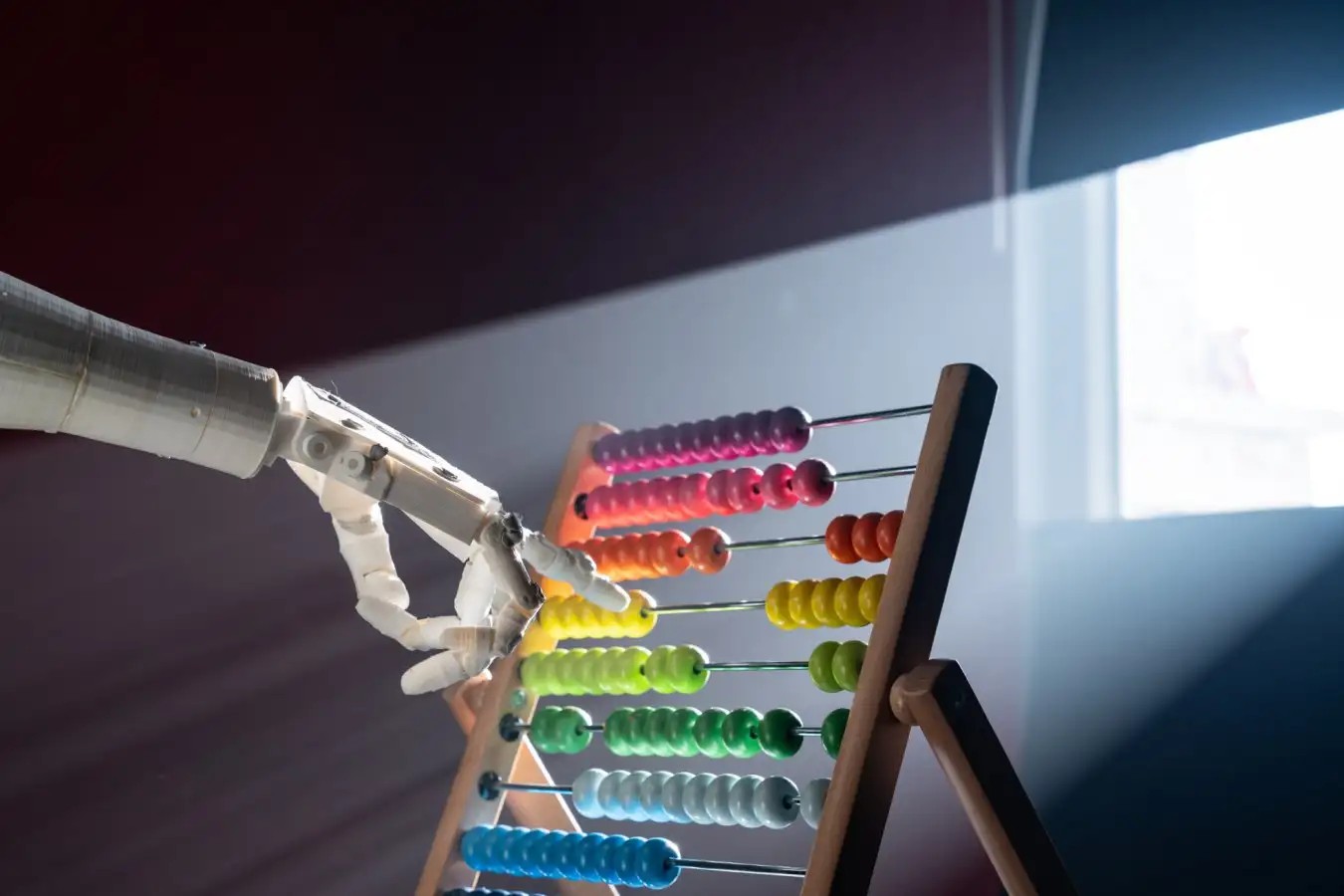
For decades, mathematicians have quietly relied on artificial intelligence to tackle complex problems – a reality that offers a crucial lesson as other fields grapple with AI’s rising influence. The field’s history demonstrates that accepting machine-generated results, even if unsatisfying, can lead to breakthroughs.
The Four Color Theorem and the Dawn of Computational Proofs
In 1976, Kenneth Appel and Wolfgang Haken stunned the mathematical world with a proof of the Four Color Theorem. This theorem states that any map can be colored with just four colors so that no adjacent regions share the same hue. However, the proof wasn’t elegant: it consisted of 60,000 lines of computer code.
The team had programmed a machine to systematically check nearly 2,000 possible map configurations, covering every potential scenario. The result was technically correct, but many mathematicians found it… unsatisfying. The proof lacked the intuitive elegance they expected, revealing no deeper mathematical principle.
Adapting to Machine Logic
Over time, the community adjusted. Mathematicians recognized that while the method wasn’t beautiful, it was effective. This acceptance paved the way for today’s AI-driven proofs. Modern large language models now handle the coding, and separate software verifies the results, eliminating concerns about AI “hallucinations” (fabricated outputs).
The Contrast Beyond Academia
This contrasts sharply with other industries where AI-generated code often fails spectacularly. Gartner predicts that half of companies replacing jobs with AI will rehire for the same roles within a year, suggesting many implementations are premature.
Mathematicians’ experience shows us that AI isn’t just about replacing humans; it’s about augmenting their capabilities. The field’s success hinges on trusting machine-validated answers, even when the process isn’t intuitive.
The world outside mathematics may not yet be ready, but the lesson is clear: practical confidence and philosophical comfort with AI output are essential for progress.


