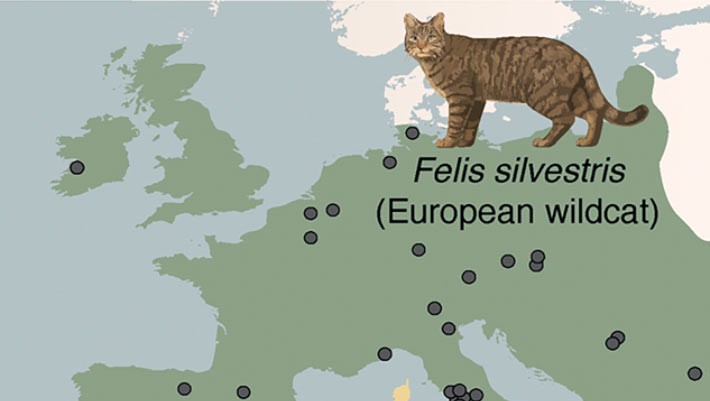
Recent genetic research confirms that domestic cats weren’t introduced to Europe with the first farmers during the Neolithic period, as previously thought. Instead, they arrived much later, around 2,000 years ago, likely originating from North Africa. The study, led by researchers at the University of Rome Tor Vergata and published in Science, analyzed the genomes of 87 ancient and modern cats to rewrite the history of feline domestication.
Challenging Long-Held Beliefs
For years, it was assumed that cats spread alongside agriculture when humans began settling down in the Near East and Europe. However, this new genomic evidence suggests a delayed arrival. Earlier feline presence in Europe appears to be from wildcats, not domesticated breeds. The study clarifies that the cats we recognize as “domestic” today only entered Europe several millennia after the initial spread of farming.
Two Waves of Migration
The research identifies at least two distinct waves of cat migration into Europe. The first wave introduced wildcats to islands like Sardinia and Corsica, establishing separate wildcat populations unrelated to feral domestic cats. These Sardinian wildcats share closer genetic ties with North African wildcats than with European domestic cats, indicating human-mediated introduction rather than natural spread.
The second, more significant wave brought the ancestors of modern domestic cats to Europe roughly 2,000 years ago. This dispersal likely followed Roman military routes, with cats reaching Britain by the 1st century CE. This timing suggests a deliberate, rather than accidental, introduction alongside human expansion.
Why This Matters
The revised timeline has implications for our understanding of human-animal relationships. Earlier assumptions that cats were integrated into settled life from the beginning now appear inaccurate. The late arrival suggests cats weren’t initially essential to early agricultural societies but were instead adopted later, possibly as rodent control in urban or military contexts.
The findings also raise questions about the precise routes and mechanisms of feline domestication. Further investigation is needed to pinpoint the exact origins of the North African population that seeded the European gene pool. Understanding these details helps us reconstruct the complex interplay between humans, cats, and the evolving landscape of ancient Europe.
The study conclusively demonstrates that the story of cats in Europe is far more nuanced than previously imagined. The arrival of domestic cats was a relatively late event, tied to specific historical movements rather than the dawn of agriculture itself.