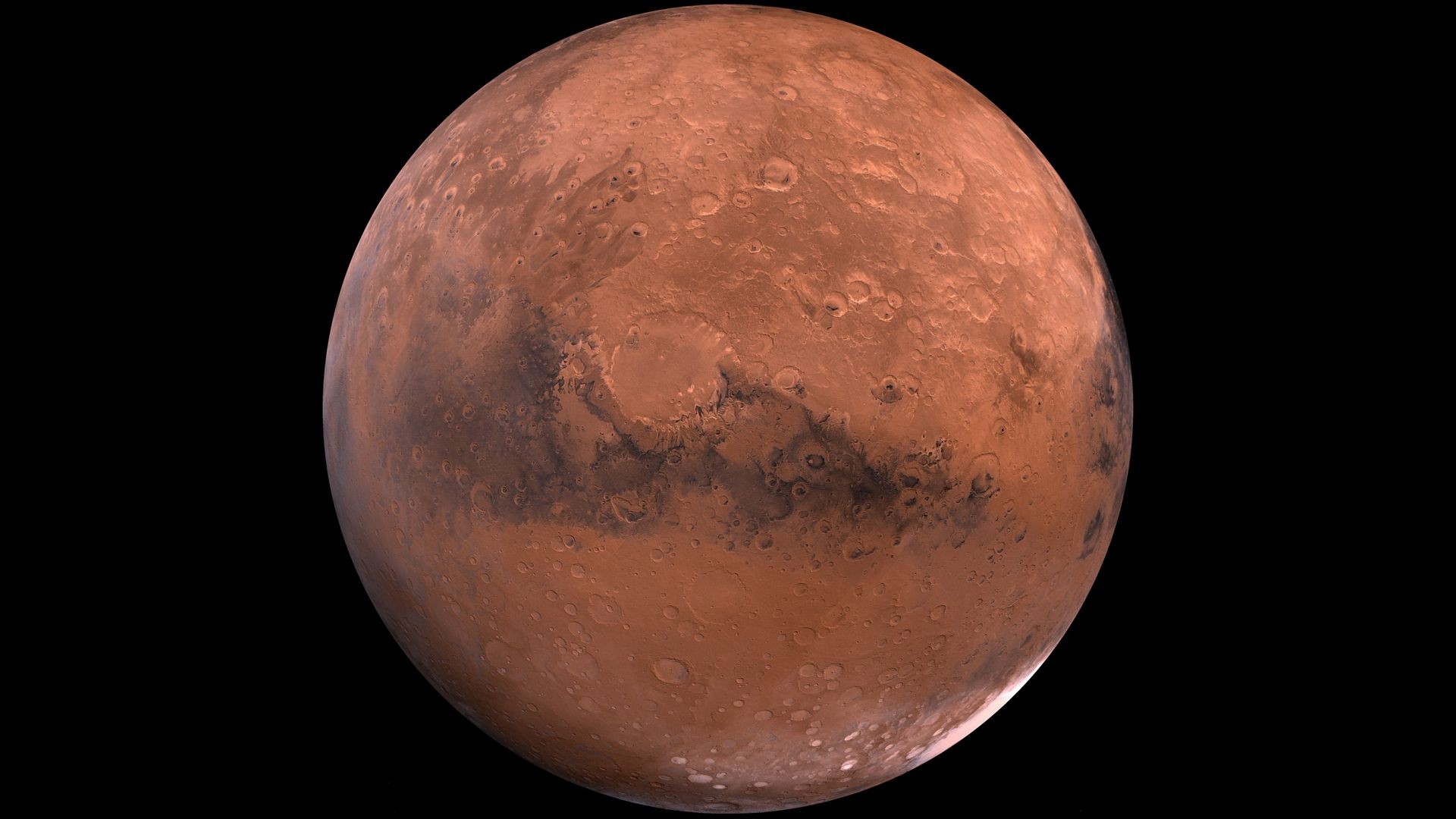
Time isn’t absolute; it’s relative. And according to recent calculations by scientists at the National Institute of Standards and Technology (NIST), time passes slightly faster on Mars than on Earth—by an average of 477 millionths of a second per day. This isn’t science fiction; it’s a direct consequence of Einstein’s theory of general relativity, and it has real implications for future space exploration.
Why Mars Time Differs
The discrepancy arises from a complex interplay of gravitational forces and orbital mechanics. Mars has weaker gravity than Earth (about five times less), orbits the sun at a slower pace, and follows a more elliptical path. These factors combine to create measurable time dilation.
- Gravity’s Role: Stronger gravity slows time down, as predicted by Einstein. Earth’s greater gravity exerts a stronger pull on time compared to Mars.
- Orbital Eccentricity: Mars’ slightly elongated orbit means it speeds up and slows down in relation to the sun, further influencing time’s passage.
- Multi-Body Problem: The sun, Earth, the moon, and Mars all exert gravitational influence on each other. Calculating the precise effects requires solving a complicated four-body problem.
As NIST scientist Bijunath Patla explained, “Mars’ distance from the sun and its eccentric orbit make the variations in time larger.” The calculations were surprisingly difficult, exceeding initial expectations.
Time Dilation Explained
This phenomenon, known as time dilation, isn’t limited to Mars. It’s the same effect that causes the famous “twin paradox,” where a space traveler moving at near-light speed ages slower than their Earthbound sibling. Similarly, time slows down near black holes due to extreme gravity. On Mars, though the difference is small, it’s measurable.
To someone standing on Mars, a second feels like a second. But to an observer on Earth, that Martian second will pass fractionally faster. The average difference is 477 microseconds per day, but it can fluctuate by as much as 226 microseconds depending on Mars’ position in its orbit.
Implications for Space Exploration
While the difference seems tiny, it’s significant for high-precision technologies. 5G networks, for example, require synchronization within a tenth of a microsecond. Future navigation and communication systems across the inner solar system will need to account for this time discrepancy.
Accurate clocks are essential for interplanetary navigation, just as they are for GPS on Earth. By understanding how time behaves on other planets, we can ensure seamless communication and precise positioning for robotic and human explorers alike.
“It may be decades before the surface of Mars is covered by the tracks of wandering rovers, but it is useful now to study the issues involved in establishing navigation systems on other planets and moons,” says Neil Ashby of NIST.
The NIST team has also calculated that clocks on the moon tick 56 microseconds faster than on Earth. These findings mark a step toward realizing the long-held dream of expanding human presence throughout the solar system.
In conclusion, the subtle yet measurable difference in time between Mars and Earth isn’t merely a theoretical curiosity. It’s a practical challenge that must be addressed as we move closer to establishing permanent settlements and interconnected networks beyond our planet. The universe operates by precise rules, and accounting for those rules will be critical for success in the next era of space exploration.