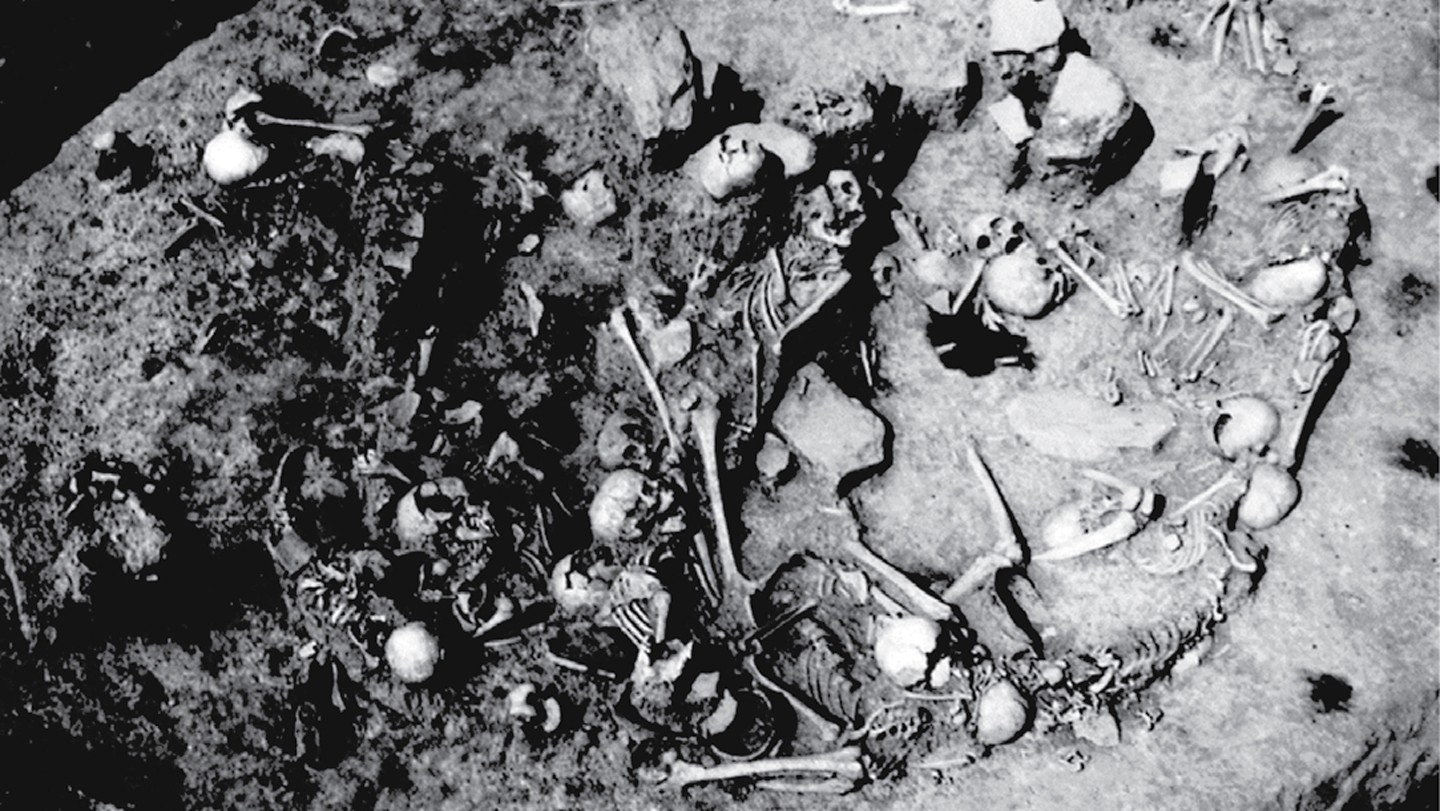
A recently re-analyzed mass grave dating back roughly 3,000 years reveals a disturbing pattern: the victims were overwhelmingly women and children. Unearthed in Serbia decades ago, the burial pit contains the remains of 77 individuals, with over 60% being children and over 70% female – a disproportionate ratio that suggests a deliberate act of violence rather than random bloodshed.
The Unusual Demographics of Violence
Mass graves typically reflect indiscriminate killing, with roughly equal gender distribution, or skew towards male casualties in wartime. However, the Gomolava site, located near the modern village of Hrtkovci, presents a stark anomaly. The absence of a significant number of adult men raises critical questions about the intent behind the massacre. Unlike typical wartime practices where young women and children are often taken as slaves, these victims were killed.
Researchers, led by Barry Molloy of University College Dublin, used modern DNA analysis, protein studies, and bone morphology to confirm the demographics. Their findings, published in Nature Human Behaviour, strongly indicate a deliberate selection of victims. “There’s clearly a choice being made about who’s being killed,” Molloy explains.
The Rise of Organized Violence in Europe
The Gomolava massacre isn’t an isolated incident. Archaeological evidence points to a surge in organized violence following the introduction of farming to Europe between 8,000 and 9,000 years ago. As methods of warfare developed, raids escalated into systematic slaughter, peaking during the early Iron Age. This period saw increasing clashes between different cultural groups vying for control of land.
The victims at Gomolava were semi-sedentary farmers, while evidence suggests they were attacked by semi-nomadic herders. The method of death – blows from horseback – further supports this interpretation. The conflict appears to have been driven by land ownership: the farmers aimed to control and cultivate the land, while the herders sought to keep it open for movement.
Status and Targeted Killing
The high proportion of women and children suggests they held significant value within their farming community. Their deliberate targeting could indicate a strategy designed to destabilize or eliminate a rival group by striking at its core – the next generation and those who maintained social structures. “Gomolava was at a flashpoint of all these different ways of using the land,” Molloy states, emphasizing the significance of the site.
Bioarchaeologist Mario Novak, who led research into an earlier massacre in Croatia, corroborates the trend of escalating violence in the region. The findings from Gomolava add a crucial layer to our understanding of how early European societies engaged in conflict.
The Gomolava site provides stark evidence of targeted violence in the Iron Age, underscoring the brutal realities of early warfare and the deliberate strategies employed to control land and resources. The skewed demographics of the victims demand further investigation into the cultural and social dynamics that drove this horrific act.