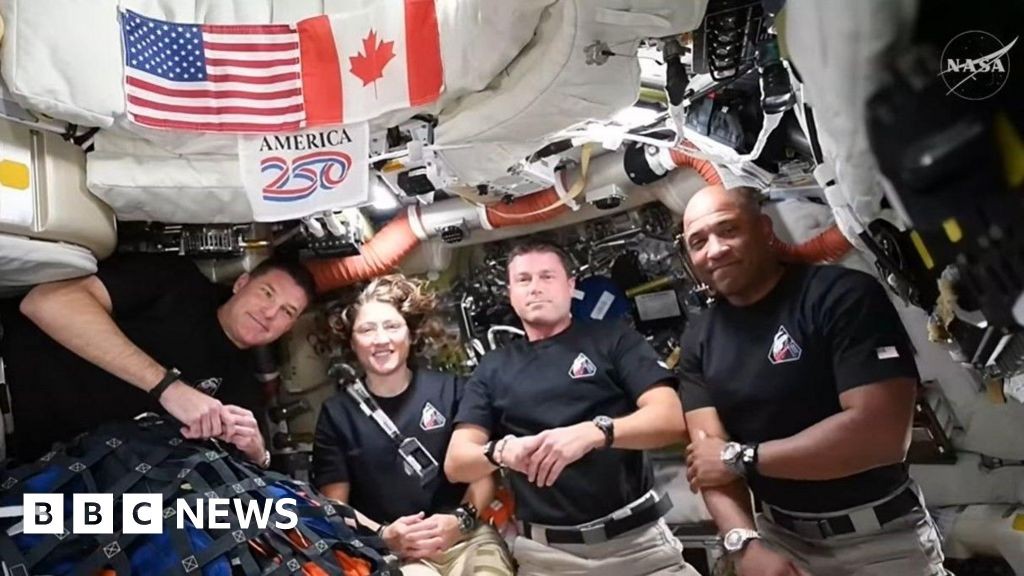
The Artemis II mission has officially concluded its journey through deep space. After traveling further from Earth than any human in history—surpassing the 1970 Apollo 13 record by over 4,000 miles—the crew successfully re-entered the atmosphere at 25,000 mph before splashing down off the California coast.
While the mission was a historic milestone for lunar exploration, the focus now shifts from the vacuum of space to the complexities of returning to life on Earth. For astronauts Reid Wiseman, Christina Koch, Victor Glover, and Jeremy Hansen, the mission is not over; it is simply entering a new, terrestrial phase.
The Physical Recovery Process
The transition from microgravity back to Earth’s gravity is a grueling physiological ordeal. Upon splashdown, the crew will undergo a rigorous medical protocol:
- Immediate Examination: Doctors aboard a US Navy vessel will conduct initial health checks.
- Transport: The crew will be airlifted by helicopter and then flown to NASA’s Johnson Space Center in Houston.
- Physical Rehabilitation: In space, the lack of gravity causes significant muscle and bone density loss. Without the constant “tug” of Earth, muscles in the back, neck, and calves atrophy rapidly.
Why this matters: While long-term residents of the International Space Station (ISS) face months of bone degradation, the Artemis II crew’s mission was relatively brief. Compared to the six-month stays typical of the ISS, their physical recovery is expected to be much faster, though still demanding.
The Psychological Transition
Beyond the physical strain, there is the “mental reentry.” Astronauts are famously composed, but the shift from a high-stakes, mission-driven environment to civilian life can be jarring.
- The “Overview Effect”: Many astronauts, including Christina Koch, report a profound shift in perspective after seeing Earth from deep space. This sense of global unity and the fragility of our planet often creates a lasting psychological impact.
- Loss of Purpose: Koch noted that she would miss the intense “teamwork and camaraderie” and the singular sense of purpose that defines spaceflight. Returning to the mundane rhythms of daily life after such an extraordinary experience requires significant mental adjustment.
Personal Reunions and Public Fame
For the crew, the most immediate priority is personal: returning to their families. The mission carried heavy emotional stakes, particularly for Commander Reid Wiseman, who has been raising his two daughters alone following the loss of his wife. Similarly, for Jeremy Hansen, the return marks the end of a period of intense separation from his wife and three children.
However, this private reunion will be met with unprecedented public attention. Unlike previous eras of space exploration, the Artemis II crew has returned to a world of 24/7 news cycles and viral social media presence. They are returning not just as scientists and pilots, but as global celebrities.
What Lies Ahead for Artemis?
Despite their return, these four astronauts remain active members of NASA’s astronaut corps. Their mission serves as the essential bridge to the next, even more ambitious stages of the Artemis program:
- Artemis III (Planned for 2027): The mission intended to land humans on the lunar surface once again.
- Artemis IV (Planned for 2028): Further deepens our presence in lunar orbit.
While the specific roles of the Artemis II crew in future missions are yet to be determined, they have already secured their place in history. They are even expected to receive a formal reception at the White House, following an invitation extended by President Donald Trump during their flight.
The Artemis II crew has transitioned from breaking records in deep space to navigating the complex realities of life on Earth, marking a pivotal moment in humanity’s journey toward the Moon.