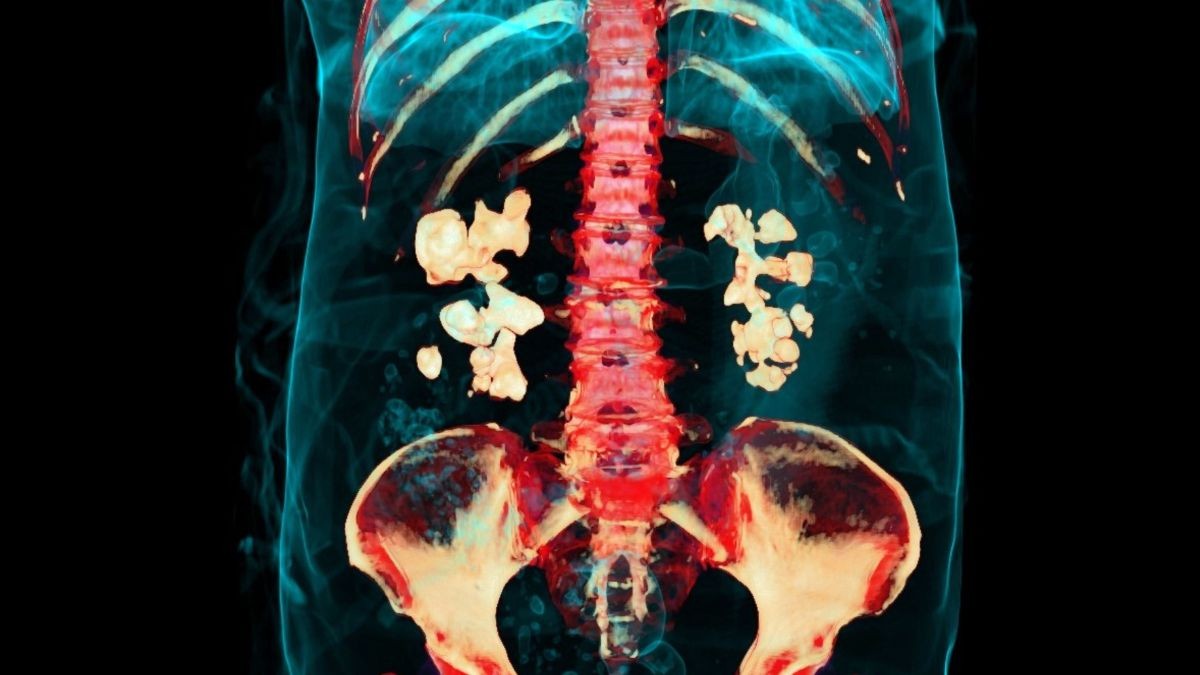
For centuries, kidney stones have been considered purely mineral formations. But a new study from the University of California Los Angeles (UCLA) has flipped this assumption on its head: live bacteria and complex biofilms were found inside the most common type of kidney stone, calcium oxalate. This discovery has far-reaching implications for how we understand, prevent, and treat this excruciatingly common condition.
The Long-Held Assumption Debunked
Calcium oxalate stones comprise roughly 80% of all kidney stone cases. Until now, medical consensus held that they formed through the simple crystallization of salts in urine – a purely chemical and physical process. The UCLA team’s research demonstrates that this is not the complete picture.
“This breakthrough challenges the long-held assumption that these stones develop solely through chemical and physical processes,” explains urologist Kymora Scotland. “Instead, it shows that bacteria can reside inside stones and may actively contribute to their formation.”
How Bacteria May Form Kidney Stones
The study, published in a peer-reviewed journal, found not just bacteria on the stones but thriving within the crystal structures, even forming biofilms. This suggests a novel mechanism for stone formation: bacteria may seed the initial crystal growth, then become trapped as the stone expands.
This isn’t the first time bacteria have been linked to kidney stones. Struvite stones (2-6% of cases) are already known to be caused by bacterial infection. However, the prevalence of bacteria in the far more common calcium oxalate stones was previously unknown.
The Implications for Treatment
The discovery opens up potential new therapeutic avenues. If bacteria contribute to stone formation, targeting the microbial environment could prevent or dissolve existing stones. The researchers also suggest this could explain why recurrent urinary tract infections often lead to recurrent kidney stones.
“We found a new mechanism of stone formation that may help to explain why these stones are so common,” Scotland says. “These results may also help to explain the connections between recurrent urinary tract infections and recurrent kidney stone formation, and provide insights on potential future treatment for these conditions.”
Beyond Calcium Stones
The study specifically focused on calcium oxalate stones, but the researchers speculate that bacteria may play a similarly overlooked role in the formation of other kidney stone types. Current understanding of these other formations remains incomplete.
The team is now conducting further research to understand exactly which bacteria are involved, why some patients are more susceptible to bacterial-seeded stones, and how to best target this mechanism for prevention and treatment. The findings suggest that kidney stones may be better described as “organic-inorganic biocomposites,” where bacterial biofilms play an integral role.
“Our multi-institutional team is currently performing studies to determine how bacteria and calcium-based kidney stones interact,” Scotland says. “We want to understand exactly what makes some patients particularly susceptible to recurrent stone formation, and what it is about these particular species of bacteria that allows them to nucleate these stones.”
This is a significant shift in medical understanding for a condition affecting tens of millions worldwide. Further research is crucial, but the paradigm has shifted: kidney stones may not be just a matter of chemistry, but a complex biological process involving living organisms.