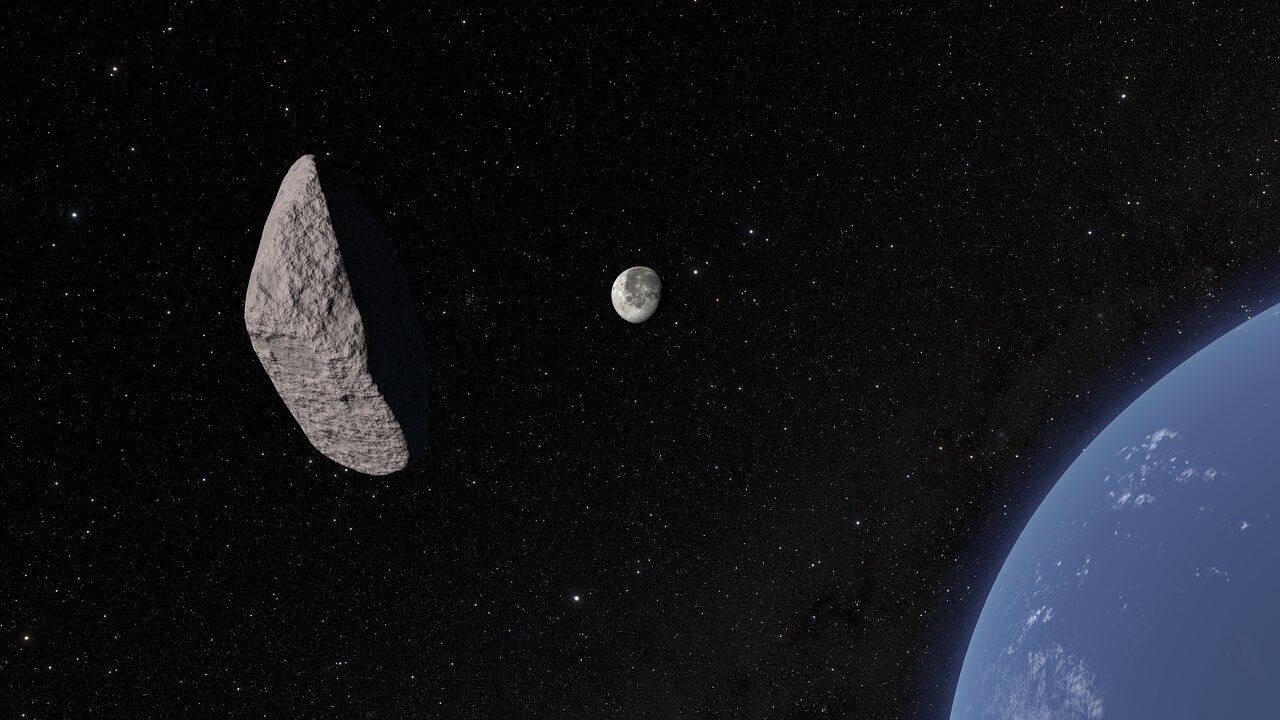
The asteroid 2024 YR4, initially assessed as a potential threat to the moon, will safely pass by Earth’s lunar companion in 2032. New observations from the James Webb Space Telescope (JWST) confirm the asteroid will miss the moon by approximately 13,200 miles (21,200 kilometers). This finding eliminates a previously estimated 4.3% chance of impact, averting what could have been a significant lunar event.
Initial Threat Assessment
Discovered in December 2024 by the NASA-funded ATLAS system, 2024 YR4 quickly gained attention due to its size – roughly 197 feet (60 meters) in diameter. An asteroid of this magnitude poses a credible hazard; a terrestrial impact could devastate a city or trigger a catastrophic tsunami if it struck the ocean. While initial calculations showed it would miss Earth, the possibility of a lunar collision remained until recent observations.
The Role of the James Webb Space Telescope
Precise tracking of 2024 YR4 required high-resolution data that could only be obtained through advanced telescopes. Researchers at Johns Hopkins University Applied Physics Laboratory (JHUAPL) coordinated with NASA and the European Space Agency to utilize JWST during a narrow observation window between February 18 and 26. By comparing the asteroid’s movement against known star positions from the European Space Agency’s Gaia mission, scientists refined its orbit with unprecedented accuracy. The measurement was challenging due to the asteroid’s faintness and JWST’s limited field of view (2.2 square arcminutes).
What if the Asteroid Had Hit?
Had 2024 YR4 impacted the moon, the consequences would have been dramatic. A collision would have created a crater roughly one kilometer in diameter, releasing energy equivalent to 6 million tons of TNT. The resulting debris would have rained down on the lunar surface, but millions of pounds would also have escaped into Earth orbit, posing a hazard to satellites and potentially creating a brief but spectacular meteor shower. This scenario highlights the very real risks posed by near-Earth objects.
Conclusion
The averted lunar impact demonstrates the critical role of advanced space observation in planetary defense. While 2024 YR4 no longer poses an immediate threat, the incident underscores the ongoing need for vigilance and continued monitoring of near-Earth asteroids. The next potential hazard is already out there, making sustained observation essential for protecting both Earth and its celestial neighbors.