


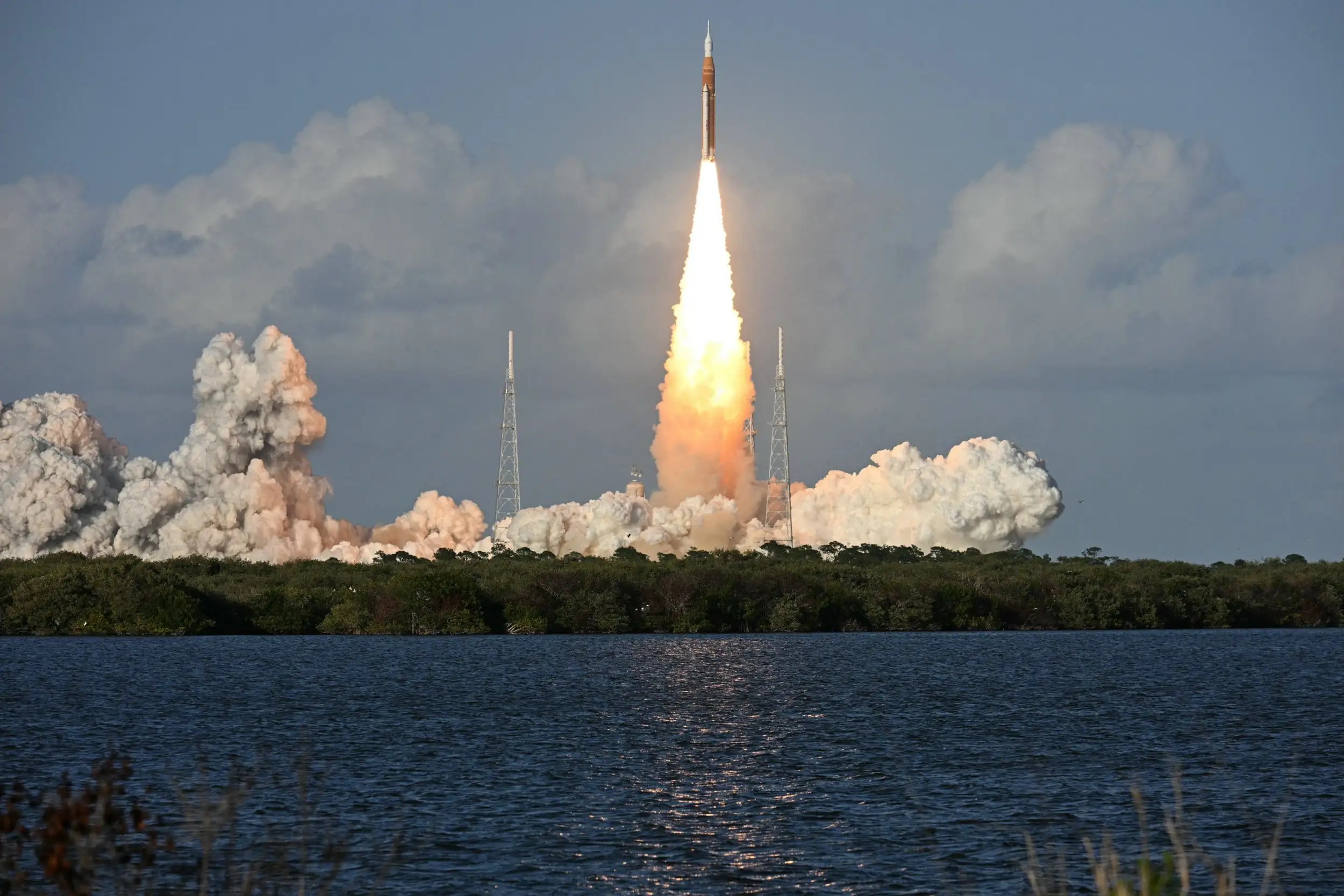
The first crewed mission to the moon in over half a century has successfully launched from Cape Canaveral, Florida, marking a pivotal moment in space exploration. The Artemis II mission, carrying astronauts Reid Wiseman, Victor Glover, Christina Koch, and Canadian astronaut Jeremy Hansen, represents a significant leap toward establishing a permanent human presence beyond Earth.
A New Era of Lunar Missions
This mission is not a landing; instead, it’s a test run for future lunar landings. The four astronauts will orbit Earth for two days, rigorously testing the Orion spacecraft and its automated systems. A key element of this phase involves a manual docking procedure with an older craft, ensuring astronauts can override autonomous systems if necessary. As astronaut Victor Glover stated, “Even if we don’t do the operation by hand [in the future], we need to be able to stop it.” This is critical because while automation is efficient, human intervention is sometimes vital in space operations.
Breaking Distance Records
After initial testing, Orion will embark on a lunar flyby, reaching a maximum distance of 402,000 kilometers from Earth – further than any human has traveled before. The spacecraft will also approach within 6,513 kilometers of the moon’s surface, providing unprecedented views of previously unseen lunar regions due to optimal lighting conditions. This close approach is not just about visual spectacle; it’s about gathering data and refining navigation for future missions.
Delayed Landing, Long-Term Goals
The next step, Artemis III (planned for 2027), was initially intended to be a lunar landing, but will now test the docking system with the lunar lander in Earth orbit. The actual landing is now scheduled for Artemis IV in 2028. This shift highlights NASA’s cautious approach, prioritizing safety and reliability before attempting a full landing. The ultimate goal is establishing a sustainable human presence on the moon, a long-term investment in space exploration.
“It is our strong hope that this mission is the start of an era where everyone, every person on Earth, can look at the moon and see it also as a destination [rather than some distant rock in the sky],” said Christina Koch.
The Artemis II mission is more than just a flight; it’s a foundational step towards making the moon accessible, not just to astronauts, but to humanity’s collective imagination. This mission demonstrates that space exploration is not a relic of the past, but a continuously evolving endeavor with ambitious goals for the future.


