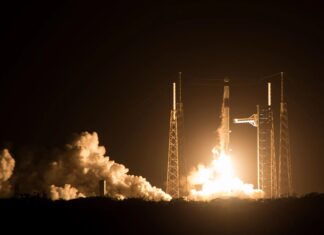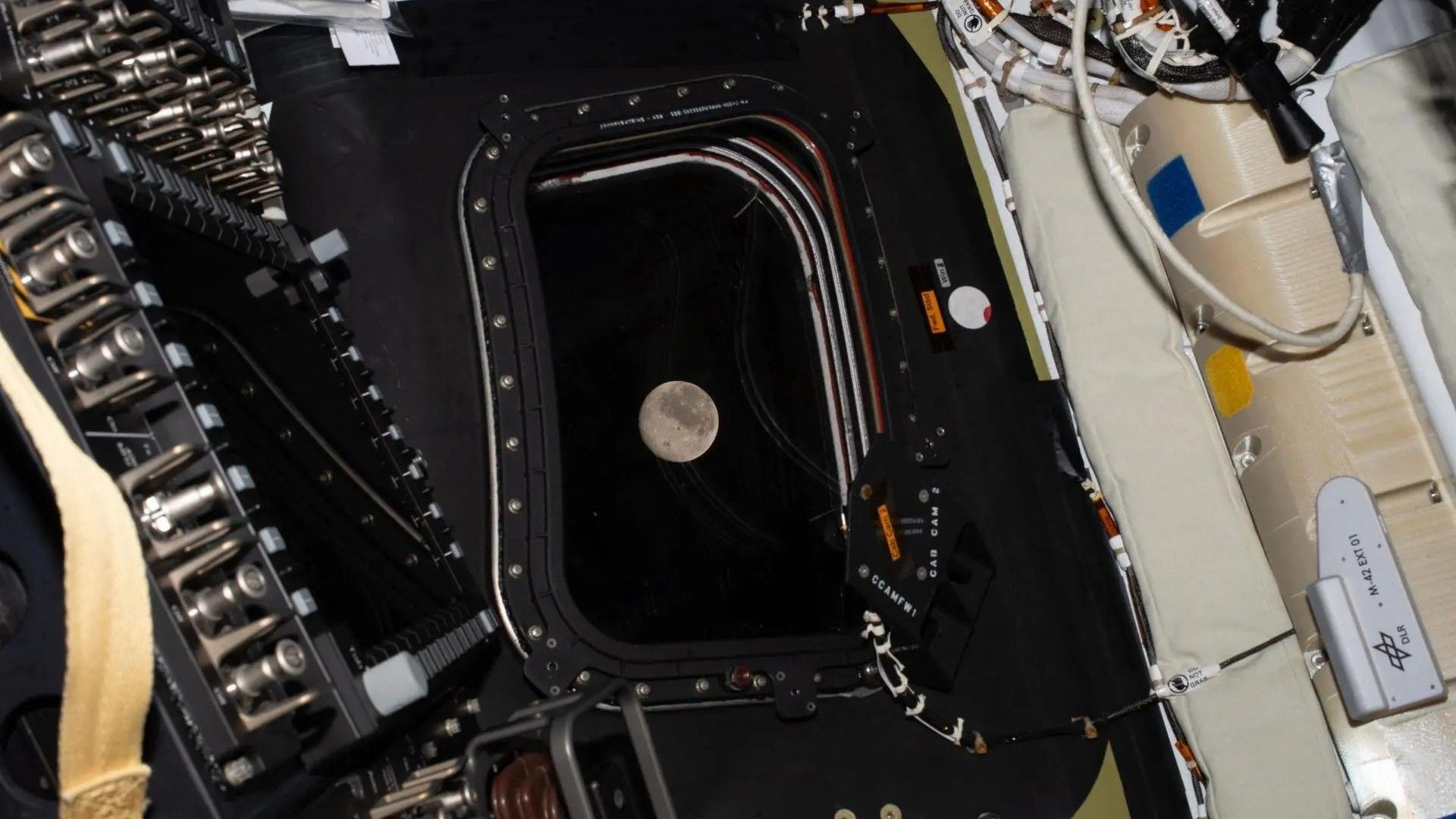
The Artemis II mission has officially entered a new era of space exploration, carrying humans farther from Earth than at any other point in history. On April 6, the Orion spacecraft, named Integrity, surpassed a half-century-old milestone, eclipsing the distance record previously held by the Apollo 13 mission.
Surpassing a 55-Year Milestone
For over five decades, the record for the farthest human travel from Earth was held by the crew of Apollo 13, who reached a distance of 248,655 miles (400,171 km) in 1970. That record was broken at 1:57 p.m. EDT as the Orion capsule began its loop around the far side of the Moon.
The Artemis II crew is expected to reach a maximum distance of 252,760 miles (406,777 km) during a six-hour lunar flyby—exceeding the previous record by approximately 4,100 miles.
“Today, for all humanity, you’re pushing beyond that frontier,” remarked CSA astronaut Jenni Gibbons as the crew broke the record.
Scientific Discovery and Personal Tributes
As the spacecraft moved around the lunar far side, the mission transitioned from a technical feat to a deeply human one. While observing the lunar surface, the crew identified a prominent crater near the boundary of the Moon’s near and far sides.
In an emotional moment, Artemis II commander Reid Wiseman requested that the feature be named “Carroll” in memory of his late wife. The crew also identified another crater, requesting it be named after their spacecraft, Integrity.
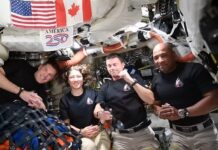
Beyond these personal landmarks, the mission serves a vital scientific purpose. The crew—comprising Reid Wiseman, Christina Koch, Victor Glover, and Jeremy Hansen—is tasked with photographing roughly 30 scientific targets. These include:
– The Orientale Basin: A massive impact crater roughly 600 miles wide.
– The Hertzsprung Basin: An ancient crater located on the lunar far side.
Because Artemis II maintains a higher orbit than the original Apollo missions, scientists will gain unique, multi-angle views of lunar geology that were previously impossible to capture.
A Visual Spectacle: Earthrise and Solar Eclipses
The lunar flyby is set to provide some of the most significant visual data in modern spaceflight. The crew will witness several rare celestial phenomena:
– Earthrise and Earthset: The crew will observe the Earth disappearing behind the Moon and reappearing over the lunar horizon, recreating the iconic perspective first captured by Apollo 8 in 1968.
– Solar Eclipse: As the Moon passes in front of the Sun, the astronauts will use specialized equipment to photograph the Sun’s outer atmosphere, or corona.
The mission also carries a symbolic bridge between generations. The crew was greeted upon waking by a recorded message from the late Apollo 8 astronaut Jim Lovell, who passed away in August 2025: “Welcome to my old neighborhood… don’t forget to enjoy the view.”
Conclusion
By breaking the distance record set during the Apollo era, Artemis II is not just performing a technical maneuver; it is validating the next generation of deep-space capabilities and expanding the human footprint in the solar system.