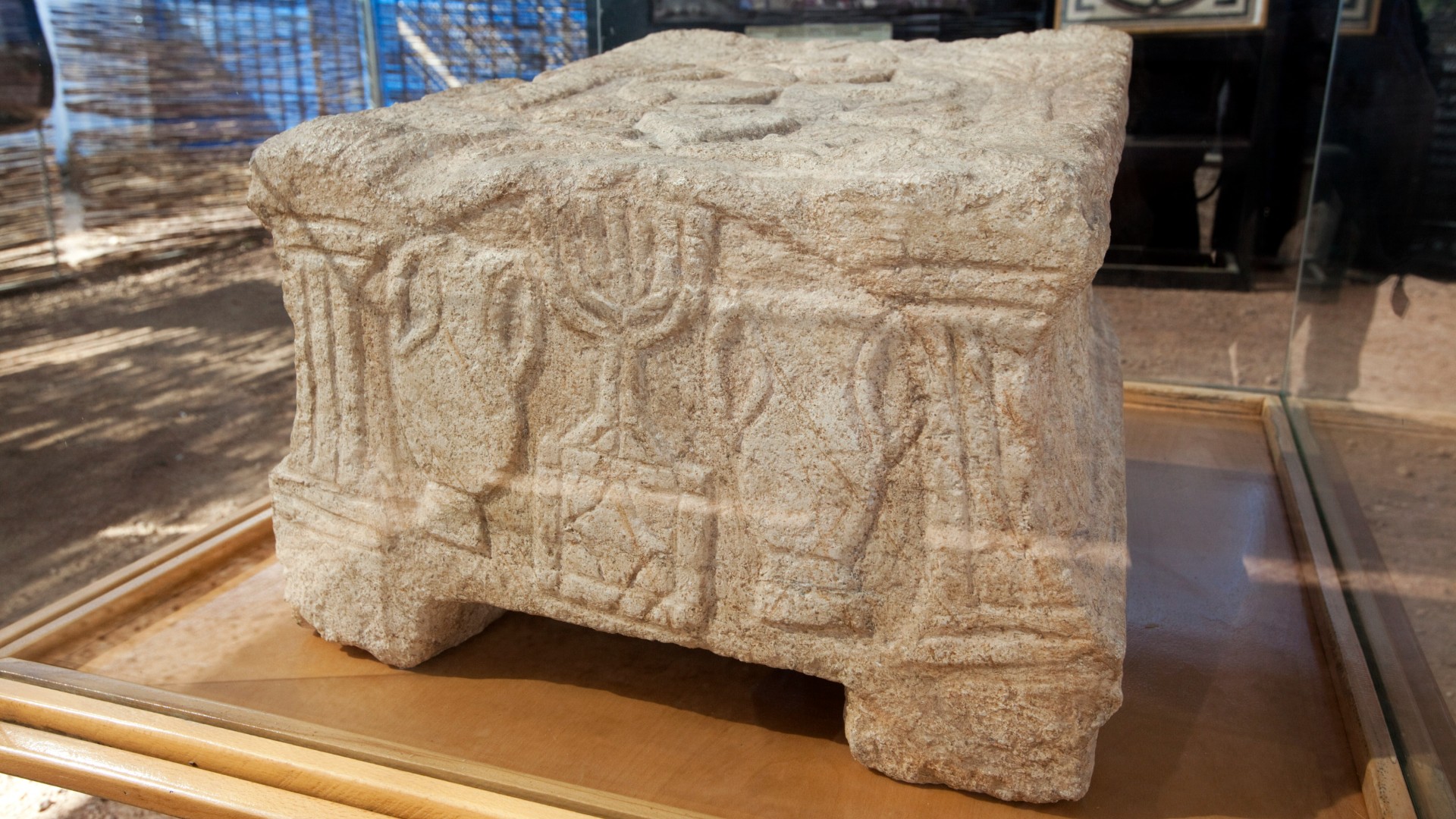
Archaeologists in Israel have unearthed a remarkable artifact: a 2,000-year-old stone carving from an ancient synagogue near the Sea of Galilee. This discovery is significant because it’s the oldest known visual representation of the seven-branch menorah, a central symbol in Jewish tradition. The stone provides a rare glimpse into religious iconography before the destruction of the Second Temple in A.D. 70, and raises questions about how vividly the Temple’s imagery was preserved outside Jerusalem.
The Magdala Stone: A Window into the Second Temple Period
The stone, known as the Magdala Stone, was discovered in 2009 during excavations at the site of Magdala (Migdal), believed to be the birthplace of Mary Magdalen. The synagogue itself was in use for roughly 30 years, from A.D. 50 to A.D. 80, before being abandoned.
The stone itself is a rectangular block of limestone, measuring approximately 60 by 50 by 40 centimeters. Its five sides are adorned with detailed carvings depicting elements associated with the synagogue. However, the most striking feature is the depiction of the menorah on one narrow end. This isn’t just any menorah; it’s a precise representation of the one used in rituals within the Second Temple itself.
Historical Context and Significance
The Second Temple in Jerusalem was destroyed by the Romans in A.D. 70, an event that fundamentally altered Jewish religious practice. Following the siege, the Romans famously looted the Temple, including its golden menorah, and paraded it through Rome as a symbol of their victory – a scene immortalized on the Arch of Titus.
The Magdala Stone’s existence suggests that before the Temple’s destruction, someone had seen and commissioned a depiction of it. This implies that the Temple’s imagery was not confined to Jerusalem and that pilgrims or individuals familiar with the Temple’s interior may have carried the vision to other communities.
Connection to Hanukkah
The discovery is particularly resonant given the recent observance of Hanukkah. Modern Hanukkah menorahs, known as hanukkiot, typically have nine branches, commemorating the rededication of the Second Temple in the second century B.C. after the Maccabean revolt against Seleucid rule. The Seleucids had previously outlawed Jewish practices and imposed pagan worship in the Temple.
The origins of Hanukkah’s eight-day duration are debated: some scholars believe it represents the miraculous burning of oil for eight days after the Temple was purified, while others suggest it was a delayed observance of the fall harvest festival Sukkot.
The Magdala Stone is more than just an archaeological find; it’s a tangible link to a pivotal moment in Jewish history, providing evidence of how deeply the Temple’s imagery resonated beyond Jerusalem before its destruction. This discovery underscores the enduring power of symbols and the importance of preserving cultural memory.