


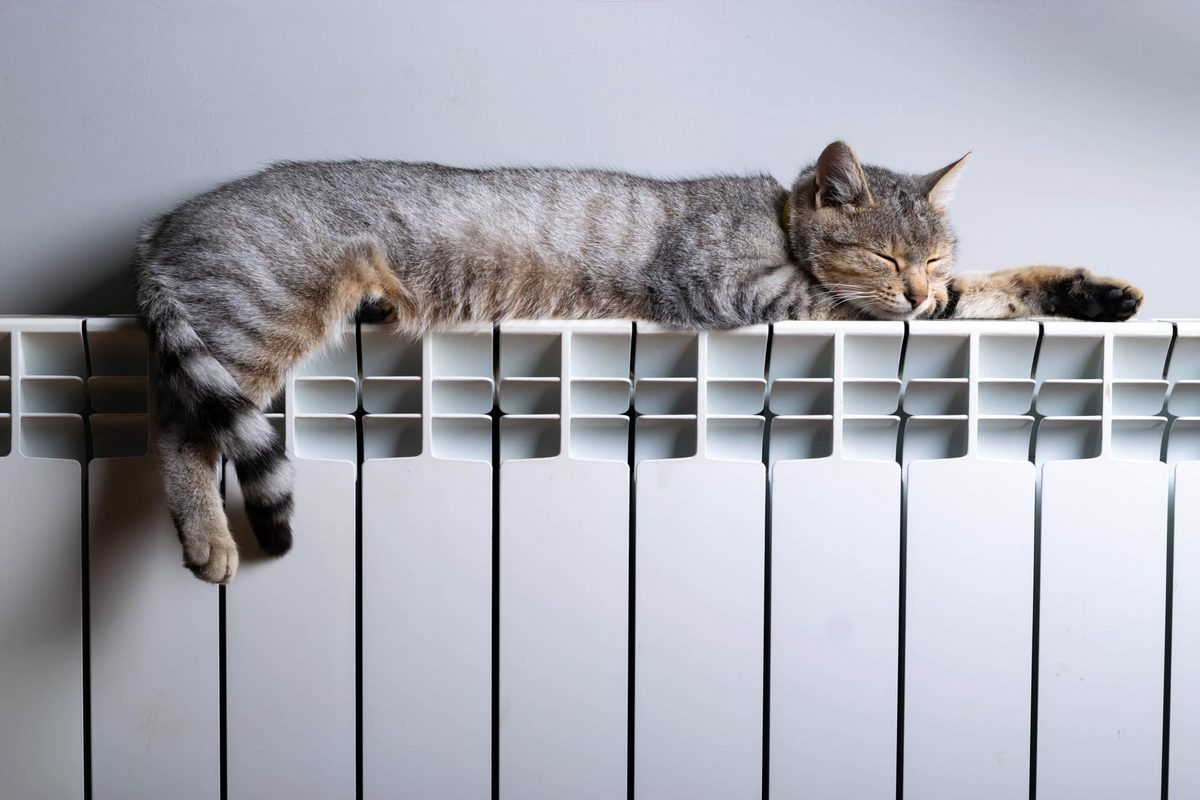
Cats have a well-documented obsession with heat. Come winter, you’ll probably see your cat curled up right on top of the radiator and enjoying the warmth. But is this cozy habit actually dangerous? The answer is nuanced. While most cases are harmless, safety depends entirely on the type of heating unit and how long your cat will be staying. Here’s what you need to know to ensure your pet’s safety while letting them enjoy their favorite spot.
Why do cats love radiators?
This behavior is instinctive. A cat’s normal body temperature is 38–39 °C (100.4–102.2 °F), which is higher than human body temperature. They actively seek external heat sources to maintain their comfort without additional energy.
Radiators are prime real estate for two reasons. First, they provide even heat. Second, they provide height. Cats are territorial creatures that feel safe when they can sit above their surroundings. The radiator combines both elements and makes it an irresistible place to stay.
Are radiators dangerous for cats?
In most households, there is no immediate danger to a cat sitting on a radiator. However, there are risks depending on the heating technology. You need to differentiate between different unit types to understand specific threats.
Traditional water-based radiators
These are the most common devices in many homes. They are generally safe for cats. Even after hours of use, the surface temperature rarely rises high enough to cause burns. It’s not primarily about burns, it’s about dehydration. If the cat lies in one place for too long, the dry heat can easily dehydrate it. Make sure your cat has fresh water nearby.
Electric or oil-filled radiators
These devices are often hotter than water-based models. If the surface gets very hot, it can cause burns to the cat’s sensitive paw pads. See the manufacturer’s instructions or touch the surface for a moment yourself. If it’s too hot for your hand, it’s too hot for your pet. Look for models with protective grills or covers that prevent direct contact.
Fan-Forced Heaters
These devices blow hot air directly into the room. This airflow can irritate the cat’s respiratory system if it is directly in the path of the heat. Dry, hot air can also dry out their eyes and nose. Never let the cat sleep directly in front of the heater or in direct air flow.
How to protect your cat and keep it warm at the same time
There is no need to ban radiators completely. Small adjustments can have a big impact on safety.
Install Protective Barriers
Special covers or cases can be attached to the radiators. These products allow heat to spread throughout the room while creating a barrier between the hot metal and the cat. This prevents direct burns and reduces the intensity of heat reaching the animal’s fur.
Watch for signs of overheating
A cat that stays in one place for too long may show signs of discomfort. Watch for rapid breathing, lethargy or restlessness. If you notice these symptoms, gently encourage your cat to move. Provide your cat with an alternative warm place, such as a heated bed or thick blanket, so that he can focus on others.
Create your own warm zone
If your cat is obsessed with the cooler, offer him a safer alternative. There are beds that are designed to sit above or near the radiators, keeping the pet a safe distance from the heat source while still benefiting from the rising heat. This means you can enjoy the temperature without the risk of contact burns.
Pros and cons of battery sleeping
Understanding balance will help you make informed decisions.
Advantages
- Comfort: Radiators provide an even warm surface that is ideal for sleeping.
- Safety: Height allows cats to monitor their territory, reducing stress.
Disadvantages
- Dehydration: Prolonged exposure to dry heat can lead to loss of moisture content.
- Burns and irritation: Hot surfaces can cause burns to the paws, while fans can irritate the respiratory system.
Final thoughts
Having your cat sleep on a heater is natural and generally safe. However, “usually” is not the same as “always”. The most important thing is to monitor the type of cooler and your cat’s behavior. By using protective covers, providing alternative warm spots and watching for signs of overheating, you can ensure that your pet stays comfortable and healthy throughout the winter. Let them enjoy their warmth, but keep an eye on them.


