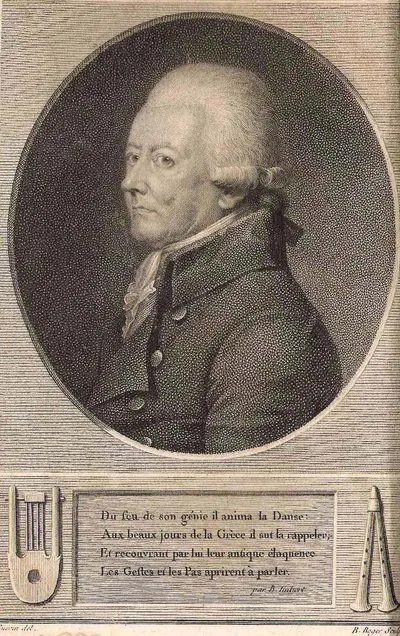
Jean-Georges Noverre was born in Paris on April 29, 1727. He was not only a good dancer. He waged a silent war against the dull performances of the 18th century. He died in Saint-Germain-en-Laye on October 19, 1810, but the changes he made outlasted him by centuries. His 1760 manifesto “Lettres sur la danse et sur les ballets” was more than just a book. This is a plan to make ballet truly meaningful.
Before Noverre, ballet was usually a decorative interlude in opera. The dancers waved their arms like confetti with great technique. Noverre hated it. He advocated action ballet. The idea is simple, but fundamental. Every action must have a dramatic purpose. Tell your story first. Steps second. He thinks that not only does admire the turnout of a foot, but also feel the story.
He made his first big breakthrough in 1754 at the “Chinese Festival”. The show was very lively. This piece caught the attention of legendary British actor and agent David Garrick. Garrick brought this work to London in 1755 and it was a huge hit. This was proof that Noverre’s vision could extend beyond the borders of France.
He carried this momentum with him to Stuttgart. From 1760 to 1767, he performed masterpieces like Medée et Jason and Psyché et l’Amour. These are not just beautiful photos on stage. They were a cohesive story with music, costumes and choreography supporting the story. His reformation, that is, more realistic costumes, less masking, integrated choreography, etc., became the standard for modern ballet production.
By 1776, his reputation was solid. The Paris Opera eventually succumbed to his influence and appointed him ballet master. It was a homecoming of sorts. The man who spent years teaching those in power what they were doing wrong is now taking charge.
But even with the name, the work is not done. The tension between technical presentation and emotional truth has not disappeared. It became even harder to ignore. Noverre forced the industry to look in the mirror.