


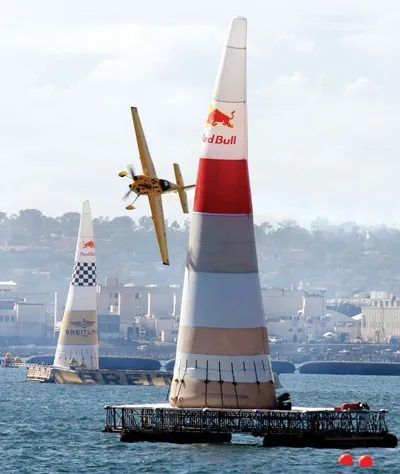
Air racing isn’t just a spectacle. It’s where modern flight performance was actually hammered out. The sport dates back to 1909, when the first international meet took place at Reims, France. That single event kicked off a competitive era that shaped how aircraft evolve.
Aviation pioneers didn’t have wind tunnels or simulation software. They had distance and speed contests. These early meets served two purposes: testing airplane limits and proving who built the best machine. Manufacturers leaned into this heavily. They wanted a public stage to show off their most advanced designs. The competition was fierce, and that rivalry pushed engineering forward faster than any government contract could have.
Most of these early gatherings happened in France. The location mattered. Reims became a hub for aviators who were willing to risk their lives for a title. The environment was electric, dangerous, and utterly serious. When the stakes are that high, innovation doesn’t slow down. It accelerates.
Why does this origin story stick? Because it proves that speed records aren’t just bragging rights. They’re development tools. Every knot gained in a race translates to better aerodynamics, stronger structures, and smarter engine management. The 1909 meet at Reims set the template. It showed the world that racing planes is a legitimate path to technical breakthroughs.
- Reims, France hosted the inaugural international air race in 1909
- Early competitions focused on distance and speed to test aircraft capabilities
- Manufacturers used races as demonstration forums for new designs
- Competitive rivalry between aviators directly advanced flight technology
The early days weren’t polished. They were gritty. Pilots pushed machines beyond what was considered safe. That pressure cooker atmosphere is what made air racing a cornerstone of sporting aviation. It wasn’t just about winning a trophy. It was about figuring out what a plane could really do when you stop being conservative.
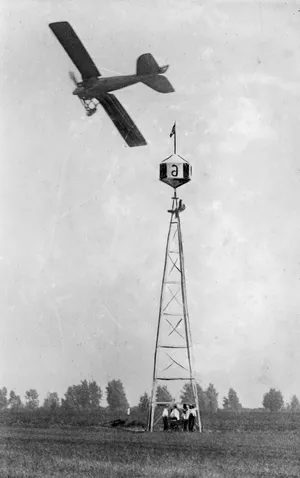

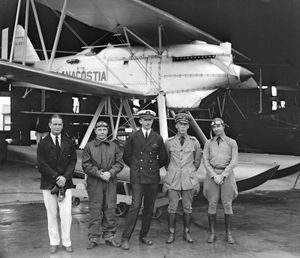

How the Schneider Trophy Changed the Rules of Air Racing
The Schneider Trophy era didn’t just end; it set a precedent that still echoes in modern pylon racing. When British pilots claimed the trophy for the third time in 1931 (after wins in 1927 and 1929), they secured permanent ownership. That rule, demanding three wins within five years, turned the competition from a series of races into a national pride contest. It pulled top pilots from around the globe, much like the Pulitzer, Thompson, and Bendix trophies did in the US, or the Kings Cup in England.
Then came 1939. The war stopped the clock. Pilots and engineers pivoted to building complex military machines, and the cost of unrestricted, state-of-the-art sport racers skyrocketed. By the time the guns fell silent, the old style of air racing was effectively dead for most of the world.
Why Formula Racing Took Over Post-War
So how did the sport survive? It didn’t. It evolved. The answer was formula racing, a system where aircraft competed based on specific categories rather than raw, unrestricted speed.
The logic was simple. You could buy surplus military planes cheaply. You could build small, fast purpose-built racers. The first of these fixed-course pylon races happened in the US in 1947. Think of it like an automobile track. Instead of a point-to-point dash, planes race around a loop defined by pylons.
This structure allowed aircraft with similar performance capabilities to compete fairly. The Air Racing Council of the United States (ARCUS) formalized this into distinct classes:
– Formula 1
– Formula V
– Biplane
– T-6
– T-28
– Sport Class
– Unlimited
Most Formula 1 action happens at Reno, Nevada. It’s the hub.
Where the Old-School Style Still Flies
Not every region embraced the formula model. The UK kept the lights on for a different type of event. The Royal Aero Club continues to organize prewar-style handicap races, including the famous Kings Cup.
This is where it gets interesting. In a handicap race, the start times are staggered. The calculation is precise. It’s designed so that the slowest plane and the fastest plane cross the finish line at the exact same moment. A tiny biplane and a modern jet can race together, and the winner is determined by who hits the line first relative to their handicap. It’s a spectacle that formula racing simply can’t replicate.
France runs a few Formula 1 events, but the broader European landscape leans toward air rallies and precision flying. The pure, high-speed pylon battle remains a distinctly American export, with the UK holding onto the traditional, equalized chaos of the handicap start.


